Pomegra
undefined
- Intel Q2 2026 revenue rose 25% year over year to $16.1 billion, beating consensus by 12.5% — the fastest growth rate for any quarter since 2011.
- INTC stock has gained more than 154% in 2026, rising an additional 12% in after-hours trading following the Q2 earnings release.
- Intel Foundry operating losses narrowed to $2.1 billion from $3.2 billion a year earlier as 18A process yields climbed to approximately 85%.
Intel's strongest quarterly result since 2011 sent shares surging after hours, cementing the chipmaker's position among the best tech stocks of 2026 on the back of AI-driven demand and an accelerating Intel foundry recovery.
Lead
Intel (INTC) reported second-quarter 2026 revenue of $16.13 billion on July 23 — a 25% year-over-year increase and the company's fastest quarterly growth rate in fifteen years — as surging demand for AI-optimized processors and measurably improving foundry execution pushed results well past Wall Street expectations. Non-GAAP earnings per share of $0.42 doubled the consensus estimate of $0.21, while gross margins of 41.8% exceeded the 39.2% forecast.What Happened
The headline figures marked a decisive inflection in Intel's multiyear turnaround. Revenue cleared the $14.33 billion consensus by 12.5%, a magnitude of upside unusual among the largest semiconductor companies. The company's Data Center and AI (DCAI) segment led the advance, generating $6.3 billion in revenue — a 59% year-over-year gain. AI-linked businesses now account for roughly 70% of Intel's total revenue and expanded more than 70% compared with the same period in 2025, reflecting the depth of enterprise and hyperscale spending on AI infrastructure.
CEO Lip-Bu Tan said "AI is driving unprecedented demand for compute" and described Intel as "well-positioned to capture sustainable growth across our CPU franchise." The result was Intel's seventh consecutive quarterly beat against consensus estimates.
Market Reaction
INTC stock news following the release was uniformly positive in after-hours trading. Shares rose 12.44% to approximately $112.70, recovering much of the ground lost in a 28% intra-month pullback that had built through July ahead of the print. The year-to-date gain for INTC stock stands at more than 154%, placing it among the best tech stocks of 2026 by total return in a year when the broader semiconductor sector outperformed the wider market.
Intel Foundry Recovery
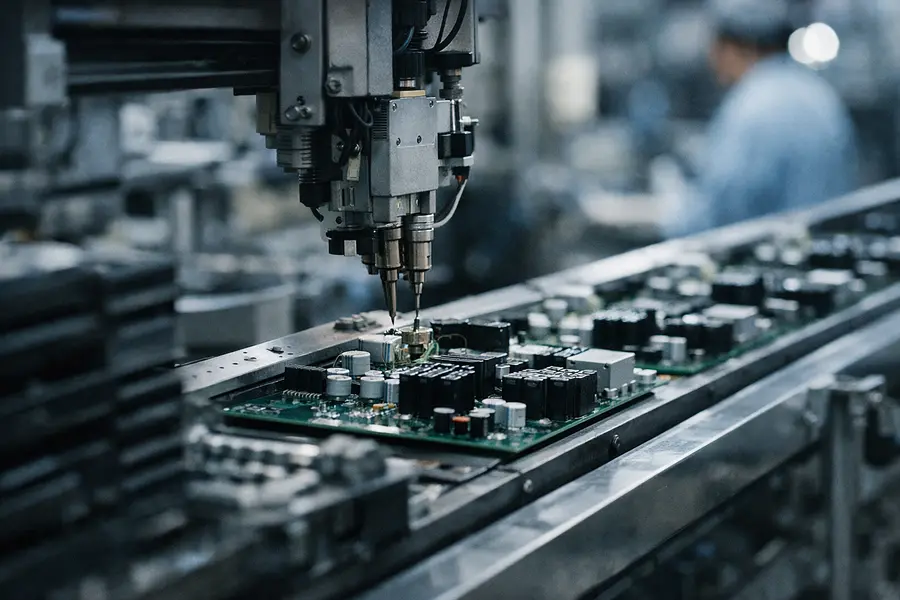
Progress in the Intel Foundry segment supplied the structural argument beneath the headline earnings beat. The division posted $5.8 billion in revenue, up 31% year over year. Its operating loss narrowed to $2.1 billion from $3.2 billion in the year-earlier period — a $1.1 billion improvement that corresponds to the initial ramp of Intel's 18A process node, its most advanced manufacturing technology.
Yields for the 18A node reached approximately 85%, rising from 65% in the prior quarter. That progression matters because yield is the primary lever through which a new process transitions from cash-consuming to cash-generating. The next-generation 18A-P process — targeting a 9% clock-speed improvement or up to an 18% reduction in power consumption versus baseline 18A — entered risk production during the quarter.
External customer revenue, a closely watched indicator of third-party confidence in Intel's manufacturing capability, totaled $293 million, or roughly 5% of segment revenue. The foundry division remains structurally loss-making, but the direction of travel has shifted from deterioration to measurable recovery.
AI and Technology Angle
Intel's first AI PC platform built on 18A, codenamed Panther Lake, targets edge AI workloads, while the Clearwater Forest server platform is positioned against offerings from Nvidia and AMD in cloud and enterprise AI deployments. The 18A architecture incorporates RibbonFET transistors and PowerVia backside power delivery — a configuration that clears approximately 11% more usable die area than conventional front-side routing, enabling denser and more power-efficient chips.
The scale of global AI infrastructure investment has pulled forward demand for Intel's Xeon server CPUs. As AI agents require high-throughput general-purpose compute alongside GPU acceleration, the CPU has re-emerged as a critical bottleneck in large-scale AI deployments — a dynamic that benefits Intel directly.
What Comes Next
The breadth of the Q2 beat — across revenue, margins, and earnings per share — has shifted the tenor of the foundry-turnaround debate from whether the recovery is real to how fast foundry losses can be eliminated. External foundry customer revenue is the most consequential near-term signal; a sustained move above $500 million per quarter would indicate that third-party manufacturers are committing production volumes to Intel's nodes. On the product side, the commercial ramp of Panther Lake and Clearwater Forest through the second half of 2026 will determine whether AI-driven CPU demand holds at current levels or accelerates further.
Outlook
Intel's Q2 2026 INTC earnings represent the company's most convincing financial performance since the mid-2010s. The convergence of an AI-driven CPU upcycle, improving 18A process yields, and sustained cost discipline has closed the gap between the turnaround narrative and reported results. The foundry segment remains loss-making and external customer adoption is nascent, but the pace of improvement — $1.1 billion in year-over-year loss reduction in a single quarter — argues that the Intel foundry recovery is advancing ahead of earlier expectations. Whether the stock's 154% year-to-date gain prices that trajectory correctly will depend on execution in the second half.