Pomegra
CoreWeave shares dropped 5% Wednesday even as Michael Burry closed his AI infrastructure short, with investors pivoting from demand skepticism to the company's $35 billion debt load as rates climb.
- CoreWeave (CRWV) fell roughly 5% Wednesday to near $80, extending a 54% decline from its June 2025 all-time high of $183.58.
- Michael Burry's exit from his highest-profile AI infrastructure short removes a symbolic headwind but failed to reverse selling pressure driven by balance sheet concerns.
- With $640 million in quarterly interest expense and debt-to-equity of 7.39, CoreWeave faces compounding leverage risk in a tightening rate environment.
Lead
Shares of CoreWeave (CRWV) fell approximately 5% on Wednesday, September 10, sliding toward the $80 level even as news emerged that prominent short-seller Michael Burry had closed his most visible bearish position against the AI infrastructure complex. The counterintuitive move confirmed a shift in the dominant market narrative: the debate is no longer whether enterprise demand for AI compute exists, but whether the debt structures underpinning data center expansion can survive a sustained high-rate environment. With $35 billion in total debt and annualized interest costs approaching $3 billion, CoreWeave has become the focal point of that concern among ai stocks.
Why Did CRWV Fall After Burry Covered?
Burry's exit, which would ordinarily signal a short-squeeze catalyst or at least a relief rally, instead drew attention to the leverage dynamics that motivated his original thesis. The closure of his position did not negate the underlying risk - it transferred the argument from speculative demand skepticism to a harder, more quantifiable problem: cost of capital. CoreWeave carries a debt-to-equity ratio of 7.39, and its Q2 2026 interest expense of $640 million represents a quarterly charge that, annualized, approaches $3 billion - a figure that eclipses the company's entire 2024 revenue base. Traders read the signal as a changing of the guard: the macro case against the stock has shifted from a contested demand story to an arithmetic one.
The Debt Architecture Behind the Selloff
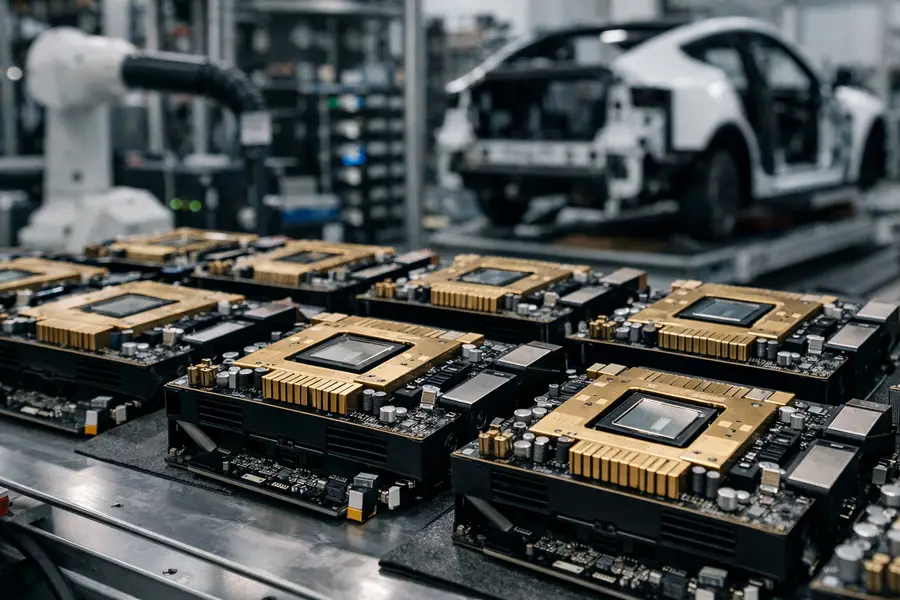
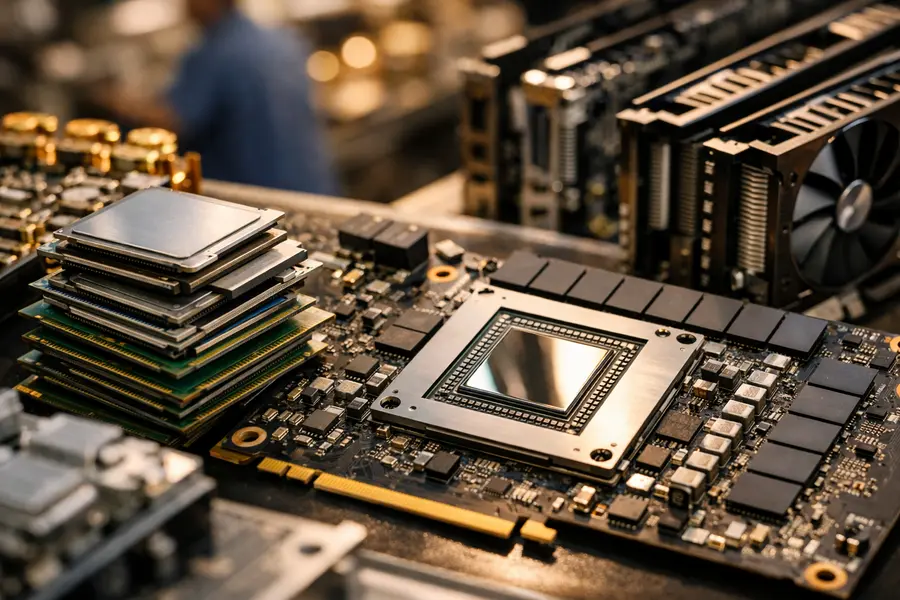
CoreWeave's balance sheet is the product of a deliberate build-fast strategy. The company expanded its data center footprint from roughly 70 megawatts at end-2023 to approximately 1.5 gigawatts by mid-2026, a scale-up financed through delayed draw-term loans, customer prepayments, and GPU-backed lending. At one point, the company raised $2.3 billion by pledging its Nvidia H100 processors as collateral - a form of asset-backed financing that functions efficiently when GPU values are stable but introduces mark-to-market vulnerability in a stress scenario.Full-year 2026 capital expenditure guidance stands at $35 billion to $39 billion, meaning CoreWeave is spending at a pace that keeps it structurally cash-flow negative even as revenue scales. The company reported 2025 revenue of $5.13 billion - a 168% year-over-year increase - while still logging a net loss of $1.20 billion. The revenue trajectory is not in dispute; it is the debt service layered on top of that growth that has repriced the risk profile.
What Does Rising Rate Exposure Mean for Debt-Financed Data Centers?
For companies in the AI cloud infrastructure segment, rate sensitivity operates through two channels. The first is direct: floating-rate facilities reset higher as benchmark rates move up, immediately expanding interest expense. The second is structural: the discount rate applied to long-duration contracted revenues rises, compressing the present value of CoreWeave's $56 billion in committed future revenue. Markets pricing at least one additional Federal Reserve rate action in the current cycle have made both channels more acute. Smaller AI infrastructure operators, including CoreWeave, have historically accessed GPU-backed lending at rates of 12% to 15%, meaningfully above the 5% to 6% range available to investment-grade hyperscalers - a spread that compounds as base rates move.
Market Reaction and the Broader AI Stocks Landscape
The selloff was not isolated. The broader cohort of debt-heavy AI infrastructure names came under pressure, reflecting a sector-level repricing rather than CoreWeave-specific news flow. The move underscores a divergence forming inside the invest in ai theme: asset-light model developers and software-layer companies have held firmer, while capital-intensive infrastructure operators have absorbed the rate-driven discount. Nvidia (NVDA), whose H100 and H200 GPUs underpin much of CoreWeave's collateral pool, held relatively steady, as has Microsoft (MSFT) and Amazon (AMZN), whose diversified cloud businesses and investment-grade balance sheets insulate them from the same pressure.
What Comes Next for CoreWeave's Balance Sheet?
The near-term calendar is manageable - CoreWeave's contracted revenue provides meaningful visibility, and its customer concentration in large-cap technology enterprises limits immediate default risk. However, the refinancing cycle ahead is a more consequential test. Debt raised during the 2023-2025 GPU financing boom will face renewal at rates that reflect the current environment rather than the conditions under which it was originally priced. If benchmark rates remain elevated - or if AI compute pricing faces competitive pressure as supply expands - the margin available to service $35 billion in debt narrows. The company's CapEx guidance implies it will add further obligations before its existing load is retired.