Pomegra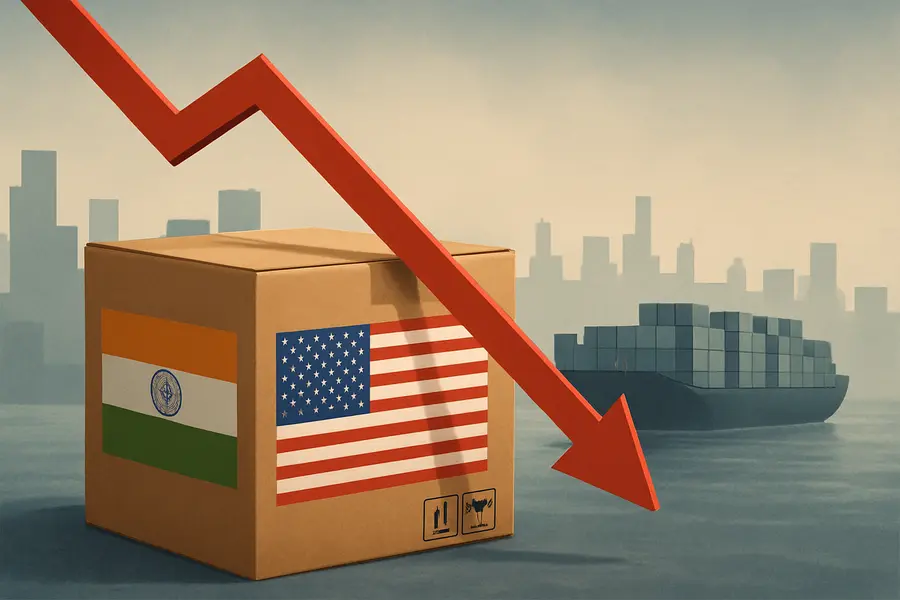
India agrees to eliminate tariffs on US industrial goods as the Trump India trade deal races toward a July 24 deadline, yet core sticking points in digital trade and agriculture remain unresolved.
- India committed to eliminating tariffs on all U.S. industrial goods and selected agricultural products under the US-India trade deal framework announced in February 2026.
- Washington and New Delhi concluded a two-day ministerial meeting on June 24 without resolving key differences, leaving the bilateral trade pact in a critical phase ahead of the July 24 tariff deadline.
- The U.S. Trade Representative's proposed 12.5% Section 301 tariff on Indian imports — tied to forced-labor allegations — adds fresh pressure to an already complex negotiation.
Lead
Washington and New Delhi wrapped a two-day ministerial round on June 24, 2026, without resolving the core disputes blocking a comprehensive US-India trade deal, even as negotiators race against a July 24 deadline after which a temporary 10 percent U.S. tariff concession on Indian imports expires and most goods revert to pre-April 2025 most-favored-nation rates. Commerce and Industry Minister Piyush Goyal and U.S. Trade Representative Jamieson Greer declared "substantial" progress on a first-phase bilateral trade agreement, but stopped short of announcing a concluded pact.
What Happened
The February 2, 2026 framework between President Donald Trump and Prime Minister Narendra Modi set the commercial architecture: the United States reduced its reciprocal tariff on Indian imports from 50 percent to 18 percent, while India pledged to eliminate tariffs and non-tariff barriers on U.S. goods — in principle, to zero. The White House fact sheet listed sweeping Indian concessions covering all U.S. industrial goods and a wide range of agricultural products, including dried distillers' grains, tree nuts, soybean oil, wine, spirits, and fresh fruit. India also committed to purchasing more than $500 billion of U.S. energy, technology, agriculture, and coking coal over five years.
That framework, however, remained aspirational. The June 22–24 ministerial talks in New Delhi — the most senior-level engagement since February — confirmed both sides are still working out the precise legal language, sector-specific carve-outs, and implementation timelines.
Sticking Points
Seven discrete issue-clusters are slowing progress, with three dominating the agenda.
Dairy and agriculture represent the most politically charged obstacle. U.S. producers are pushing for meaningful access to India's dairy market, which supports an estimated 70 million small-holder farmers and cooperatives. Farmer protests in recent months have sharpened New Delhi's caution; any perception of concessions to foreign dairy imports carries direct electoral risk. Digital trade and data localization divide the two sides along regulatory philosophy lines. U.S. technology companies — among them cloud and payments platform operators — demand free cross-border data flows as a baseline condition for investment and market access. India's Digital Personal Data Protection Act of 2023 (DPDP Act) establishes domestic data processing mandates that Washington argues function as non-tariff barriers. Neither side has shown willingness to cede ground. Non-tariff barriers and sanitary standards continue to wall off Indian food and pharmaceutical exports from the U.S. market, even as Washington seeks parallel Indian concessions on medical devices and automobiles. Negotiators have yet to agree on a mutual recognition framework for phytosanitary certification.The Section 301 Complication
A new variable entered the equation in June 2026. The USTR formally proposed an additional 12.5 percent Section 301 tariff on Indian imports following an investigation into alleged failures to prohibit trade in goods produced with forced labor — the higher of two proposed brackets, placing India alongside China, Japan, Brazil, and Saudi Arabia rather than the lower-rate group that includes the EU and Canada. India has categorically denied the forced-labor findings. New Delhi's position, articulated in ministerial communications, is that signing the broader bilateral trade agreement should serve as a shield against such unilateral tariff actions — effectively linking the two tracks. Public comment on the USTR proposal closes July 6, with hearings scheduled July 7, putting the two timelines on a collision course.
The Section 301 risk is compounded by a separate legal uncertainty: the U.S. Supreme Court struck down the administration's broad use of the International Emergency Economic Powers Act (IEEPA) as the statutory basis for reciprocal tariffs, forcing the Treasury and USTR to seek alternative legal pathways to preserve leverage.
Strategic Context
For India, the bilateral trade negotiations are embedded in a wider strategic calculus. New Delhi is seeking a competitive tariff advantage over rival manufacturing hubs — Vietnam, Thailand, Indonesia, and China — as global supply chains continue to diversify away from single-country concentration. A favorable outcome would cement India's position as a preferred destination for U.S. companies relocating production.
For the Trump administration, a concluded deal with the world's most populous country and a fast-growing consumer market would demonstrate diplomatic and trade-policy capacity ahead of a crowded legislative calendar. India's $500 billion energy purchase commitment — spanning liquefied natural gas, coal, and civil nuclear technology — addresses domestic political priorities around export revenues and manufacturing employment.
Bilateral goods trade between the two countries reached approximately $130 billion in 2025, with the U.S. running a deficit of roughly $45 billion. Services trade, where the U.S. holds a surplus, has been a secondary but contested dimension of the talks.
Outlook
The July 24 tariff expiration date is functioning as a forcing mechanism, but the gap between a press-conference framework and an operational, sector-specific agreement remains substantial. On agriculture, digital trade, and the Section 301 overlay, the positions are not yet bridged. A narrow interim arrangement — covering industrial goods tariffs, select agricultural lines, and a Section 301 carve-out — is the most likely near-term outcome if negotiators move fast enough. A comprehensive Trump India trade deal covering services, data flows, dairy, and regulatory harmonization is a longer-horizon objective. How both governments manage the next thirty days will determine whether the February framework becomes durable policy or another stalled bilateral agreement.
Mentioned tickers: N/A