Pomegra
Houthi claims on a Saudi refinery, port and power plant and two mined tankers near Hormuz kept the crude oil price near $92 as supply glut fears held.
- Houthis claimed strikes on Saudi Arabia's Rabigh refinery, Jizan port and Al-Shuqaiq power station; Riyadh has not confirmed damage.
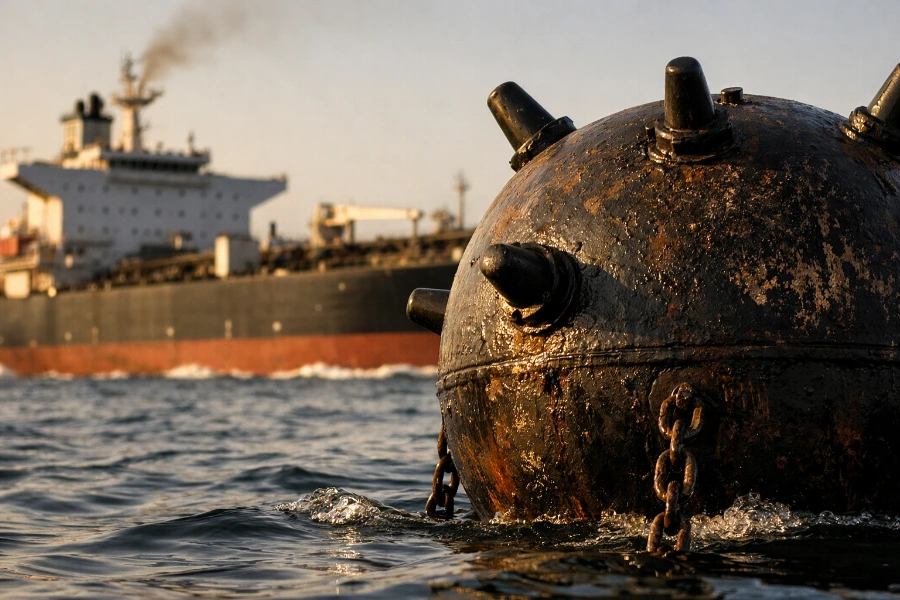
- Iran's navy said two tankers caught fire after hitting mines east of the Strait of Hormuz on Sunday.
- Brent traded near $92 a barrel on Monday, after a third straight weekly loss, as oversupply worries outweighed the attacks.
Lead
Yemen's Houthi movement said it struck three Saudi targets over the weekend, and tankers were hit on the Gulf's main export route. The group claimed a direct hit on the Rabigh oil refinery on the Red Sea coast on Sunday, after earlier claiming attacks on the Al-Shuqaiq power station and the port of Jizan. Saudi authorities had not confirmed any damage by Monday. Separately, the Iranian navy said two tankers caught fire east of the Strait of Hormuz after striking naval mines, and the UK maritime security agency UKMTO reported a tanker incident involving military forces in the Gulf of Oman. Brent crude traded near $92 a barrel in early Monday trade, with WTI at about $83.
What Did the Houthis Claim to Hit?
The Houthis claimed three strikes on Saudi infrastructure between Friday and Sunday. A spokesman said the group hit the Al-Shuqaiq power station and Jizan port with "accurate and direct" strikes that caused extensive damage. On Sunday it said it had struck the Rabigh refinery.
Rabigh is home to Petro Rabigh, a refining and petrochemical complex developed by Saudi Aramco (2222.SR) and Sumitomo Chemical (4005.T). Videos of a fire at the site circulated online, but the extent of any damage has not been established.
The strikes followed a Saudi-led coalition "special operation" on Friday against the Red Sea port of Hodeidah. The coalition said it targeted facilities used to smuggle weapons and ballistic missiles. The Houthis said coalition strikes killed 41 people in 24 hours and warned airlines that Saudi airspace was unsafe. The two sides have traded attacks since a four-year truce in Yemen's civil war collapsed in July.
What Happened to the Tankers Near Hormuz?
Two tankers caught fire east of the Strait of Hormuz on Sunday after hitting mines, according to the Iranian navy. The Revolutionary Guard navy said two supertankers had "suffered explosions and were brought to a halt" at locations north of Ghanam Island and east of the strait. The identities of the vessels and the cause of the blasts have not been independently confirmed. Iran blames incidents on the enforcement of the US naval blockade of its ports.
The blockade was first imposed on April 13 after talks in Islamabad failed to end the war. It was reinstated on July 14 after a temporary ceasefire collapsed. UKMTO logged 31 attacks in the Hormuz area in October, the highest monthly total since the war began in February. It logged about 19 more in November through the 20th. On Friday, an outbound tanker was struck about eight nautical miles north of Khasab, Oman, and caught fire.
Why Is the Crude Oil Price Not Rising Faster?
Oil is not rallying because the market is pricing a supply surplus ahead, and the attacks have not cut flows enough to change that. Brent settled at $92.57 on Friday, up 59 cents on the session but down about 3.4% on the week. Brent was at $92.29 early Monday, and some contracts were down about 0.5%, near $92.08.
Hormuz volumes have recovered from the wartime trough. Preliminary Kpler data showed throughput of about 8.3 million barrels a day in the week to November 11, against 17.1 million before the war. Regional shipments excluding Oman have reached roughly three quarters of prewar levels. The US Energy Information Administration expects Brent to average $99 in December and $86 in 2027 as Middle East supply returns and inventories rebuild.
New attack reports have triggered short-covering rallies. Confirmation that cargoes keep moving has then restored the downtrend.
Geopolitical Dimension
The Houthi claims widen the risk map beyond Hormuz. Rabigh and Jizan sit on the Red Sea, where Saudi Arabia has built export capacity that bypasses the Gulf chokepoint. Saudi Arabia's East-West pipeline and Red Sea terminals are the main alternative route when Hormuz is disrupted. Attacks there erode the insurance value of that alternative.
The risks are tied together. Iran's mine and projectile campaign targets the Gulf route, and the Houthis, who are aligned with Tehran, now claim strikes on the western coast. The US blockade keeps Iranian crude off the market and invites Iranian counteraction against shipping. The three pressure points make a single-chokepoint outage less likely but a broader rise in freight and war-risk premiums more likely.
What Comes Next for Oil Prices?
The next scheduled test is the OPEC+ meeting on November 29, which sets the 2027 output framework. A decision to hold output would reinforce the surplus view. Verified damage at Rabigh or a confirmed loss of Red Sea export capacity would raise the risk premium on Brent quickly.
Three variables will decide near-term direction over the next three to twelve months. The first is whether Saudi facilities sustain lasting outages. The second is whether mine strikes push insurers and owners to cut Hormuz transits again. The third is whether Washington extends strikes on Iran or negotiates, a decision President Donald Trump has so far delayed. Prices near $92 sit between the $89 to $96 range that traders have been watching and the EIA's $99 December forecast.
Outlook
The weekend's attacks add to a pattern of rising incident counts at sea and escalating exchanges between Saudi Arabia and the Houthis. Markets have so far treated them as a risk premium rather than a supply shock, with Brent about 3% lower on the week. That balance is fragile. Confirmed damage to Saudi export or refining assets, or a sharp fall in Hormuz transits, would shift the crude oil price toward the upper end of its recent range. A holding pattern at the OPEC+ meeting would keep the surplus narrative intact.
Mentioned tickers: 2222.SR, 4005.T