Pomegra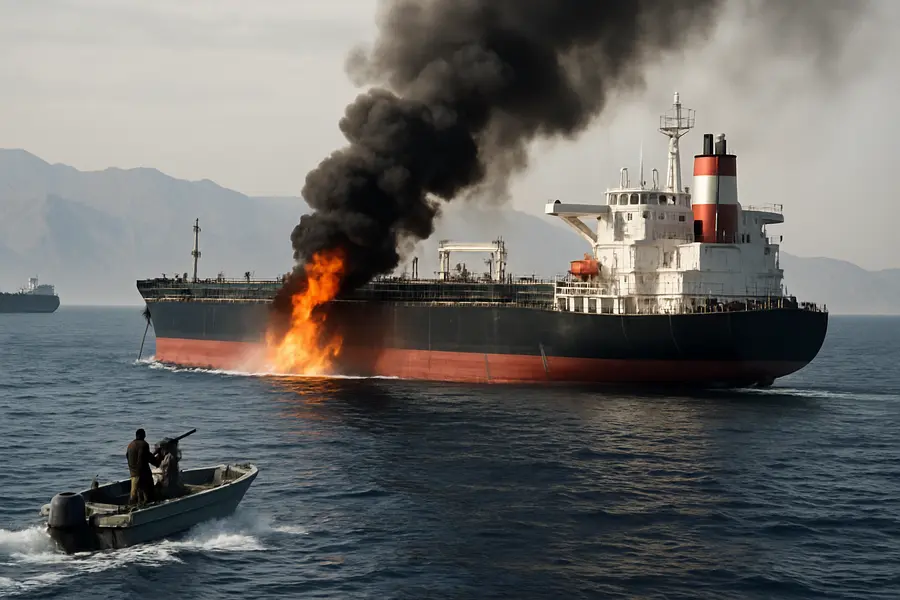
Iran's IRGC drone strike on an Evergreen container ship halts UN evacuation operations, lifts crude 1.9%, and tests the fragile U.S.-Iran peace deal signed eight days prior.
- Iran's IRGC struck Evergreen's Ever Lovely with a drone on June 25, damaging the bridge with no reported casualties
- The IMO immediately suspended evacuation operations for 11,000+ seafarers stranded in the Persian Gulf since February
- Benchmark crude gained 1.9% on renewed fears over global shipping risk and Hormuz safety
Lead
Iran's Islamic Revolutionary Guard Corps struck the Evergreen Marine container ship Ever Lovely with a drone on June 25, 2026, as the Singapore-flagged vessel exited the Strait of Hormuz approximately 14 kilometres southeast of Oman's port of Dahit. The attack damaged the ship's bridge without casualties, prompting the International Maritime Organization to immediately suspend an active programme to evacuate hundreds of stranded vessels and more than 11,000 seafarers from the Persian Gulf — and raising urgent questions over the durability of a U.S.-Iran peace deal signed eight days earlier.
What Happened
The 9,532-TEU Ever Lovely, operated by Taiwan-based Evergreen Marine, was transiting outbound through the strait when a projectile struck its starboard side, according to the United Kingdom Maritime Trade Operations agency. The British naval advisory body placed the vessel close to the Omani coast at the moment of impact.
The strike came hours after Iran's Persian Gulf Strait Authority warned commercial shipping to avoid routes established without Tehran's prior approval. Iran's military subsequently declared any transit route through the Strait of Hormuz established without its authorisation "unacceptable and dangerous," reinforcing its assertion of operational control over the waterway.
Peace Deal Under Pressure
The attack directly tests the framework agreed on June 17, when President Donald Trump and Iranian President Masoud Pezeshkian signed a memorandum of understanding intended to end the conflict that has disrupted the waterway since late February 2026. That deal committed Iran to reopening the strait without transit tolls for a 60-day window and granted Tehran a formal co-oversight role alongside Oman.
Trump responded to the strike by accusing Iran of a "foolish violation" of the ceasefire. The incident reanimates unresolved disputes embedded within the peace deal framework, including disagreements over financial incentives for Iran, the scope of nuclear inspections, and Iran's assertion of sovereign routing authority over the strait — alongside Israel's parallel military operations in Lebanon.
Global Shipping Risk and Market Reaction
The Ever Lovely attack immediately repriced global shipping risk. Benchmark crude oil climbed 1.9% on renewed concern that Gulf energy flows could remain disrupted longer than markets had factored following the June 17 agreement.
The Strait of Hormuz is the world's most critical maritime chokepoint, through which roughly 20% of globally traded oil transits daily. Its effective closure since February rerouted tanker traffic around the Cape of Good Hope, extending voyage times by weeks, inflating freight rates, and tightening refined product markets across Europe and Asia.
The IMO's evacuation programme — the first organised maritime relief effort of its kind for the crisis — had begun shepherding stranded vessels and crews toward safety before Thursday's attack forced its suspension. More than 11,000 seafarers aboard hundreds of merchant vessels remain without a clear egress pathway.
Strategic Context
Iran's decision to strike a commercial vessel under active peace deal conditions reflects a deliberate exercise of maritime leverage. By targeting an outbound ship using an IMO-designated route not sanctioned by Tehran, Iran demonstrates it retains effective veto power over Hormuz safety regardless of diplomatic frameworks — a posture consistent with its maximum-pressure playbook since the conflict began.
The selection of an Evergreen Marine vessel amplifies the symbolic weight of the strike. Evergreen ranks among the world's largest container operators, with fleet exposure across Asia-Europe and trans-Pacific trades, ensuring the attack registers across global supply-chain risk desks immediately.
For Washington, the incident creates a constrained policy space: significant pressure on Tehran risks unravelling the peace framework entirely, while a muted response may signal tolerance for future violations of the maritime security regime the administration has sought to underwrite.
Hormuz Safety and Forward Risk
The resumption of IMO evacuation operations is now contingent on security guarantees that no party has been able to credibly supply. Iran's insistence on routing authority, paired with its demonstrated willingness to strike non-compliant vessels, means Hormuz safety remains structurally uncertain even within a nominal ceasefire architecture.
Shipping insurers have maintained elevated war-risk premium loadings on Gulf-bound voyages since February. The June 25 maritime security vessel attack is expected to sustain or widen those premiums, raising the total landed cost of energy imports from the region and complicating any near-term normalisation of commercial traffic through the strait.
Outlook
The Ever Lovely strike has broken the fragile post-June 17 calm and reset the risk calculus for operators contemplating Gulf transits. The IMO evacuation remains suspended pending fresh security consultations, and U.S.-Iran diplomatic engagement continues under significant new strain. The fundamental tension between Tehran's demand for operational control of the strait and Washington's commitment to freedom of navigation was not resolved by the June 17 memorandum. Until that structural fault line is addressed, maritime security in the Strait of Hormuz and the Gulf of Oman will remain contingent rather than guaranteed.
Mentioned tickers: 2603.TW