Pomegra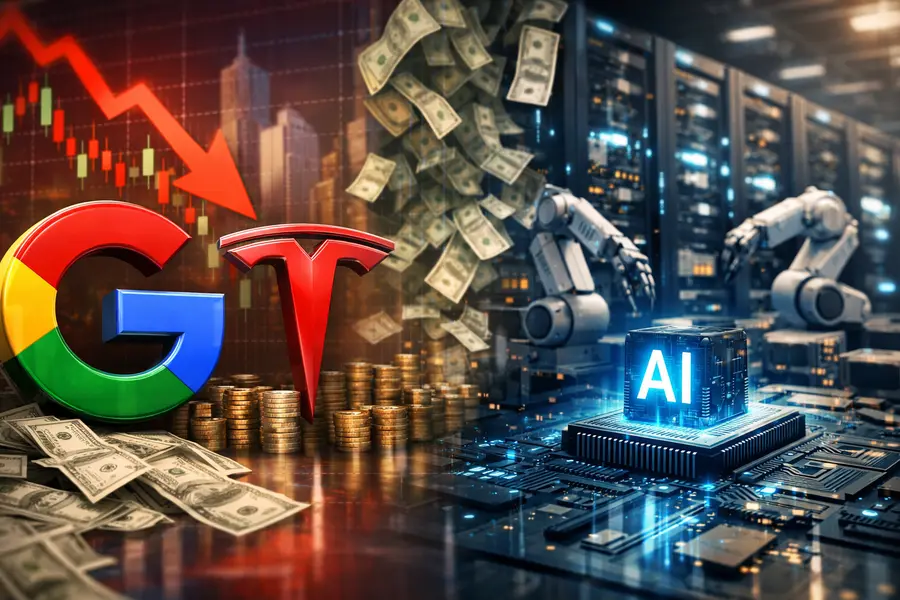
Alphabet and Tesla's second-quarter earnings triggered the Magnificent Seven's steepest single-session wipeout since April 2025, erasing nearly $800 billion in collective market value while a basket of their hardware suppliers surged an average of 11%.
- Alphabet and Tesla together lost roughly $500 billion in market value this week as AI capital expenditures outpaced cash generation.
- The Magnificent Seven shed $797 billion in a single session on July 23 — their worst combined decline in over a year.
- Tech suppliers including Micron and Nvidia gained while the mega-cap spenders fell, redefining where AI dollars flow.
Lead
New York, July 25, 2026 — Shares of Alphabet (GOOGL) and Tesla (TSLA) plunged after second-quarter results confirmed that artificial-intelligence infrastructure spending is accelerating faster than either company can convert it into free cash flow. Alphabet fell as much as 8%, shedding roughly $330 billion in market capitalization in a single session, while Tesla shed approximately 14.5% — briefly pushing its market value below $1 trillion — and wiped out more than $140 billion. The broader Magnificent Seven collectively erased $797 billion on July 23 alone, their worst single-day drawdown since April 2025.What Happened
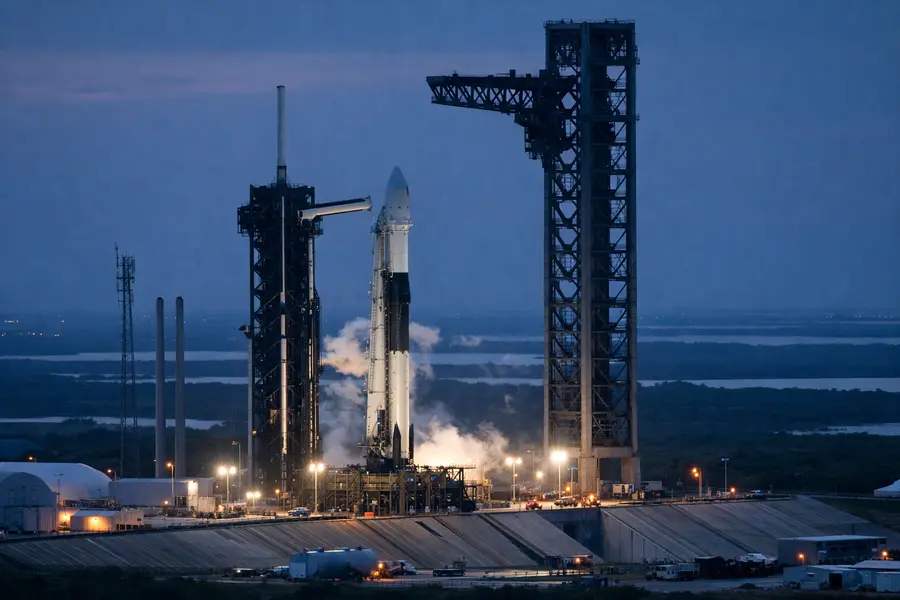
Both companies reported second-quarter revenue that cleared Wall Street's bar, but the figures that rattled investors were buried in the capital expenditure lines. Alphabet disclosed quarterly capex of $44.9 billion — nearly double the $22.4 billion it spent in the same period of 2025 — and raised its full-year spending guidance to between $195 billion and $205 billion, with the company warning that the figure will climb further in 2027. The surge pushed Alphabet's free cash flow into negative territory for the first time in its history as a public company, burning $5.9 billion in the quarter.
Tesla told investors its capex jumped 142% year-on-year to $5.79 billion in the quarter, with chief executive Elon Musk describing 2026 as "a massive capex year" and reaffirming guidance of more than $25 billion for the full year. Free cash flow turned negative by approximately $1.1 billion — Tesla's first cash burn in more than two years — even as total revenue rose 26% year-on-year to $28.2 billion, surpassing $100 billion on a trailing twelve-month basis for the first time. Adjusted earnings per share of $0.33 missed consensus estimates.Market Reaction
The tech stock sell-off rippled across the Nasdaq, which fell nearly 4% over the following five trading sessions. The five largest AI spenders — Alphabet, Microsoft, Amazon, Meta, and Tesla — declined an average of 9%. Tesla short sellers captured an estimated $9 billion in gains as the stock neared its $308 intraday trough.
The Google Tesla market cap loss, taken together, totaled roughly $500 billion across the week — a figure that Yahoo Finance's Chart of the Day framed as the definitive illustration of the week's divergence between infrastructure buyers and infrastructure sellers.
Suppliers Cash In
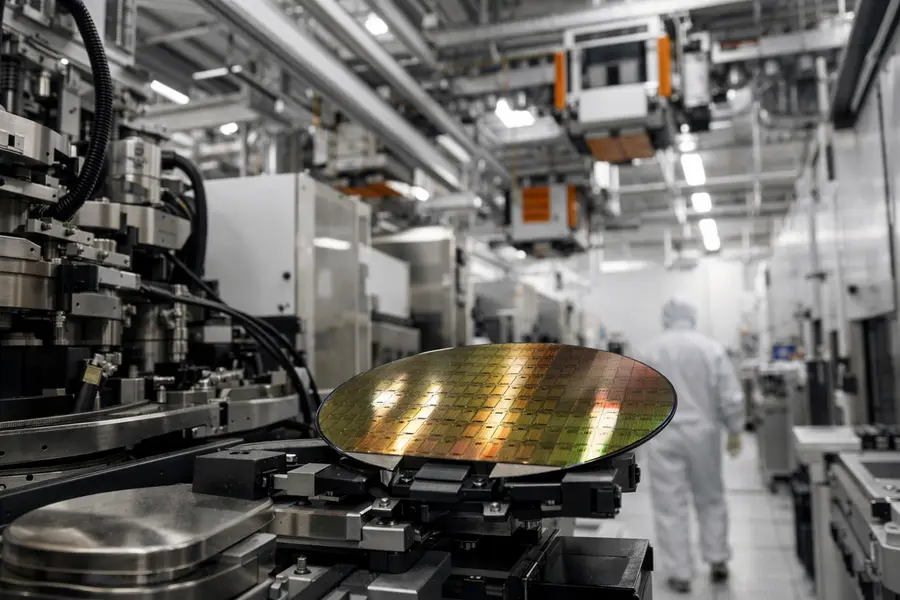
While the mega-cap spenders absorbed the sell-off, their hardware and memory vendors moved in the opposite direction. A basket of tech supplier stocks — memory makers, server builders, and data-center landlords — rose an average of 11% over the same period, precisely as their largest customers confirmed they would spend more, not less.
The AI Stock Bubble Debate
The events of the week brought renewed intensity to the AI stock bubble debate. Investors who have funded open-ended infrastructure commitments for three consecutive years are increasingly demanding a timeline for returns. The concern is not that AI is failing commercially — Alphabet's Search and Cloud segments both grew — but that the magnitude of capital deployment now exceeds any near-term earnings uplift.
Alphabet's commitment of $195 billion to $205 billion for 2026 alone exceeds the GDP of most mid-sized economies. Tesla's equivalent commitment, directed largely at AI supercomputing and its Optimus robotics program, more than doubled year-on-year at a moment when the company's automotive margins remain under pressure. Neither company provided a definitive payback horizon, and that absence drove the institutional selling.
The Magnificent Seven had already surrendered approximately $3 trillion in combined market value during June 2026, and the July earnings season has extended that drawdown. Year-to-date, the group has shed more than $2 trillion in July alone.
Strategic Context
The rotation from AI spenders to AI suppliers reflects a structural shift in how markets are pricing the tech stock sell-off. Investors are not abandoning AI as a theme; they are repositioning within it — moving capital from companies absorbing the cost of AI infrastructure to companies monetizing that same spending cycle. Memory shortages, server rack demand, and data-center power constraints make the supplier end of the trade a direct, lower-valuation proxy for the same secular growth.
For Alphabet, the free cash flow inversion carries additional weight. The company halted share buybacks in the quarter, removing a key demand signal that has historically underpinned GOOGL's multiple. For Tesla, negative free cash flow at a moment of depressed auto margins raises questions about capital prioritization that Musk has so far deflected rather than resolved.
Outlook
The immediate catalyst for the tech stock sell-off — earnings-driven concern over AI capex sustainability — is unlikely to dissipate before the next earnings cycle. Alphabet's $195–$205 billion spending commitment and Tesla's $25 billion-plus capex guidance frame the rest of 2026 as a period in which both companies will prioritize infrastructure over near-term cash returns. Whether that spending translates into a step-change in revenue — particularly in Alphabet's AI-native cloud services and Tesla's robotaxi and Optimus programs — will determine whether the current discount is a correction or the beginning of a deeper revaluation. In the meantime, tech supplier stocks with direct exposure to the AI infrastructure build continue to attract the capital rotating out of the spenders.
Mentioned tickers: GOOGL, TSLA, MU, NVDA, MSFT, AMZN, META, AAPL