Pomegra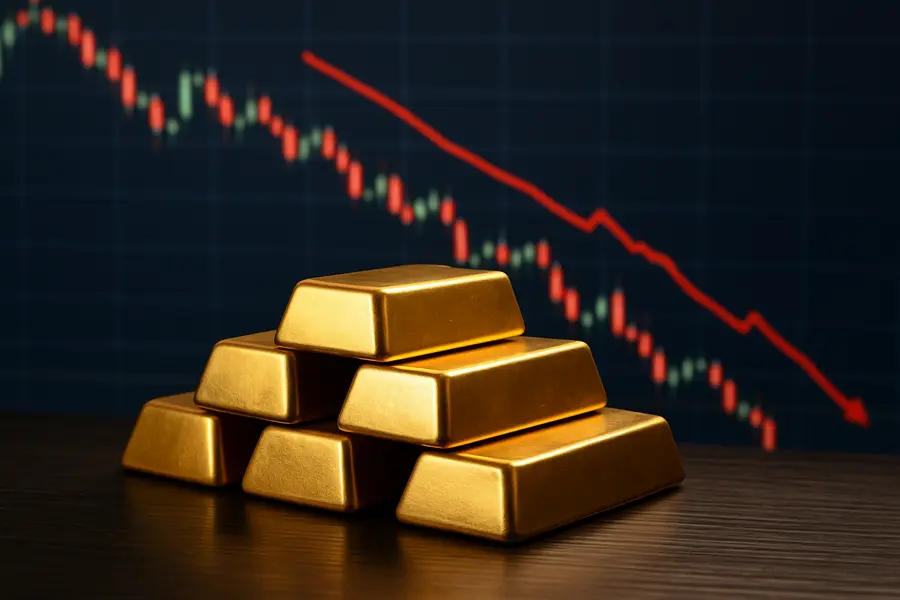
https://upload.wikimedia.org/wikipedia/commons/d/d7/Gold_bullion_bars.jpg
- Gold futures dropped to $4,322.80 on June 8, approaching an 11-week low, as Israel and Iran agreed to halt direct missile strikes following a Trump appeal.
- Silver also fell sharply as easing Middle East hostilities drained safe-haven demand across the broader precious metals complex.
- The de-escalation reverses a portion of the $77 gold surge recorded on June 4, when early Middle East peace signals first emerged.
Gold fell to $4,322 on June 8 as Israel and Iran pledged to end mutual missile strikes, unwinding the safe-haven premium that had sustained precious metals through the week's hostilities.
Lead
Gold futures fell as low as $4,322.80 per troy ounce on Monday, June 8, approaching an 11-week low, after Israel and Iran jointly pledged to halt mutual missile strikes. The announcement removed a geopolitical risk premium that had kept precious metals elevated through the prior week's most severe exchange of hostilities since an April ceasefire was agreed.What Happened
Gold opened at $4,354 per troy ounce on June 8, down 0.3% from Friday's close of $4,365.30, before extending losses to $4,322.80 by 7:05 a.m. ET. Silver posted steeper declines on the same session, falling sharply as traders unwound safe-haven positioning across the precious metals complex.
The pledges to halt direct strikes came late Monday following a personal appeal from U.S. President Donald Trump, who has sought a negotiated resolution to the broader Israel-Iran conflict that has unsettled global commodity markets throughout 2026. Both sides confirmed the halt publicly, citing the U.S. call for de-escalation.
During the prior week, as Israeli and Iranian forces exchanged the most intense missile strikes since April, gold had traded near $4,500, underpinned by elevated war-risk premiums. The June 8 retreat toward an 11-week low reflects the rapid repricing as hostilities formally paused.
Market Reaction
The decline reversed a significant portion of the gains accumulated during the escalation. On June 4, when early signals of Middle East peace progress emerged alongside U.S. House passage of a resolution limiting presidential war powers on Iran, gold surged $77 — or 1.74% — to $4,519.00 per ounce. Silver climbed 3.08% to $75.38 on that same session as the U.S. dollar and crude oil sold off sharply.
Monday's retreat to $4,322 erased nearly the entirety of that advance. The pattern confirms that precious metals are trading in tight lockstep with incremental signals from the Israel-Iran diplomatic track, with buyers and sellers repricing geopolitical risk in near-real time.
Geopolitical Dimension
The halt in direct missile exchanges represents a meaningful pause in a conflict that began with U.S.-Israeli strikes targeting Iranian nuclear infrastructure in early 2026. Trump's personal intervention follows months of shuttle diplomacy and marks the most substantive acknowledgment from both sides that direct strikes are off the table, at least temporarily.
The agreement stops short of a formal ceasefire, and the framework for broader Israel-Iran negotiations remains unresolved. Market participants continue to price a material probability of renewed escalation, particularly given the absence of any verified weapons-monitoring mechanism or third-party guarantor.
Strategic Context
Gold's broader 2026 rally has rested on three overlapping drivers: safe-haven demand from the Middle East conflict, persistent central bank accumulation, and inflation hedging. Market consensus estimates that a geopolitical premium of $400 to $600 per ounce — roughly 8% to 12% of price levels recorded in late May — had been embedded in bullion since U.S.-Israeli strikes began earlier this year. A durable cessation of hostilities places that entire premium at structural risk.
The de-escalation arrives alongside a shifting macro backdrop. Stronger-than-expected U.S. employment data has reinforced Federal Reserve rate-hike expectations, with markets now pricing roughly a 70% probability of a December move. Rate-sensitive assets, including gold, face additional headwinds if the Fed signals a sustained restrictive posture at its upcoming meeting.
What Comes Next
U.S. Consumer Price Index data due later this week will be scrutinized for evidence that Middle East supply disruptions — particularly in energy — are easing alongside the military pause. Any upside inflation surprise could partially offset the gold price decline by reinforcing the inflation-hedge thesis.
The durability of the Israel-Iran halt is the dominant near-term variable. Fresh hostilities would rapidly re-inject safe-haven demand into both gold and silver, with traders closely monitoring official statements from Tehran and Jerusalem for any sign of breakdown in the arrangement.