Pomegra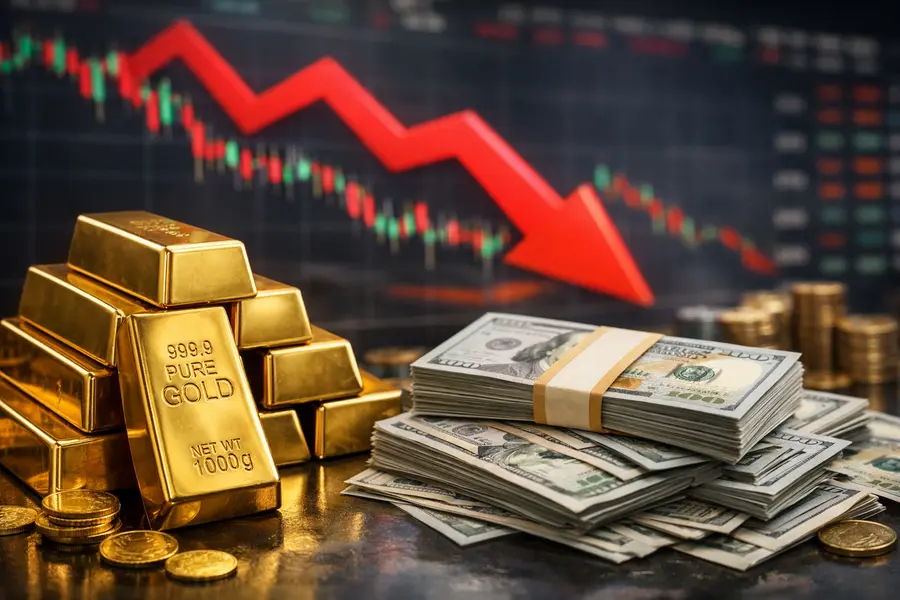
Gold fell below $4,100 an ounce on July 13 as investors rotated into cash despite fresh US-Iran strikes, betting rate hikes will outweigh safe-haven demand.
- Gold dropped as much as 1.4% to near $4,060/oz on July 13, retreating from recent highs above $4,100.
- Brent crude jumped 3.25% to $78.48 and WTI rose 3.29% to $73.76 after weekend strikes closed the Strait of Hormuz.
- The 10-year Treasury yield edged up to 4.549% as traders priced higher odds of near-term rate hikes.
Lead
Gold prices moved lower on Monday, July 13, 2026, after a weekend of renewed military strikes between the United States and Iran, with bullion sliding as much as 1.4% to roughly $4,060 an ounce even as the conflict intensified. The decline marks an unusual break from gold's traditional role as a safe haven asset, as investors instead shifted capital into cash and short-duration instruments on expectations that surging energy prices will force central banks to keep interest rates elevated for longer.
What Happened
Iran targeted US facilities across the Gulf on Sunday and said it had again closed the Strait of Hormuz, escalating a conflict that had appeared close to resolution under an interim US-Iranian agreement signed last month. That accord had set a 60-day negotiating window to reopen the strait and wind down hostilities; the latest exchange of strikes has cast that timeline into doubt.
The renewed fighting sent energy markets sharply higher. Brent crude futures climbed 3.25% to $78.48 a barrel, while West Texas Intermediate gained 3.29% to $73.76, extending a five-day rally that has pushed oil prices up more than 9%. Gold, by contrast, fell alongside the escalation, dropping below the closely watched $4,100 level before trimming some losses later in the session.
Market Reaction
The gold price trend on July 13 reflected a tug-of-war between two competing forces. On one side, escalating conflict in the Middle East would typically be expected to lift demand for defensive assets. On the other, the inflationary shock from higher oil prices raised expectations that central banks will need to hike rates to contain price pressures — a dynamic that erodes the appeal of non-yielding precious metals relative to cash and short-term Treasurys.
The 10-year Treasury yield rose two basis points to 4.549%, while a firmer US dollar added further pressure on bullion. Gold recovered from its session lows as some investors reasserted safe-haven positioning, but the metal still closed the day in negative territory, underscoring how safe haven asset performance has become more contingent on the interest-rate outlook than on geopolitical risk alone.
Markets are also awaiting fresh US inflation data and commentary tied to Federal Reserve leadership speculation, both of which are shaping near-term expectations for the rate path and, by extension, gold's trajectory.
Strategic Context
Gold's inverse relationship with real yields has reasserted itself as the dominant driver of price action. When geopolitical shocks raise inflation expectations faster than they raise safe-haven demand, investors have historically rotated toward instruments offering a better inflation-adjusted return — a category that increasingly includes cash and short-term government paper rather than bullion. That is the dynamic playing out this week: the same conflict that might once have driven a flight to gold is instead reinforcing a flight to cash, because the primary transmission channel into markets has been energy-driven inflation rather than pure risk aversion.
Central bank buying, a structural support for gold prices through much of the past two years, has not been sufficient this session to offset the pressure from rising yields and a stronger dollar.
Geopolitical Dimension
The breakdown risk facing the interim US-Iran agreement carries implications well beyond bullion markets. The Strait of Hormuz remains one of the world's most critical energy chokepoints, and its closure — even temporarily — threatens to disrupt tanker traffic carrying a substantial share of global seaborne oil exports. Sustained disruption would keep upward pressure on energy prices, reinforce inflation expectations, and complicate monetary policy decisions across major economies still working to bring inflation back to target.
Should the conflict de-escalate and the 60-day negotiation framework hold, energy prices and inflation expectations could ease quickly, removing the current headwind for gold. A further breakdown, however, would likely sustain elevated oil prices and keep the rate-hike narrative — and the pressure on gold — in place.
What Comes Next
Near-term gold price direction will likely hinge on two variables: the trajectory of the US-Iran conflict and incoming US inflation data. A durable ceasefire or renewed progress on the interim agreement would likely ease energy-driven inflation fears, potentially restoring gold's traditional safe-haven bid. Conversely, further strikes or a prolonged Hormuz disruption would keep oil prices elevated, reinforce rate-hike expectations, and could extend gold's slide toward lower support levels.
Investors are also watching upcoming inflation readings and Federal Reserve communications for signals on the rate path, both of which will shape real yields and, in turn, the relative attractiveness of gold versus cash. Volatility in precious metals markets is expected to persist as long as the geopolitical and monetary policy signals continue to point in opposite directions.
Outlook
Gold's decline on July 13 illustrates how precious metals markets are weighing inflation and rate risk more heavily than immediate geopolitical danger. With oil prices surging on Strait of Hormuz disruption fears and Treasury yields ticking higher, cash has temporarily displaced bullion as the preferred defensive asset. The path forward for gold will depend on whether the US-Iran conflict escalates further or gives way to renewed diplomacy under the existing interim framework.