Pomegra
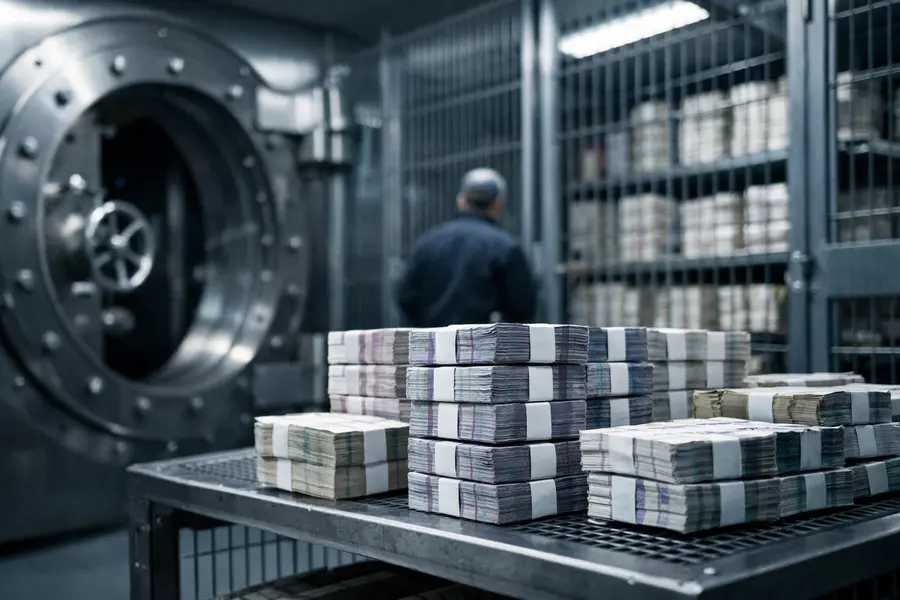
Precious metals extended their rally as gold bars vault holdings swelled and silver bullion demand accelerated, reflecting persistent investor anxiety over geopolitical and macroeconomic uncertainty.
- Gold climbed above $3,100 per troy ounce, reinforcing the metal's status as the premier safe-haven asset in volatile markets.
- Silver bullion approached $39.77, driven by both safe-haven flows and persistent industrial demand from the clean-energy sector.
- Central bank accumulation and ETF inflows into gold bars vault facilities continued to underpin prices at elevated levels.
Lead
Gold surpassed $3,100 per troy ounce and silver approached $39.77 on Sunday, August 2, 2026, as investors rotated into precious metals amid a broadening risk-off environment. The dual advance reflected sustained safe-haven demand, with physical gold bars vault inventories rising across major custodians in London, Zurich, and New York even as equity markets showed signs of stress.
What Happened
Gold extended a multi-session rally to breach the $3,100 threshold, a level that had previously attracted waves of profit-taking. The move came on above-average volume in Comex futures, where the most-active contract settled near $3,104 before edging marginally higher in after-hours trade. Silver bullion tracked the advance, touching $39.77 — its highest print in several months — before consolidating just below that level.The gold-to-silver ratio tightened modestly to approximately 78:1 as silver's pace of gains slightly outstripped gold on a percentage basis, a pattern that historically signals broadening conviction in the precious-metals complex rather than a narrowly defensive bid confined to gold alone.
Market Reaction
Spot gold and futures contracts moved in lockstep, with the cash-to-futures spread remaining orderly — a sign that physical delivery pipelines and gold bars vault capacity are functioning without stress. Exchange-traded products backed by physical metal registered net inflows for the session, reversing a brief period of outflows seen earlier in the quarter when equity markets had stabilized.
Silver bullion demand was notable for its breadth: purchases spanned both investment-grade bars held in allocated accounts and smaller retail formats, pointing to participation from both institutional allocators and individual investors seeking portfolio protection. Options markets reflected elevated implied volatility for near-dated silver contracts, suggesting traders are positioning for continued price movement rather than a near-term reversion.Strategic Context
The renewed safe-haven bid in precious metals follows a confluence of factors that have been building since mid-July 2026. Elevated sovereign debt levels in major economies, unresolved trade frictions, and uncertainty around the pace of central bank rate adjustments have collectively eroded confidence in paper assets.
Central banks — which collectively purchased a record quantity of gold over the prior two years — have not publicly signaled any reduction in their accumulation programs. Emerging-market central banks in particular have continued shifting reserve compositions away from dollar-denominated instruments toward physical gold bars vault holdings, a structural trend that has provided a persistent floor beneath prices even during periods of dollar strength. Silver occupies a dual role that has become increasingly prominent: in addition to its monetary heritage as a safe-haven asset, it serves as a critical industrial input for photovoltaic panels, electric vehicle components, and advanced electronics. This industrial demand component provides an additional demand layer that pure safe-haven assets such as government bonds do not enjoy, lending silver bullion a distinct fundamental support structure.Geopolitical Dimension
Geopolitical tensions across multiple theaters have reinforced the safe-haven narrative. Uncertainty over trade policy between the United States and key partners, alongside ongoing conflict risks in the Middle East and Eastern Europe, has pushed risk premiums higher across asset classes. Precious metals, which carry no counterparty risk and are accepted globally as stores of value, have been primary beneficiaries of this environment.
Currency dynamics have also contributed. The U.S. dollar has exhibited volatility rather than a sustained upward trend, removing one of the more common headwinds for gold and silver bullion prices. When the dollar weakens or trades erratically, gold denominated in other currencies becomes more attractive globally, broadening the buyer base.
Supply and Physical Market Dynamics
On the supply side, mine output has not kept pace with demand growth. Major gold-producing regions — including South Africa, Australia, Canada, and Peru — have faced cost inflation, permitting delays, and in some cases operational disruptions, constraining the flow of newly mined metal into the market. The consequence has been tighter physical availability, evidenced by lease rates for gold bars vault storage trending upward and premiums for immediate delivery rising in key trading hubs.
Silver bullion supply faces analogous pressures. Primary silver mines have seen grade depletion at mature operations, while recycled silver — which accounts for a meaningful share of annual supply — has not expanded sufficiently to fill the gap. The result is a market that is structurally tighter than headline price action might suggest.What Comes Next
Several catalysts are likely to remain in focus over the coming weeks. Central bank policy decisions in the United States and Europe will be scrutinized for any signals on the trajectory of real interest rates, which historically move inversely with gold prices. A sustained decline in real yields would be expected to provide additional upward pressure, while any surprise hawkish pivot could test current support levels.
For silver bullion, demand from the solar manufacturing sector — particularly in China, which accounts for a dominant share of global panel production — will be a key variable. Any acceleration in clean-energy build-out commitments would tighten the supply-demand balance further.