Pomegra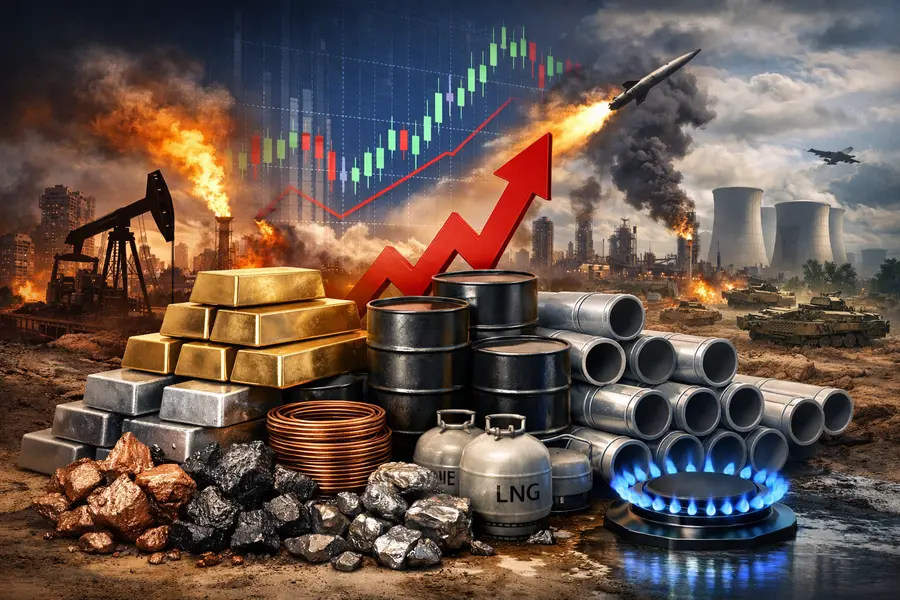
A cascade of geopolitical shocks — from the Strait of Hormuz closure to disruptions in Qatar's liquefied natural gas exports — is triggering the sharpest commodity repricing in four years, propelling metals demand and reshaping the global energy outlook through at least 2030.
- World Bank projects overall commodity prices to rise 16% in 2026, with energy up 24% — the steepest annual surge since Russia invaded Ukraine in 2022.
- Qatar's LNG shutdown has removed roughly 20% of global supply, with spot prices surging as much as 143% in parts of Asia.
- Precious metals demand is forecast up 42% this year as gold hits successive records, while base metals face structural deficits tied to the energy transition and defense re-armament.
---
Lead
The World Bank's April 2026 Commodity Markets Outlook — the most comprehensive review of global commodity flows — estimates that the war in the Middle East has delivered the largest oil supply shock on record, removing an initial 10 million barrels per day from world markets and sending energy, metals, and fertilizer prices to multi-year highs simultaneously. The confluence of a geopolitical shock with pre-existing structural deficits in critical minerals has turned 2026 into a defining year for commodity markets.
---
What Happened
Attacks on energy infrastructure across the Persian Gulf — and the closure of the Strait of Hormuz, through which roughly 20% of global seaborne crude oil trade passes — triggered a chain reaction across every major commodity class. Brent crude, which averaged $69 a barrel in 2025, is now forecast to average $86 a barrel for full-year 2026, with the World Bank's adverse scenario placing the average as high as $115 a barrel should damage to oil facilities prove lasting.
The disruption extended beyond oil. Iranian strikes on two QatarEnergy facilities at Ras Laffan and Mesaieed Industrial City forced a suspension of LNG production at the world's largest liquefied natural gas complex. The shutdown removed approximately 10.2 billion cubic feet per day — close to 20% of global LNG trade — in a single week. European natural gas futures surged more than 40%, Asian LNG benchmark prices jumped 39%, and spot cargo prices in parts of Asia spiked 143%. The IEA described the episode as "the largest energy security crisis the world has ever faced."
---
Metals Demand: Structural Forces Amplified
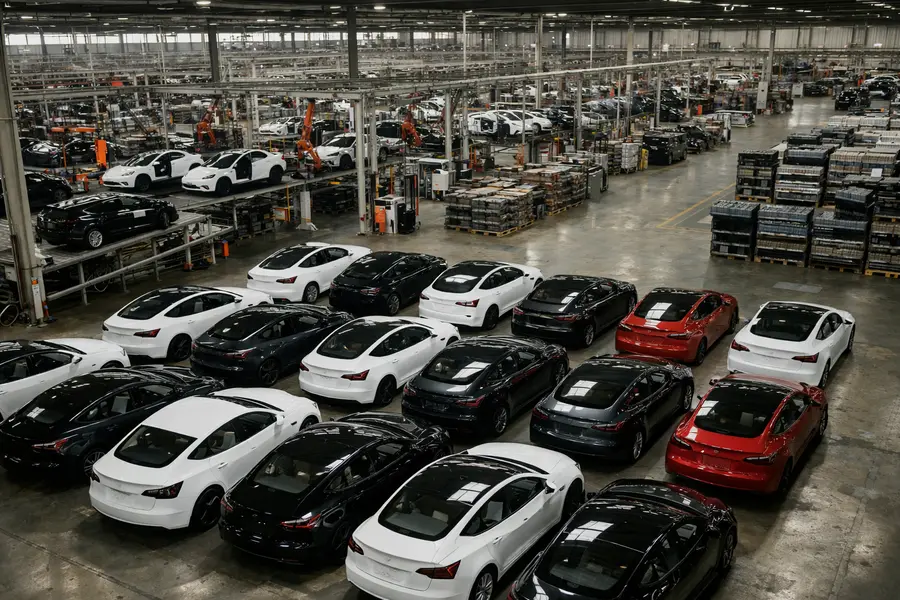
The geopolitical shock did not create the metals bull market; it accelerated one already in motion. The World Bank projects metals and minerals prices to rise 17% in 2026, with base metals — copper, aluminum, and tin — on course for all-time highs. The drivers are structural: data center construction for artificial intelligence workloads, electric vehicle production lines, and grid expansion for renewable energy all compete for the same finite pool of critical minerals.
Copper is the focal point. Global demand for the metal is growing at roughly 2.6% annually. Supply is not keeping pace: the market entered a structural deficit in 2025 and analysts project a cumulative shortfall of up to 19 million metric tons by 2050 if no significant new capacity comes online. Defense re-armament programs across NATO and Indo-Pacific allies are compounding the pressure. A bill before the U.S. Congress would create a $2.5 billion critical minerals stockpile for defense and aerospace applications — a signal that governments are beginning to treat metals demand as a security issue, not merely an economic one.Supply concentration amplifies every risk. Among copper, lithium, nickel, cobalt, graphite, and rare earth elements, the top three refining nations control 86% of global output. For most of those minerals, a single country — China — accounts for the majority of refining capacity, a dependency that the current geopolitical shock has pushed to the center of national security debates in Washington, Brussels, and Tokyo.
---
Safe-Haven Flight Pushes Gold to Records
Precious metals have become the clearest financial expression of geopolitical anxiety. Gold hit a record $5,405 per troy ounce in January 2026, with the London Bullion Market Association logging a quarterly average of $4,873/oz for the first quarter — itself a record. J.P. Morgan and Société Générale both project prices reaching $6,000/oz by the fourth quarter of 2026. The World Bank's aggregate precious metals forecast is a 42% gain for the full year.Central bank purchasing, a de-dollarization trend among emerging-market reserve managers, and record-breaking inflows into gold ETFs — $89 billion in 2025, doubling global AUM to $559 billion — have built a structurally elevated demand base. The commodity news cycle keeps feeding fresh safe-haven bids.
---
Energy Outlook: A Delayed Supply Wave
Beyond the immediate price spike, the energy outlook carries a longer tail. Damage to Qatar's LNG liquefaction infrastructure is set to delay the global LNG supply expansion wave by at least two years, with the IEA estimating a cumulative supply loss of around 120 billion cubic metres between 2026 and 2030. That window matters: many European and Asian importers had planned to lean on new Qatari and U.S. capacity additions to replace residual Russian pipeline gas. Those plans now require revision.
For developing economies, the commodity shock compounds existing vulnerabilities. The World Bank estimates inflation in developing nations will average 5.1% in 2026 — a full percentage point above pre-war projections — driven by higher energy and food costs.
---
Outlook
The geopolitical shock of 2026 has done what prior commodity analysts had warned about in theory: it has stress-tested simultaneously the oil, gas, and critical minerals supply chains that underpin the global economy. Even if the Strait of Hormuz fully reopens and LNG production resumes at Ras Laffan, the structural forces driving metals demand — the energy transition, AI infrastructure build-out, and defense re-armament — will sustain elevated prices through the decade. The commodity news cycle will remain dominated by the interaction of policy, conflict, and supply concentration for the foreseeable future. Governments and corporations that have not yet audited their critical mineral dependencies now face the consequences of that delay.
---
Mentioned tickers: GLD, FCX, BHP, RIO, XOM, CVX, LNG, GLEN