Pomegra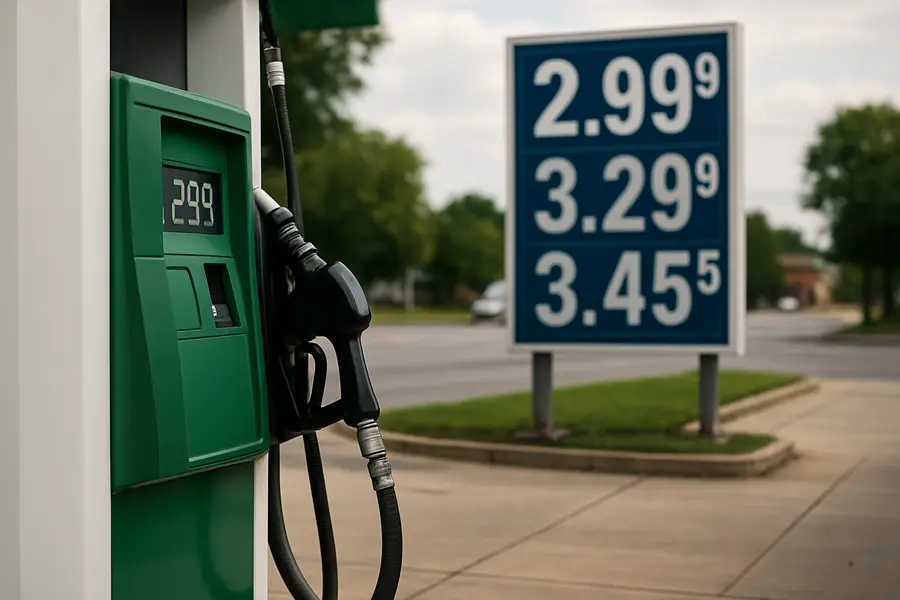
I now have sufficient data. Writing the article.
- The national gas average fell to $3.92/gallon by June 23, down 13.6% in four weeks, as the U.S.-Iran peace roadmap erased the war premium from crude.
- Wholesale gasoline futures touched $2.88/gallon on June 16, a three-month low; retail prices are expected to follow lower within weeks.
- May CPI hit 4.2% year-on-year on a gasoline-led energy surge; the June report, due July 14, should show material softening if pump prices hold.
---
With wholesale gasoline already sub-$3 and the national retail average at $3.92, the 13.6% retreat from May's war-driven peak signals meaningfully softer headline inflation in the months ahead.
Lead
The U.S. national average price for a gallon of regular gasoline reached $3.92 on June 23, 2026 — down 62 cents, or 13.6%, from the $4.56 peak recorded on May 21 at the height of energy-market anxiety over the U.S.-Israel campaign against Iran. Wholesale gasoline futures have already broken below the $3 threshold, touching a three-month low of $2.88 per gallon on June 16 in New York Harbor trading, and the standard refinery-rack-to-pump transmission lag suggests the retail average will follow. The convergence arrives as inflation data from May showed a 4.2% headline rate — the highest since April 2023 — driven almost entirely by a wartime energy spike that is now unwinding.
What Happened
The energy selloff accelerated after the United States and Iran signed a 60-day peace roadmap in Geneva on June 16–18, with Qatar and Pakistan serving as mediators. The agreement halted active hostilities and opened a credible path toward resuming Iranian oil exports, lifting the Strait of Hormuz closure risk premium that had been embedded in global crude prices for four months.
WTI crude fell to just below $70 per barrel on June 24 — its lowest level since before the war began — a decline of more than 30% from its wartime peak. Brent crude settled around $77–$80 per barrel in mid-June, approximately 7% above pre-war levels, as markets priced in the prospect of partial supply restoration. Wholesale gasoline prices, which move in near-real time with crude, fell ahead of the retail average by several weeks — consistent with the standard lag.Since the May 21 national-average high, pump prices have declined for six consecutive weeks. In the single week ending June 4, retail prices dropped 18 cents nationwide, the sharpest seven-day move of 2026.
The Inflation Dimension
The Iran energy shock was the defining driver of spring's headline inflation. The Bureau of Labor Statistics reported on June 10 that the Consumer Price Index rose 4.2% in the twelve months through May — the highest reading since April 2023 — with energy prices up 23.5% year-on-year and gasoline surging 40.5%. Those two items alone accounted for more than 60% of May's 0.5% monthly increase.
As wholesale gas prices hold near or below $3 and retail prices continue to retreat, the gasoline component of CPI is expected to shift from a major contributor to a drag on the headline reading. If current pump price trends persist, the June CPI print — due July 14 — is on track to show a meaningful deceleration.
Market Reaction
Equity markets interpreted the energy deflation signal positively. Airlines and other fuel-intensive industries saw improved earnings outlooks as jet fuel costs fell in parallel with gasoline. Refiners faced a more complex environment: lower crude input costs were partly offset by compressed crack spreads in sessions where wholesale gasoline declined faster than crude.
The retreat in energy prices also buoyed Federal Reserve rate-cut expectations. Markets began pricing in a higher probability of a September reduction in the federal funds rate as the energy-led inflation spike appeared increasingly transitory. The ten-year Treasury yield edged lower in response. Motorists are projected to spend approximately $11 billion less on gasoline in 2026 compared to 2025 if prices hold near current levels, providing a meaningful consumer spending tailwind in the second half.
Geopolitical Dimension
The Iran framework remains a 60-day roadmap, not a final treaty. Fresh rhetoric from Washington in the week of June 22 — including renewed threats of military action if technical talks stalled — briefly pushed Brent crude back above $80 before prices settled. The Strait of Hormuz, through which roughly 20% of global oil supply transits, has not returned to full pre-war traffic volumes. Any breakdown in negotiations carries the risk of rapidly reinstating the supply-risk premium.
OPEC+ has signaled willingness to adjust production schedules depending on whether Iranian barrels return to the market in volume, adding a further variable to the crude price outlook.Outlook
Wholesale gasoline sub-$3 with retail prices typically lagging by several weeks points to continued declines at the pump before the end of June or in early July. The June CPI report on July 14 is the next major data checkpoint; if energy prices hold, the headline rate should fall materially from May's 4.2%. Core inflation at 2.9% leaves little independent pressure on the Federal Reserve, positioning a September rate cut as a credible outcome should the Iran peace process remain intact. The durability of the peace roadmap is now the primary variable: a final agreement unlocks a sustained energy disinflation; a return to hostilities would rapidly reverse the gains at the pump.