Pomegra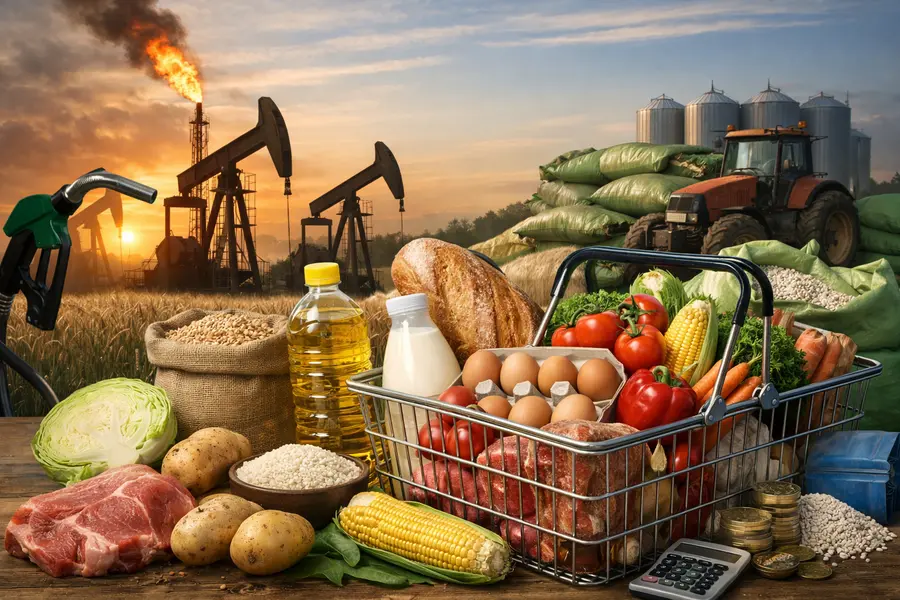
Rising energy and fertilizer costs tied to Strait of Hormuz disruptions are pushing global grocery prices higher, with U.S. food inflation forecast to reach 4–4.5% by December 2026.
- The FAO Food Price Index stood 1.7% above year-ago levels in June 2026, with vegetable oils surging 23.3% year-on-year.
- Urea fertilizer prices hit $725.6 per metric ton in March 2026, up 53.7%, the highest level in four years.
- USDA projects U.S. food-at-home prices up 2.8% in 2026, though independent economists put the year-end figure closer to 4.5%.
Lead
Global food inflation is set to accelerate through the second half of 2026, as higher diesel and fertilizer costs work their way through agricultural supply chains at precisely the wrong moment. The closure of the Strait of Hormuz in March 2026 — a chokepoint carrying approximately one-quarter of seaborne oil trade and roughly one-third of the world's traded fertilizer volume — has amplified cost pressures that were already building across the grocery sector. U.S. food-at-home prices rose 2.7% year-on-year through May, but the full weight of the supply shock has yet to register at checkout.
Fuel Shock Ripples Through Supply Chains
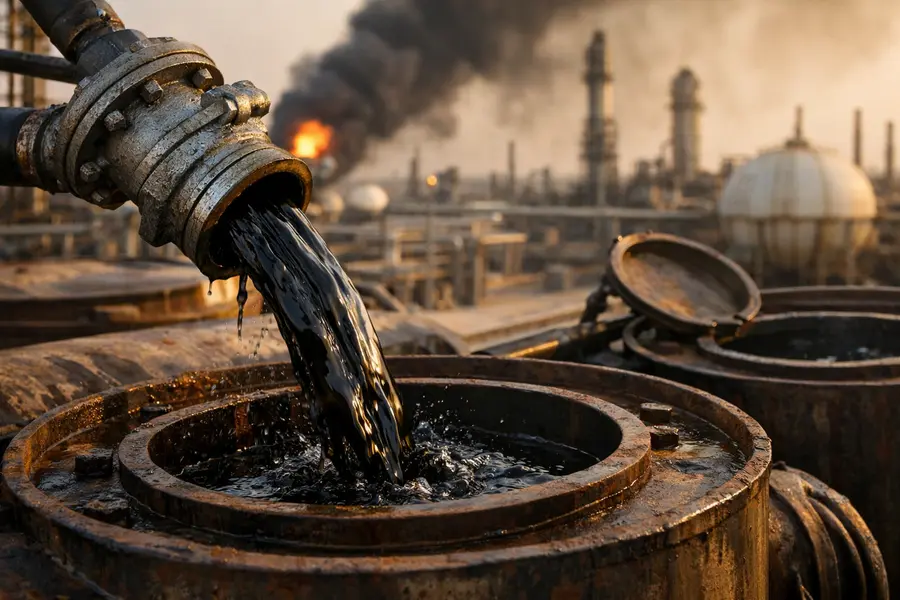
Brent crude surged past $120 per barrel in the weeks following the March 4 Strait of Hormuz closure, the sharpest oil price jump since the 2022 Russia–Ukraine war. Diesel — the fuel of tractors, refrigerated trucks, and freight vessels — is the primary transmission mechanism between oil markets and grocery prices. Every stage of the modern food supply chain runs on diesel, and cost increases compound at each link: field preparation, harvesting, processing, cold storage, and last-mile delivery.The International Energy Agency characterized the event as the largest supply disruption in the history of the global oil market. Higher bunker fuel prices and elevated freight insurance premiums have since added a structural layer to distribution costs that logistics operators describe as unlikely to unwind quickly even if geopolitical tensions ease.
Fertilizer Markets Face Deepest Disruption in Years
The impact on fertilizer markets is equally consequential. The Strait of Hormuz is a primary transit corridor for urea, ammonia, and potash shipments from Gulf producers. With those flows disrupted, urea prices climbed 53.7% in March 2026 alone to $725.6 per metric ton — a four-year high — while broad-based fertilizer cost indices for North America rose 20% from pre-conflict levels.
China's decision to suspend urea exports until at least August 2026, removing millions of metric tons from global supply, compounded the shortfall. European nitrogen production, already constrained to roughly 75% of capacity since 2022 due to elevated natural gas costs following the Russia–Ukraine conflict, provided no offsetting buffer.
For U.S. corn producers, fertilizer costs are now averaging approximately $166 per acre in the 2026 crop year — a 5.3% increase from 2025 — according to USDA estimates. Soybean growers face a 5.2% rise to around $57 per acre. Fertilizer remains the most volatile non-land input cost in row-crop agriculture, typically representing 20% to 30% of total production expenses.
The World Bank has flagged a 33% cumulative spike in fertilizer costs through 2026, with the sharpest consequences concentrated in Sub-Saharan Africa, where smallholder farmers lack the capital to absorb price increases and governments have limited fiscal capacity to subsidize inputs.
Grocery Shelves Feel the Pressure
U.S. grocery prices — measured by the food-at-home component of the Consumer Price Index — increased 0.7% in April alone, with fuel and fertilizer costs cited as key contributors. The USDA's official baseline projects food-at-home inflation at 2.8% for the full year, with a prediction interval running to 4.4%. Former USDA economists now place the year-end reading between 4% and 4.5% if energy costs remain elevated through the summer.
Beef and veal prices carry the steepest near-term risk, with USDA forecasting a 7.5% increase in 2026. Higher diesel costs push up feed transport expenses; higher fertilizer costs reduce hay and feed-grain yields; and reduced livestock herd sizes resulting from prior drought cycles leave little inventory to absorb demand. Vegetable oils, already up 23.3% year-on-year per the FAO, reflect both energy-intensive production and fuel-intensive shipping from Southeast Asian origins. Food away from home is running hotter still — up 3.5% year-on-year through May — as restaurants pass through rising ingredient and logistics costs with less lag than retailers.Markets Most Exposed
Gulf Cooperation Council states face the most acute near-term stress. These economies source more than 80% of caloric intake through the Strait of Hormuz, and by mid-March, approximately 70% of food imports had been disrupted. Retailers in the region resorted to air freight for staples, driving consumer prices up 40–120% on key categories. Emergency purchases from alternative suppliers have since eased the acute shortage, but structural food inflation in the region remains elevated.
Globally, the FAO Food Price Index averaged 130.3 points in June 2026, 1.7% above its year-ago level. The vegetable oil sub-index hit 192.0 points — up 3.8% in a single month — as palm oil and soybean oil prices reflected both demand substitution and fuel-cost pressure on processing and shipping.
Emerging market food importers face a double burden: higher grocery import bills denominated in dollars, combined with local currency weakness in several key economies, amplifying domestic food inflation in local-currency terms.
Outlook
Even if Strait of Hormuz shipping normalizes before the end of Q3, the food inflation transmission lag means consumers and governments should expect elevated grocery prices well into early 2027. Fertilizer applied to fields this season determines fall harvest volumes; feed costs for livestock already set in motion will shape beef and dairy prices months from now. The World Bank and IMF have both flagged food-cost pressure as a principal cost-of-living risk for 2026–2027, with the burden falling hardest on lower-income households in both developed and developing economies. For agricultural commodity markets and food-retail operators, the central question is whether energy prices stabilize or reaccelerate — a variable that remains entirely contingent on geopolitical developments outside the food system's control.
Mentioned tickers: DE, MOS, NTR, CF, ADM, BG, CAG, KR, WMT, COST, SYY