Pomegra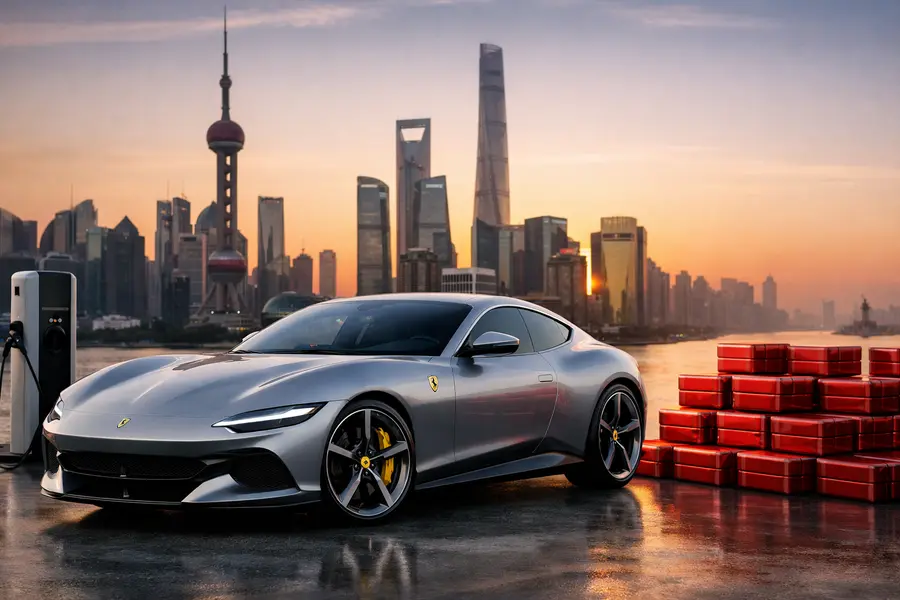
Ferrari's first luxury EV, the $640,000 Luce, has sold out its entire 2026 production run in under two months, with Chinese buyers driving a backlog that now stretches well into next year.
- Ferrari hit its full-year 2026 Luce sales target of approximately 500 units less than two months after the model's late-May launch.
- China's allocation of 88 units sold out almost immediately; total Chinese orders have reportedly exceeded 500 units, pushing delivery timelines into 2027.
- Despite an initial 8% stock drop on launch day tied to design controversy, demand momentum has outpaced early skepticism.
Lead
Ferrari (NYSE: RACE) has filled its entire 2026 production quota for the Luce, its first fully electric car, within roughly two months of the model's May 25 debut — a result driven overwhelmingly by demand from China, where orders have already exhausted the current-year allocation and are being pushed into 2027, according to multiple industry reports published in late July 2026.What Happened
Ferrari launched the Luce on May 25, 2026, pricing it at €550,000 (approximately $640,000 at launch) and targeting just under 500 units for delivery in the current model year. By late July, that allocation was effectively closed, with new orders falling outside the 2026 production window.
China emerged as the dominant source of demand. Ferrari's domestic Chinese rollout initially reserved 88 units for the market — a figure that sold out within days of the announcement. Subsequent reporting from Chinese automotive media, citing domestic market data, placed total Chinese order intake above 500 units, a figure Ferrari has not officially confirmed nor broken down by region.
The Luce is a four-door, five-seat grand tourer powered by four electric motors producing a combined 1,035 horsepower, drawing from a 122 kWh battery pack. Ferrari quotes a 0–100 km/h sprint time of 2.5 seconds and an estimated range of approximately 330 miles per charge. The exterior and interior were co-developed with LoveFrom, the creative studio founded by former Apple design chief Sir Jony Ive and designer Marc Newson, featuring what Ferrari describes as a shell-like continuous form with floating aerodynamic wings and a machined recycled-aluminum three-spoke steering wheel.
Market Reaction
The Luce's debut was not without turbulence. Ferrari shares fell approximately 8% in the sessions following the May 25 reveal, erasing more than $4 billion in market capitalization as critics — including portions of Ferrari's traditional collector base — reacted negatively to the vehicle's minimalist, saloon-body silhouette. The departure from Ferrari's signature low-slung, combustion-engine aesthetic drew pointed commentary, with some analysts initially questioning whether existing Ferrari clients represented the core demand pool.
By late July, RACE had recovered to approximately $398, reflecting a broader market reassessment as order data contradicted the early bearish read. The stock's trajectory over the intervening weeks illustrates the gap between aesthetic reception and commercial appetite in the luxury ev segment.
Strategic Context
Ferrari has calibrated the Luce's role carefully within its broader product portfolio. The company's stated long-term target calls for approximately 2,500 cumulative Luce sales by 2030, implying an annual run-rate of roughly 600 units — equal to approximately 5% of Ferrari's total annual shipments. That intentional constraint preserves the scarcity premium that underpins Ferrari's pricing architecture and secondary-market valuations.
The concentration of early demand in China is strategically significant. China represents the world's largest and fastest-growing market for ultra-premium electric vehicles, and Ferrari's ability to generate a waitlist exceeding one year before first deliveries suggests pricing power and brand positioning remain intact despite the design controversy. Ferrari has not disclosed whether the Chinese order base consists primarily of new customers or existing registrants in its client database.
The ferrari electric car marks a structural pivot the company has navigated incrementally: hybrid drivetrains appeared on flagship models years before the Luce, giving the engineering organization and the customer base time to acclimate. The Luce's full battery-electric architecture, however, is the first to carry no combustion component at all.
What Comes Next
Production is scheduled to begin in late 2026, with deliveries in the United States deferred to the second quarter of 2027. Ferrari's ability to manage the China backlog — converting order intake into confirmed deliveries against a tight production ramp — will be the key operational variable heading into 2027.
Broader industry observers will watch whether other European ultra-luxury marques interpret Ferrari's order velocity as a validation signal for high-price-point EVs targeting Asian buyers.
Outlook
The Luce's sell-out of its 2026 allocation within sixty days demonstrates that demand for stratospherically priced electric vehicles from heritage performance brands is substantive, not speculative. China's role as the primary demand engine introduces geographic concentration risk but also confirms that the world's largest EV market extends its appetite to the very top of the price ladder. Ferrari enters the second half of 2026 with a cleared near-term inventory position and a backlog that provides near-certain revenue visibility for the first half of next year.