Pomegra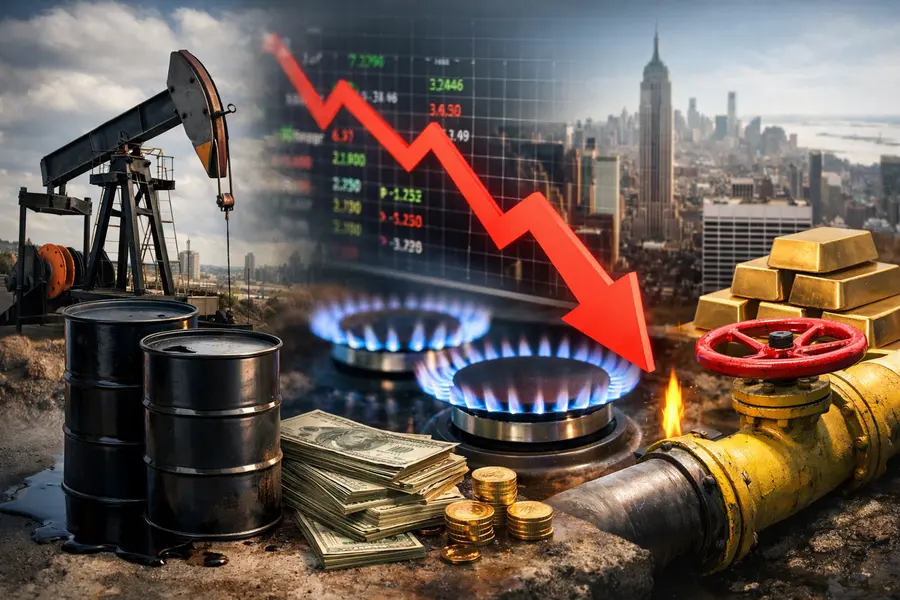
New York Fed President John Williams says declining energy prices will pull U.S. headline inflation lower in coming months, even as he keeps his monetary policy stance unchanged.
- Williams told Fox Business on July 7 that he is "more sanguine" on the near-term inflation outlook due to the energy price retreat.
- U.S. crude oil has dropped below $70 per barrel; national gasoline prices fell to $3.84 from a peak above $4.50.
- The Fed's policy rate holds at 3.50%–3.75%; Williams says future decisions hinge entirely on incoming data.
Lead
New York Federal Reserve President John Williams on Tuesday said falling energy prices are making him less worried about inflation, marking a shift in tone from one of the central bank's most influential voices. Appearing on Fox Business' Mornings with Maria, Williams said energy prices will "come down quite a bit and that will bring headline inflation down," even as he acknowledged that inflation remains above the Fed's 2% target. The comments arrive as U.S. crude oil trades below $70 per barrel—a steep retreat from the geopolitically driven highs of spring 2026.
What Happened
Williams, who holds a permanent vote on the Federal Open Market Committee and leads the New York Fed, said the "big decline in oil prices"—both current and in futures markets—is shifting his near-term inflation view in a constructive direction. He stopped short of calling for any immediate adjustment to interest rates, but his language represented a meaningful softening from previous assessments earlier in the year, when energy inflation had surged to 23.5% year-over-year in May.
The interview came one day into what markets view as a pivotal stretch for Federal Reserve interest rates policy, with the FOMC's next decision window approaching and traders pricing in at least one 25-basis-point adjustment before year-end.
The Energy Price Retreat
The US energy price retreat driving Williams' revised outlook traces directly to two developments: a partial reopening of the Strait of Hormuz and an associated easing of fears over Middle East supply disruptions. Crude oil prices, which the EIA projected would average around $105 per barrel through June on the assumption of continued Hormuz closures, have since declined sharply. National average gasoline prices fell to $3.84 per gallon in late June, down from highs above $4.50 at the peak of the disruption.
Energy components of the Consumer Price Index had been the dominant driver of monthly inflation prints earlier this year, accounting for more than 60% of the all-items monthly increase in May. The index had risen 3.9% in May alone, following 3.8% in April and a 10.9% surge in March. A sustained softening in energy costs is expected to mechanically reduce both month-over-month and year-over-year inflation outlook readings in the months ahead.
Monetary Policy Stance
Despite the improved tone, Williams was careful to frame the energy development as one data point rather than a policy pivot. "Monetary policy is well positioned to achieve our maximum employment and price stability goals," he said, adding that future decisions "really depend on what happens with the data" and the evolution of economic risks.
The Federal Reserve has held its benchmark rate in the 3.50%–3.75% range since its most recent meeting. Williams reiterated that the economy continues to grow solidly and that labor market risks have stabilized, suggesting no urgency on either side of the rate decision.
Three Pillars of Williams' Revised View
Williams outlined three factors behind his more optimistic Fed Williams inflation outlook. First, the drag from tariffs on goods prices is beginning to wane as initial supply-chain adjustments are absorbed. Second, an anticipated resolution of the conflict affecting Middle East oil shipping lanes is expected to further ease energy costs. Third, shelter inflation—one of the stickiest components of core CPI—is showing early signs of moderation as rent increases slow in line with the easing of a previous multiyear housing supply shortage.
Taken together, Williams projected US headline inflation to reach 2.75%–3.0% for the full year 2026, down from the sharper readings seen in the spring quarter.
Market Reaction
Treasury yields edged lower following Williams' remarks, reflecting the market's interpretation that the Fed sees less pressure to tighten further in the near term. Crude oil futures held near recent lows. The dollar was little changed on the session. Traders in fed funds futures markets maintained pricing for at least one rate adjustment later in 2026, though the timing remains data-dependent.Outlook
The energy-driven improvement in the US inflation outlook gives the Federal Reserve a degree of relief heading into the second half of 2026, though Williams signaled that rate decisions remain tethered to evolving data rather than a single commodity price move. Should crude oil prices hold below $70 per barrel and shelter costs continue to moderate, the path toward the Fed's 2% target becomes more visible. The next CPI release will be closely watched to confirm whether the May energy-driven spike has begun to meaningfully reverse.
Mentioned tickers: USO, XLE, TLT, DX-Y.NYB