Pomegra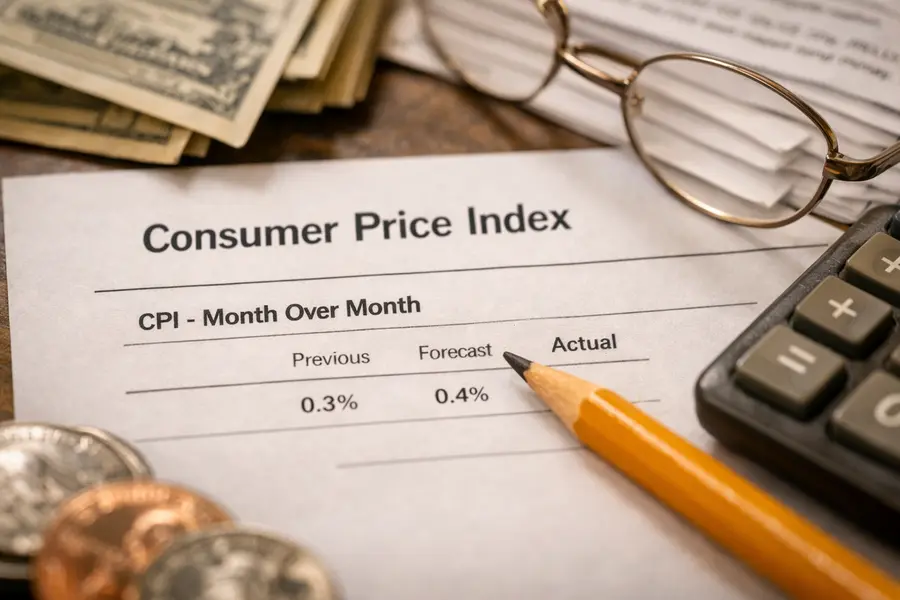
August payrolls at 162,000 - triple consensus - and hawkish Fed Chair Kevin Warsh remarks have lifted September interest rates hike odds to a near coin-flip, making Thursday's CPI the decisive event.
- August nonfarm payrolls surged to 162,000 against a 53,000 consensus estimate, erasing the rate-cut narrative from July's jobs miss.
- Fed Chair Kevin Warsh warned markets not to interpret cooling inflation as a policy signal, reinforcing a hawkish posture into the FOMC.
- August CPI, due September 11, is now the single most market-moving data release before the September 15-16 FOMC meeting.
Lead
The Federal Reserve's September rate decision has become a genuine coin flip. August nonfarm payrolls surged to 162,000 - more than three times the 53,000 consensus estimate - erasing the rate-cut narrative that had taken hold after July's disappointing jobs miss and pushing September hike probability to nearly 50/50. The repricing has concentrated all attention on Thursday's August consumer price index release, now the pivot point between a 25-basis-point increase and a hold at the September 15-16 Federal Open Market Committee meeting.
What Flipped the Interest Rates Narrative?
The July labor market miss had convinced bond markets that the Fed's tightening cycle was functionally complete. The August payrolls print, arriving at more than triple consensus, shattered that assumption in a single data release. Fed Chair Kevin Warsh compounded the hawkish shift by explicitly warning markets against reading policy-easing intent into any near-term softening of inflation data. Fed funds futures repriced September hike odds from well below 30 percent to near 50/50 within 48 hours, reversing weeks of accumulated dovish positioning. The speed of the move reflects how lightly held the prior consensus had been.
Why Does August CPI Now Carry This Much Weight?
With hike odds split almost evenly, the August consumer price index - due Thursday, September 11 - functions as a pre-FOMC casting vote. A reading above expectations, particularly in core categories, would confirm Warsh's view that disinflation has not yet earned a policy response and likely locks in a 25-basis-point increase. A cooler print opens the door to a hold but does not guarantee one given the labor market's demonstrated resilience. Markets have rarely entered a single inflation report with this degree of binary sensitivity; the outcome will directly move short-term interest rates, equity valuations, and the dollar across a compressed two-session window.
Market Reaction
The August payrolls release triggered immediate and broad repricing. SPY and QQQ both retreated as investors rotated out of rate-sensitive growth equities, with technology-heavy sectors bearing disproportionate pressure. The two-year Treasury yield - the cleanest market proxy for near-term Fed policy - extended its rise after the print, briefly touching its highest level since the July FOMC meeting. The dollar strengthened against major peers as rate differentials moved in favor of the United States. Equity volatility measures edged higher as traders priced the CPI binary into options markets ahead of Thursday.
What Did Warsh Signal?
Warsh's post-payrolls remarks were notable for their directness. Rather than allowing markets to build a dovish pivot narrative around any single month of moderated inflation, Warsh framed ongoing vigilance as a baseline condition independent of near-term data fluctuations. The messaging aligns with the Fed's broader communication strategy of keeping financial conditions restrictive long enough to prevent a premature relaxation of the inflation constraint. It also reflects the institutional lesson drawn from the 1970s experience - that easing policy on the first sign of cooling inflation allowed price pressures to reignite. Warsh appears determined not to repeat that pattern.
How Does a September Hike Affect the Prime Rate?
A 25-basis-point increase at the September meeting would push the prime rate higher, extending the pressure on consumer and business borrowing costs that has defined this tightening cycle. The prime rate today already sits at multi-decade highs, and any further movement filters directly into variable-rate credit lines, adjustable mortgages, and a broad range of floating-rate instruments. A hold, by contrast, would stabilize those benchmarks heading into the fourth quarter, giving households and corporate finance teams a clearer cost-of-capital baseline for year-end planning.
Outlook
The September 11 CPI print now carries the weight of a pre-meeting vote. A hot reading gives Warsh and like-minded policymakers the empirical cover to deliver a rate increase on September 16; a soft reading opens the door to a hold but leaves the door ajar for a November move if labor market strength persists. The Fed enters its blackout period with the rate path genuinely unresolved - an unusual condition that concentrates maximum volatility into a single Thursday morning release and sets up a consequential two-day stretch for every rate-sensitive asset class. For markets, the question has narrowed from whether hikes are finished to whether this cycle has one round left.
Mentioned tickers: SPY, QQQ