Pomegra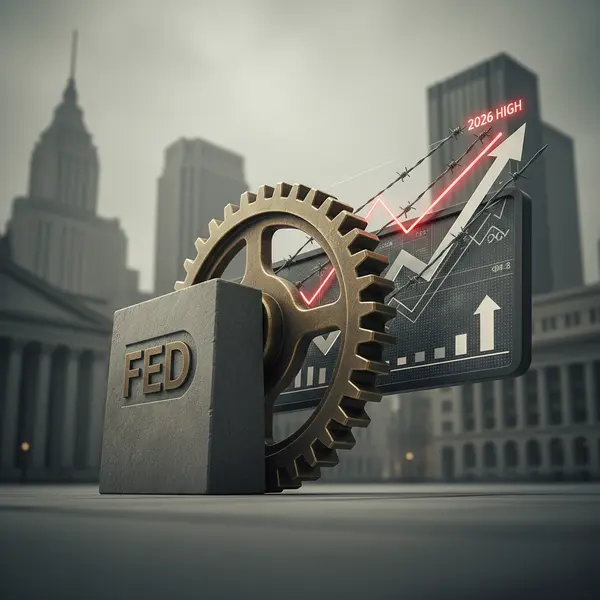
The Federal Reserve's third consecutive rate hold and a fractious 8-4 FOMC vote are resetting the Treasury yields forecast as markets scale back cut expectations for the rest of 2026.
- The Fed kept its benchmark rate at 3.50%–3.75% for a third straight meeting, with FOMC dissenters split between hawks and doves.
- The 10-year Treasury yield reached 4.50% on May 15 — its highest print since June 2025 — signaling elevated term-premium risk.
- CME FedWatch pricing shows near-zero probability of a cut at the June 16–17 meeting, down sharply from two cuts priced at the start of the year.
The Fed Holds — Again
The Federal Open Market Committee voted 8-4 on April 29 to keep the federal funds target range at 3.50%–3.75%, marking three consecutive holds following a run of three quarter-point cuts in late 2025. The decision reflected a committee increasingly divided over the pace and direction of monetary policy as inflation proved stickier than projected.
The dissents were notable in both directions. Stephen Miran voted for an immediate 25 basis-point reduction, arguing that policy remains restrictive enough to dampen growth unnecessarily. On the opposite flank, Beth Hammack, Neel Kashkari, and Lorie Logan opposed language that would introduce an explicit easing bias into the statement — a sign that a vocal faction sees upside inflation risk as the larger threat.
Treasury Yields Push to Multi-Month Highs
The Fed interest rate pause has cascaded directly into the bond market. Two-year and 10-year Treasury yields both climbed during the intermeeting period, with the benchmark 10-year note reaching 4.50% on May 15 for the first time in twelve months. The move reflects a combination of factors: persistent above-target inflation, elevated energy costs tied to ongoing Middle East tensions, and a material repricing of when — or whether — the Fed resumes cutting.
The Treasury curve has steepened modestly as short-end rates remain anchored by the policy rate while longer maturities absorb higher term premium. Analysts tracking the 10-year now flag a risk range of 3.75%–4.50% for the remainder of the year, with the upper bound increasingly credible given current macro dynamics.
Inflation and Labor Market Hold the Key
Core PCE inflation — the Fed's preferred gauge — stood at 3.0% as of February 2026, still a full percentage point above the 2.0% target. While headline readings have moderated from their 2022 peak above 5.5%, the last mile of disinflation has proven elusive. Energy price volatility linked to geopolitical conflict in the Middle East complicates the committee's path, raising the risk that second-round inflation effects keep headline figures elevated into the second half of the year.
The labor market, meanwhile, is described internally as "slow but stable" — cooling enough to take pressure off wages without generating the deterioration that would force the Fed's hand toward easing. Nonfarm payrolls and weekly jobless claims have remained within ranges consistent with a soft-landing scenario, giving policymakers limited urgency to move in either direction.
Markets Reprice the 2026 Rate Path
When 2026 opened, fed funds futures implied two quarter-point cuts by year-end. That consensus has collapsed. Current CME FedWatch pricing shows near-zero probability of action at the June 16–17 FOMC meeting, with the dot plot from April's meeting revised to signal just one additional 25 basis-point cut for the full calendar year — likely in the fourth quarter at the earliest, contingent on meaningful progress toward the inflation target.
Bond traders have gone further, pricing a non-trivial probability of a rate hike in 2026 — a scenario that would have seemed remote at the start of the year. That shift in tail-risk pricing is itself a factor pulling longer-dated Treasury yields higher, independently of actual Fed signaling.
A New Fed Chair Adds Policy Uncertainty
The June 16–17 FOMC meeting carries an additional variable: it will almost certainly be the first session chaired by Kevin Warsh, who has signaled a broadly dovish orientation on the rate path. His arrival introduces leadership uncertainty at a critical juncture. While Warsh holds only one vote in the committee's decision-making structure, the chair's ability to shape communications, guide consensus, and control post-meeting messaging carries significant market weight. Investors are watching whether Warsh's debut aligns with the cautious tone established under prior leadership or signals a shift toward earlier easing — even as energy-driven inflation risk complicates that case.
What Comes Next
The Fed's monetary policy trajectory through the second half of 2026 hinges on three variables: the trajectory of core inflation, the durability of the labor market, and the resolution — or escalation — of geopolitical factors driving energy prices. A clear downward move in PCE toward 2.5% by mid-year would likely open the door to a September cut. Stalled progress, by contrast, could extend the Fed interest rate pause well into 2027.
The 10-year Treasury yield is now functioning as a real-time referendum on that probability calculus, with each piece of inflation data carrying the capacity to shift the range meaningfully.
Outlook
The Fed's third consecutive hold, paired with a sharply divided FOMC and Treasury yields at their highest level in twelve months, marks a decisive shift from the easing cycle that markets expected entering 2026. The central bank's median projection of one remaining cut this year — versus two priced at January — reflects a committee that sees inflation risk, not growth risk, as the dominant concern. The June 16–17 meeting, headlined by new Fed Chair Warsh and an updated dot plot, will set the monetary policy tone for the remainder of the year.
Mentioned tickers: TLT, IEF, SHY, SPY, GLD