Pomegra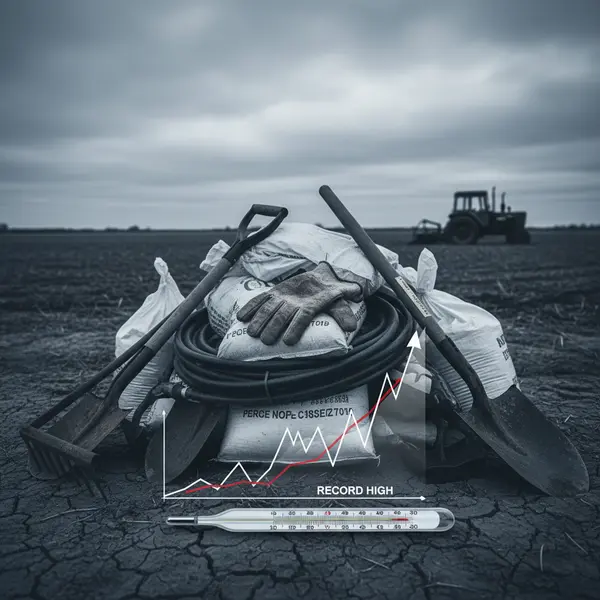
The Purdue/CME Group Ag Economy Barometer fell to 119 in May 2026, as a record 51% of U.S. farmers named high agricultural costs as their single greatest financial concern this season.
- The Ag Economy Barometer dropped to 119 in May as the Current Conditions Index hit its lowest level since December 2024.
- A record 51% of producers cited high input costs as their top concern, with fertilizer prices running 10–15% above 2025 levels.
- Two-thirds of surveyed farmers expect net farm income to decline in 2026 despite a projected $44.3 billion in direct government payments.
Lead
U.S. farmer sentiment slipped for the second consecutive month in May 2026, as the Purdue University/CME Group Ag Economy Barometer declined 2 points to 119 — its second-lowest reading of the year — driven by surging agricultural costs that a record share of producers now name as their foremost financial challenge. The monthly survey of 400 farmers, conducted May 11–15, shows a sector under measurable pressure heading into the back half of the crop year.
What Happened
The composite barometer reading of 119 masked an important split beneath the surface. The Current Conditions Index fell 8 points to its lowest level since December 2024, while the Future Expectations Index edged up by a single point. The divergence between those two sub-indices reflects a farm sector acutely stressed by present-day cost structures yet still holding onto measured optimism about conditions further out.
A record 51% of respondents identified high input costs as their primary concern — a proportion that has risen steadily since the start of the year. An additional 46% said elevated input expenses are directly limiting their ability to improve their financial position in 2026, reinforcing a picture of a farm economy pinched from both directions: costs accelerating faster than commodity prices can offset.
The Input-Cost Squeeze
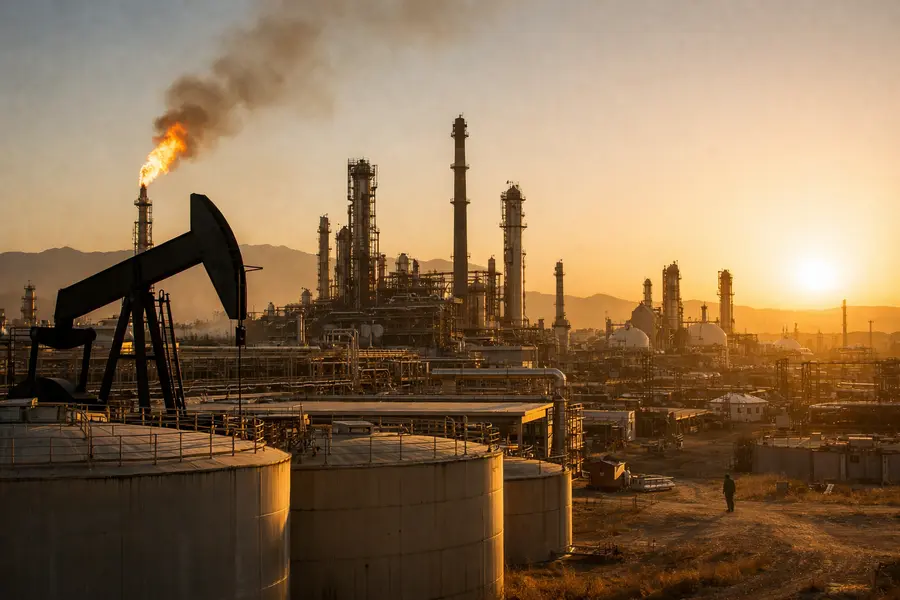
Fertilizer is the sharpest pressure point across the sector. Nitrogen prices are running 10% to 15% above their 2025 levels, driven by rising natural gas costs that feed directly into ammonia-based fertilizer production. The U.S. Energy Information Administration projects the average Henry Hub natural gas price at $4 per million British thermal units in 2026, roughly 16% above the 2025 average. Total operating costs are projected 4% higher for corn and 6% higher for soybeans compared with a year earlier, and nearly half of survey respondents expect their corn break-even price to rise by up to 6%, with 30% bracing for increases of 10% or more.The gap between production costs and prices received by farmers has widened to a 10-year high, placing smaller and mid-size operations under acute financial stress. Approximately 40% of agricultural economists now believe a substantial share of U.S. farms may require major structural changes to remain viable, according to industry survey data published earlier this year.
Financial Outlook and Capital Spending
Constrained margins are translating directly into reduced investment activity. The Farm Capital Investment Index fell to 41 in May, its weakest level since September 2024, signaling that producers are deferring equipment purchases and farm improvements. Only 14% of respondents reported their operations were better off financially than a year earlier, and just 22% expect conditions to improve over the next 12 months.
The USDA's net farm income forecast corroborates the strain. Net farm income is projected at $153.4 billion for calendar year 2026, a nominal decline of $1.2 billion (0.7%) from 2025 and an inflation-adjusted drop of $4.1 billion, or 2.6%. Direct government payments are forecast to reach $44.3 billion — up $13.8 billion from 2025 — providing a meaningful buffer but also underscoring the degree to which structural profitability has eroded. The corn season-average price received by producers is forecast at $4.20 per bushel, only 10 cents above the prior year, insufficient to offset cost increases for most operations.
Crops vs. Livestock
A sharp divergence is widening between crop and livestock producers. Only 31% of survey respondents expect good times for crop producers over a five-year horizon, compared with 68% who anticipate favorable conditions for livestock operations. Stronger domestic and export demand for animal proteins, combined with more stable feed cost expectations over the medium term, has lifted livestock sentiment well above that of grain farming.
Soybean planted area is forecast to rise nearly 4 million acres in 2026 as producers shift rotations in search of better margins, but the broader crop sector remains anchored by the dual pressures of elevated costs and uncertain export demand.
Labor and Technology
Hiring difficulties compound the financial squeeze. Among the 39% of survey participants who employ nonfamily farm workers, 44% reported difficulty filling positions. On the technology front, 59% of respondents said they do not believe emerging artificial intelligence tools will materially improve their situation — a level of skepticism that suggests technology adoption in agriculture lags far behind the optimism expressed in broader industry conversations about the farming outlook.