Pomegra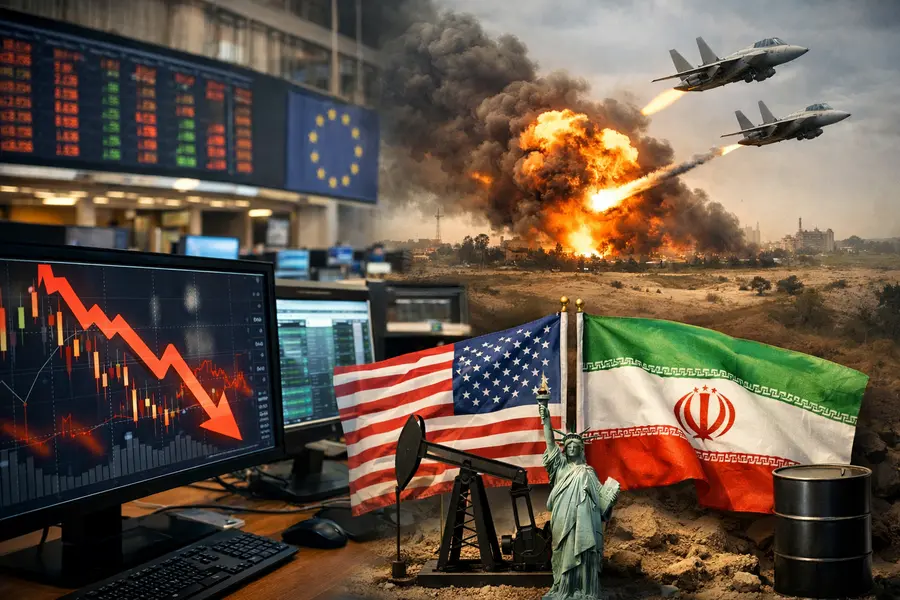
European stocks edged lower July 13 as US-Iran strikes and Hormuz tensions pushed Brent crude above $78 a barrel, testing global equity market resilience from the DAX to the FTSE.
- The pan-European STOXX 600 fell 0.09% to 640.54; Germany's DAX shed 0.3% in early trade before paring losses.
- Brent crude surged more than 4% to $78.82/barrel, its highest since June 22, lifting European energy stocks 1.6%.
- Hormuz vessel crossings dropped to six in a 12-hour window, down from a normal 18–22 per day.
Lead
European equity markets edged lower on Monday, July 13, as overnight US military strikes against Iran and Tehran's claim that it had shut the Strait of Hormuz until further notice reignited energy-supply fears across global markets. The pan-European STOXX 600 slipped 0.09% to 640.54 by 0840 GMT, pulled down by a 1.2% drop in the technology sector even as surging crude prices lifted the energy sub-index 1.6% and cushioned broader losses.
What Happened
US Central Command carried out dozens of airstrikes against Iranian military positions overnight, hours after Iranian forces attacked the Cyprus-flagged container ship MV GFS Galaxy while it transited the Strait of Hormuz. Tehran responded by launching missile and drone strikes against the United Arab Emirates, Qatar, Kuwait, Oman, and Bahrain — the most geographically expansive escalation since the conflict began.
Iran's Revolutionary Guards declared the Strait of Hormuz closed "until further notice." US Central Command disputed the claim, stating the route remained open to lawful maritime traffic. Vessel-tracking data told a starker story: just six ships crossed the strait in the 12-hour window ending at 06:00 GMT on Friday, against 18 to 22 daily crossings recorded earlier this month.
The overnight exchange also puts the June interim peace agreement between Washington and Tehran under severe pressure. That accord, which had been expected to restore normal Hormuz traffic and set the foundation for wider negotiations, now appears in jeopardy.
Market Reaction
European stock market performance on July 13 was mixed and sharply sector-dependent. Germany's DAX gave up 0.3% in early trading before recovering most of the loss through the session. London's FTSE 100 outperformed the continent, posting a 0.2% gain as its elevated weighting in global oil majors acted as a structural hedge against the crude price spike — a recurring pattern during Middle East escalations. DAX and FTSE performance diverged precisely on that distinction: DAX-listed industrials and exporters carry far less direct energy-revenue offset than the London index's integrated oil groups.
Shell climbed 1.8%, BP advanced 2.7%, and TotalEnergies gained 2.3%. The STOXX Europe 600 Oil & Gas sub-index ranked among the best-performing sectors on the day.Offsetting those gains, European tech stocks fell 1.2% as risk appetite contracted and capital rotated toward energy and defensive names. Airlines and consumer discretionary stocks also came under pressure, reflecting the dual threat of higher jet-fuel costs and softening near-term demand if the conflict drags on.
Strait of Hormuz at the Center
The Strait of Hormuz is the world's most critical oil chokepoint, through which approximately one-fifth of all seaborne crude passes daily. Sustained disruption there cascades quickly into spot prices, long-term supply contracts, insurance premiums, and alternative-routing costs that ripple across the broader global equity landscape.
Brent crude for September delivery traded at $78.82 per barrel by 08:00 GMT on Monday — up more than 4% on the session and the highest print since June 22. West Texas Intermediate gained a comparable 4.4%. The rally reversed several weeks of declines that had followed June's interim accord, signaling that markets now assign material probability to a prolonged disruption.Europe's exposure is acute. Germany, the eurozone's largest economy, depends heavily on petroleum-derived industrial inputs; France and the Netherlands are substantial refined-products importers. Higher crude benchmarks feed directly into input-cost inflation across European manufacturing and add to the DAX's near-term headwinds.
Geopolitical Dimension
The weekend's events mark the sharpest single escalatory step since the conflict's onset, widening from a bilateral US-Iran confrontation into a regional exchange involving five Gulf states. Iranian strikes against GCC members risk drawing those nations more directly into hostilities and complicate Washington's diplomatic posture at a moment when the June accord was still fragile.
For institutional investors weighing global equity exposure, the central concern is not the day's crude print but the prospect of a structural rerouting of energy flows — longer shipping lanes, higher insurance costs, and reduced throughput — that reprices risk across European industrial and consumer sectors for months.
Outlook
European markets remain exposed to further deterioration if Strait of Hormuz traffic does not normalize quickly. Energy-heavy benchmarks such as the FTSE 100 are better positioned to absorb additional crude gains, while DAX-listed industrials face mounting input-cost pressure. The survival of the June peace accord — and whether Washington and Tehran can return to the negotiating table — is now the central variable for both oil and global equity sentiment. Brent's ability to hold above $78 per barrel will serve as the near-term barometer for how markets price the conflict's duration and scope.