Pomegra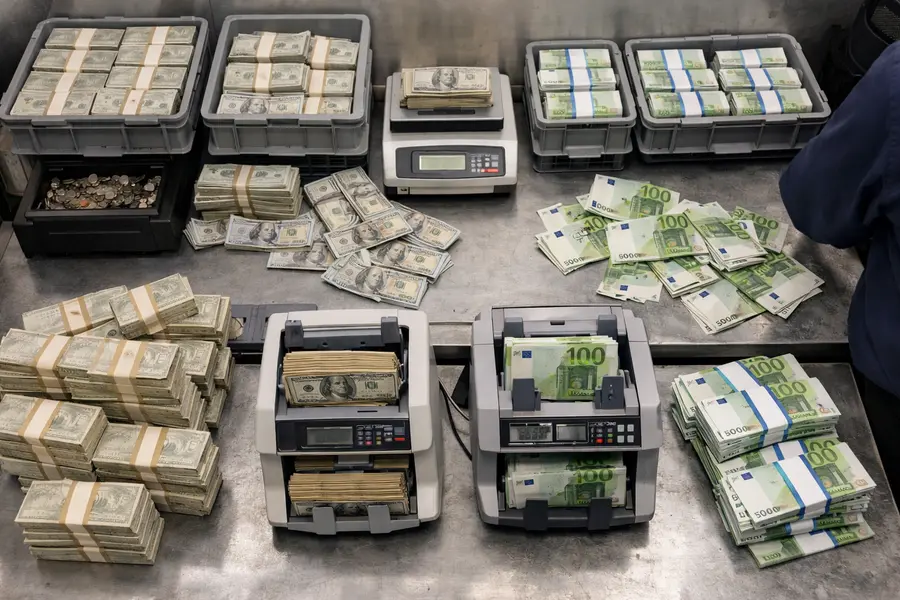
The euro broke above $1.17 for the first time since May as Treasury Secretary Bessent's bond-buyback doubling pressured the dollar to a three-month low.
- EUR/USD crossed $1.17, its strongest level since May, while the U.S. Dollar Index fell to 98.8, a three-month low.
- Treasury Secretary Scott Bessent at least doubled long-dated bond buyback operations to $4 billion per transaction across 10-to-30-year maturities.
- The 30-year Treasury yield initially dropped 14 basis points to 5.196% before partially reversing, keeping dollar pressure intact through the session.
Euro Breaks Key Level on Treasury Shift
The euro cleared $1.17 against the dollar for the first time since May, touching a three-month high as the U.S. Dollar Index (DXY) slid to 98.8 following Treasury Secretary Scott Bessent's decision to expand the government's long-dated bond buyback program. EUR/USD traded in a range of $1.1676 to $1.1700 during the session, with the pair's advance reflecting broad-based dollar selling that extended across G10 currencies. Euro banknotes, long a proxy for global confidence in U.S. fiscal credibility, surged as market participants questioned whether Washington's latest intervention could durably cap borrowing costs on a national debt approaching $40 trillion.
The move adds to a pattern of dollar weakness that has accumulated since mid-August, as rising long-term Treasury yields drew scrutiny from both the administration and global investors holding U.S. assets.
What Did Bessent's Bond Intervention Do to Markets?
Bessent's Treasury at least doubled the maximum size of its long-dated buyback operations - from $2 billion to $4 billion per operation - targeting securities in the 10-to-20-year and 20-to-30-year maturity sectors, with operations scheduled to run from September 9 through November 4. On the announcement, the 30-year Treasury yield dropped 14 basis points to 5.196% from 5.337%, its sharpest single-session decline in weeks. The relief proved short-lived: yields subsequently rebounded to 5.248% as the session progressed, erasing the bulk of the initial rally. Bessent responded by signaling that individual operations could exceed $4 billion, with the final scale determined by market conditions - a comment that kept the dollar from recovering.
Bond buybacks function as a form of liquidity injection: when the Treasury repurchases outstanding securities, it draws down the Treasury General Account, effectively releasing dollars into the financial system. That mechanism weakened the dollar index regardless of whether yields ultimately held lower, as the supply dynamic weighed on the currency independently of rate moves.
Why Is the Euro the Primary Beneficiary?
The euro has emerged as the clearest winner from dollar softness for two compounding reasons. First, eurozone inflation data for July arrived precisely in line with consensus - headline consumer prices at 2.9% year-over-year, core at 2.5% - providing the European Central Bank no immediate impetus to cut its policy rate. A stable ECB policy rate outlook contrasts with growing market uncertainty about the Federal Reserve's room to maneuver, caught between persistent inflation risk and political pressure to support growth. Second, EUR/USD technical positioning had clustered heavily below $1.17 for the prior three months, meaning the level's breach triggered additional momentum buying from systematic strategies tracking the forex chart.
The pound sterling also advanced against the dollar alongside the euro, with dollar weakness broad enough to benefit the entire G10 complex rather than reflecting any single currency-specific catalyst.
Dollar Under Structural Pressure
The dollar's retreat goes beyond the mechanics of any single buyback operation. The DXY has struggled to sustain support as the U.S. fiscal trajectory has come into sharper relief. Long-term yields, which drive the dollar through the interest-rate differential channel, remain elevated even after the buyback announcement, with the 30-year benchmark still above 5.2%. Analysts note that expanding buyback operations addresses demand at the margin but does not alter the supply of new issuance, leaving the root cause of yield pressure intact.
Federal Reserve Chair Kevin Warsh, whose institution holds nominal independence over monetary policy, faces a politically charged environment as the Treasury moves to manage the yield curve through fiscal tools. The buyback escalation has been described in market commentary as placing new pressure on the Fed to validate or resist the Treasury's implicit yield-management framework - a dynamic with significant implications for dollar credibility.
What Comes Next for EUR/USD?
Whether EUR/USD consolidates above $1.17 or retreats depends on two near-term variables: the pace and scale of further Treasury buyback announcements, and the Federal Reserve's policy posture at its next scheduled meeting. If Bessent delivers on operations materially above $4 billion, dollar liquidity expansion could sustain the euro's advance toward the year-to-date high of $1.1974 reached in late January. Conversely, a resumption of 30-year yields above 5.33% - reversing the full effect of the intervention - would likely restore some dollar demand and create a ceiling for EUR/USD in the $1.165-to-$1.172 range.
Eurozone data in the weeks ahead carries its own weight: any upside surprise in inflation or a deterioration in growth indicators would complicate the ECB's steady-rate story and could limit the euro's upside even in a weak-dollar environment.
Outlook
The euro's decisive break above $1.17 marks a consequential threshold, driven by a shift in U.S. debt management rather than a change in underlying growth or rate-differential fundamentals. With the DXY near 98.8, the 30-year yield still above 5.2%, and Bessent signaling willingness to expand operations further, the dollar faces continued headwinds. Sustained EUR/USD gains beyond current levels will require either a credible reduction in U.S. long-term yields or confirmation that the ECB holds its policy rate steady as eurozone inflation stabilizes near target.
Mentioned tickers: N/A