Pomegra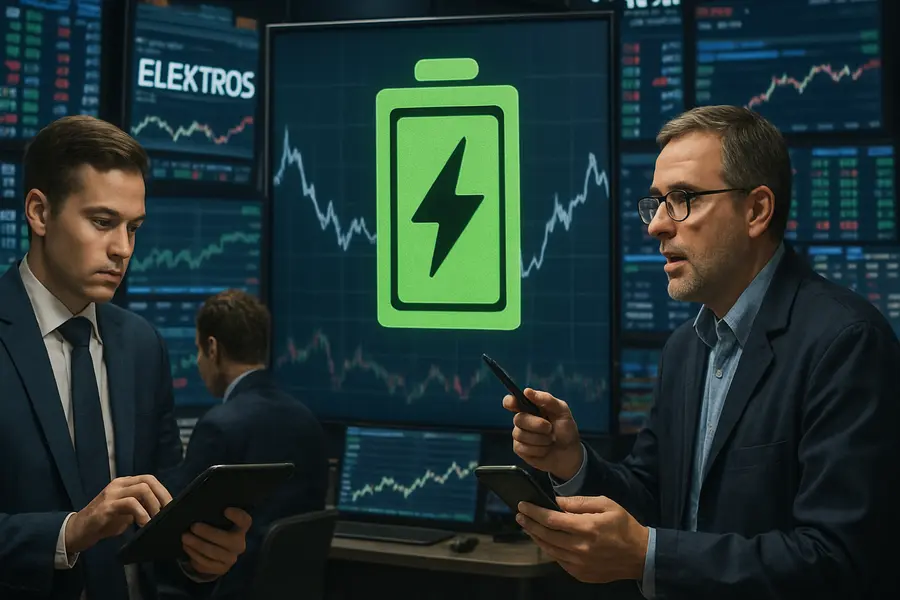
Elektros Inc. (ELEK) captured global microcap attention in May 2026 as a Sierra Leone lithium claim and an EV fast-charging patent drove triple-digit share gains.
- ELEK surged 344% in May 2026, rising from $0.0125 to $0.0555 per share, following a major hard-rock lithium discovery announcement in Sierra Leone.
- Global critical minerals investment reached $128 billion in 2025, a 62% increase from 2023, fueling speculative flows into early-stage lithium stocks.
- Lithium demand is projected to grow 16% year-over-year in 2026, with electric vehicles accounting for 58% of incremental growth.
Lead
SUNNY ISLES BEACH, Fla. — Elektros Inc. (OTC PINK: ELEK), a Florida-based microcap pursuing lithium mining and electric vehicle charging technology, recorded a single-session gain of 41.49% on May 18, 2026, and a cumulative advance of 344% after announcing a hard-rock lithium discovery in Sierra Leone. The moves placed Elektros — also widely referenced as Electros Inc. across retail investor forums — at the center of a global surge in penny stock activity tied to the critical minerals supercycle underpinning the clean energy transition.
What Happened
Shares of Elektros climbed from $0.0125 to $0.0555 following the Sierra Leone announcement, with a separate Friday session in late May delivering an additional 33.33% single-day gain. The company, incorporated in 2020 and headquartered in Sunny Isles Beach, is conducting artisanal hard-rock lithium exploration in Sierra Leone, West Africa, where geological surveys indicate deposits the company describes as potentially among the largest in the sub-region. Extracted material is earmarked for export to lithium refineries in the United States.
A second catalyst centers on U.S. Patent No. 12,522,100 B1, a fast-charging electric vehicle technology the company holds. On May 5, 2026, Elektros issued a cease-and-desist notice to an undisclosed global automaker for alleged infringement. The company is evaluating licensing arrangements, one-year lease structures, and broader strategic options including potential acquisition or buyout proposals for the patent portfolio.
Market Context: Lithium Stocks in Focus
The retail enthusiasm surrounding Elektros arrives at a genuine structural inflection point for lithium stocks and rare earth minerals broadly. Global investment in critical minerals extraction and processing reached $128 billion in 2025, a 62% increase from 2023, as governments and industrial buyers race to diversify supply chains heavily concentrated in China.
J.P. Morgan Global Research projects lithium demand to expand 16% year-over-year in 2026, with electric vehicles absorbing 58% of incremental growth and energy storage systems capturing another 30%. The International Energy Agency estimates global lithium demand could reach two to three times 2024 levels by 2030 under existing policy trajectories, and five times current demand by 2040.
The commodity price backdrop has also improved. Lithium carbonate collapsed from a peak near $80,000 per tonne in late 2022 to under $12,000 per tonne in late 2024 — a correction that idled or shelved at least 15 development projects worldwide. By early 2026, spot prices recovered into an $18,000–$22,000-per-tonne range, restoring economic viability to early-stage exploration ventures and rekindling speculative interest in junior miners trading on OTC markets.
Geopolitical Dimension
The scramble for rare earth minerals and battery-grade materials sits at the center of intensifying competition between the United States, the European Union, and China. Beijing controls an estimated 60% to 90% of global processing capacity for lithium, cobalt, rare earths, and graphite — a concentration that has prompted aggressive counter-mobilization by Western governments.
The U.S. Export-Import Bank issued $14.8 billion in Letters of Interest for critical minerals projects under the current administration, including $400 million directed at lithium extraction in Arkansas. Washington separately launched "Project Vault," a $12 billion strategic stockpile initiative. Canada, Australia, and the EU have collectively mobilized tens of billions in complementary partnerships, while the 2026 Critical Minerals Ministerial, convened by the U.S. State Department, broadened multilateral coordination on supply chain resilience.
West African deposits, including those being evaluated in Sierra Leone, are gaining strategic relevance as diversification targets outside the Australia–Chile–China triangle that supplies more than 90% of global lithium output. The continent's underexplored hard-rock formations represent a potential third pillar in the supply rebalancing that Western policymakers are actively pursuing.
Penny Stock Dynamics and Risk Profile
The velocity of ELEK's price moves reflects the asymmetric risk profile defining penny stock investing in commodity-adjacent sectors. Microcap exploration companies typically combine small market capitalizations, limited liquidity, and pre-revenue operational risk — factors that amplify both gains and drawdowns relative to large-cap miners.
Retail participation in lithium stocks via OTC markets has accelerated alongside rising media coverage of the energy transition. Companies holding credible claims on lithium-bearing ground — even at pre-feasibility stage — have attracted outsized speculative flows, a pattern recurring across commodity cycles. The patent enforcement action against a major automaker adds a binary catalyst element to the Elektros investment narrative, injecting potential licensing revenue scenarios independent of the pace of mining development in West Africa.
Outlook
Elektros Inc. is advancing both its Sierra Leone lithium exploration program and its EV patent enforcement strategy as simultaneous near-term catalysts. The broader structural tailwinds — accelerating lithium demand, government-backed supply diversification, and a partial commodity price recovery — continue to provide a supportive backdrop for junior miners and exploration-stage companies across the rare earth minerals and battery materials complex. Execution at the asset level, including resource estimates, production timelines, and patent dispute resolution, will determine whether early retail momentum translates into durable fundamental value.Markets