Pomegra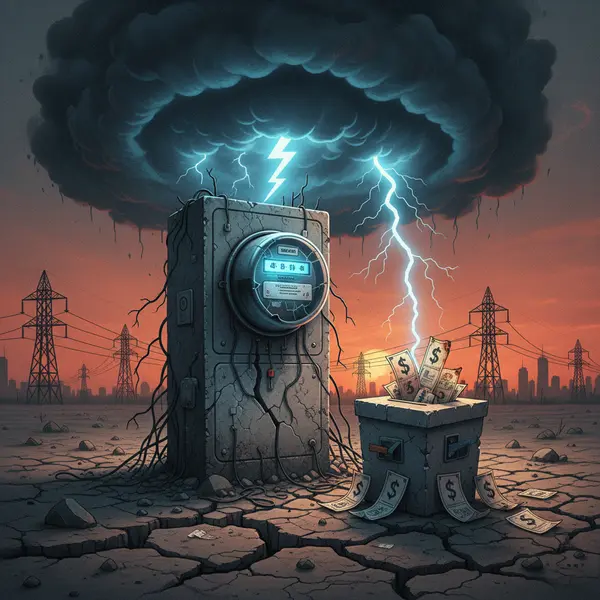
---
- Average U.S. residential bills climbed from $121 in 2021 to $156 in 2025, a 30% increase that outpaced overall consumer inflation.
- PJM wholesale electricity prices surged 76% year-over-year in Q1 2026, driven by accelerating AI data center load across 13 Eastern states.
- Electricity costs ranked as a primary concern for 84% of national survey respondents in January 2026, reshaping midterm electoral politics.
https://upload.wikimedia.org/wikipedia/commons/c/ce/Electric_meter_and_the_circuit_breaker.JPG
U.S. electricity bills, up 30% since 2021 as AI data center demand surges, have become the defining affordability crisis of the 2026 midterms.
Lead
Residential electricity bills have become the defining energy costs flashpoint of the 2026 midterm cycle, with average monthly household charges climbing from $121 in 2021 to $156 by late 2025—a 30% increase that has outpaced overall consumer price inflation and stoked broad voter anger from Pennsylvania to Michigan. The U.S. Energy Information Administration projects residential rates will rise a further 13% to 18% by year-end 2026, compounding the utility inflation burden on American households at a politically sensitive moment.
What Happened
The escalation in electricity prices is being driven by a convergence of structural forces: rapid expansion of artificial intelligence infrastructure, deferred grid upgrades now arriving simultaneously as large-scale capital investments, and transmission bottlenecks in high-demand corridors. The national average residential electricity rate stands at 17.65 cents per kilowatt-hour in 2026, with regional disparities widening sharply.
Maryland has emerged as the most acute pressure point, with electricity prices surging 89% year-over-year—nearly nine times the national rate of increase. Washington D.C. recorded a 26.3% annual rise, Pennsylvania 18.9%, and Rhode Island 16.3%. The concentration of increases along the Eastern Seaboard reflects an accelerating buildout of AI infrastructure within the PJM Interconnection territory, which serves 67 million residents across 13 states and the District of Columbia.
The AI Data Center Driver
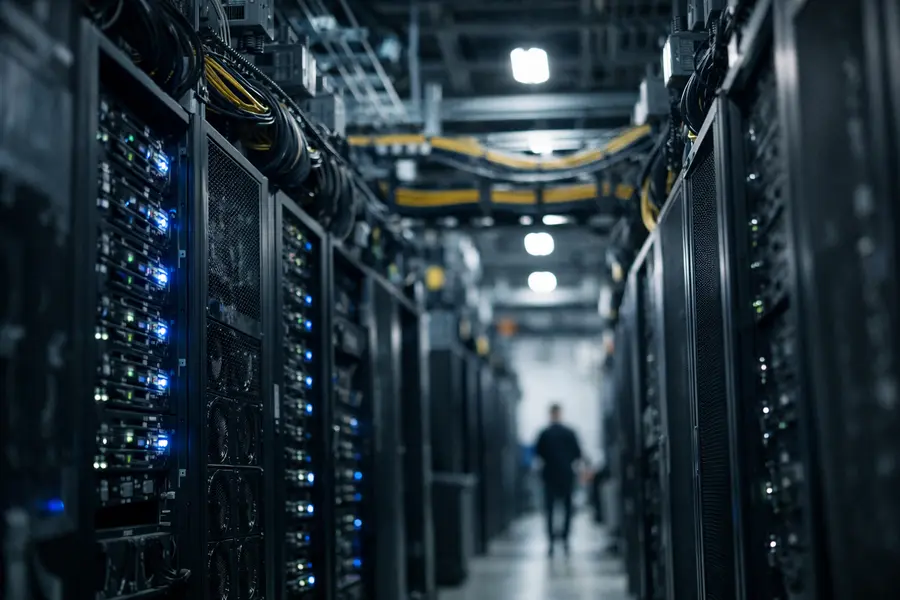
The most structurally significant contributor to rising energy costs is the AI data center boom. Each large-scale facility consumes as much electricity as 100,000 homes; next-generation campuses under development are projected to draw more power than cities the size of Pittsburgh or Cleveland. Data centers accounted for 4% of total U.S. electricity consumption in 2024, a share that is expected to more than double by 2030.
The financial impact is already measurable in wholesale markets. PJM Interconnection's average wholesale power cost reached $136.53 per megawatt-hour in the first quarter of 2026, up from $77.78 a year earlier—a 75.5% increase. The surge was led by capacity costs, which jumped 398% over the same period as the grid priced in projected future demand from data center development. Capacity auction prices have moved from $28.92 per megawatt-day in the 2024/25 delivery year to $329.17 in 2026/27—a more than tenfold increase in two years.
PJM's two most recent capacity auctions incorporated data center load projections that collectively added $13 billion to ratepayer obligations—costs borne entirely by residential and commercial customers rather than the technology companies generating the demand. The grid's independent market monitor characterized the impacts as "significant and irreversible," warning they will intensify unless regulators address large-load interconnection policy directly.
Political Flashpoint
The affordability crisis has redrawn the midterm economics landscape. In a January 2026 Climate Power survey of 2,710 registered voters, 84% cited electricity bills among their primary concerns—a level of salience ordinarily reserved for gasoline prices and grocery costs. A separate AP-NORC Center for Public Affairs Research poll found that 36% of U.S. consumers describe electricity bills as a "major" source of financial stress, and a Politico national survey found nearly half of Americans expect data center energy costs to become a defining campaign issue heading into November.
The electoral effects are already registering. Democrats have outperformed their 2024 vote share by an average of 10.5 percentage points across 20 state legislative special elections, with utility affordability messaging serving as a central plank. Earlier off-year victories in Virginia and New Jersey gubernatorial races were attributed in part to candidates' emphasis on rising utility costs.
Bipartisan pressure against the technology sector is intensifying. Candidates from both parties have proposed data center construction moratoriums, large-load utility tariffs that would require hyperscalers to pay directly for grid upgrades, and new state levies on AI infrastructure development. The debate has exposed an unusual partisan asymmetry: 44% of Democrats view data centers as harmful to household energy costs, compared with 33% of Republicans, who are more inclined to frame AI infrastructure as an economic development vehicle.
Human Toll
The cumulative burden is becoming a hardship indicator. The National Energy Assistance Directors' Association estimates approximately 4 million U.S. households experienced utility service disconnections in 2025—roughly 500,000 more than in 2024. Low- and fixed-income households in high-rate states, particularly within the PJM service territory, face the sharpest exposure as both energy commodity prices and distribution infrastructure charges rise simultaneously.
Regulatory Dimension
State utility commissions are navigating an increasingly charged environment. Rate proceedings that would ordinarily proceed with limited public scrutiny are attracting organized consumer opposition, while at the federal level the Federal Energy Regulatory Commission faces growing pressure to revise interconnection queue rules and cost-allocation frameworks governing how large industrial loads fund grid expansion. Several reform proposals would require AI data center operators to internalize capacity costs directly rather than socializing them across all ratepayers—a structural change that could materially alter the economics of hyperscale development in rate-sensitive markets.
Outlook
Electricity prices are unlikely to stabilize in the near term. EIA projections and PJM's capacity auction trajectory point to sustained household energy costs elevation through at least 2028. With midterm elections in November and no near-term relief mechanism legislated or approved by regulators, utility inflation will remain among the most consequential economic grievances on the electoral map—creating lasting pressure on congressional candidates, state regulators, and the technology companies whose infrastructure expansion sits at the center of the debate.
Mentioned tickers: EXC, FE, PPL, DUK, NEE, MSFT, AMZN, GOOGL, META