Pomegra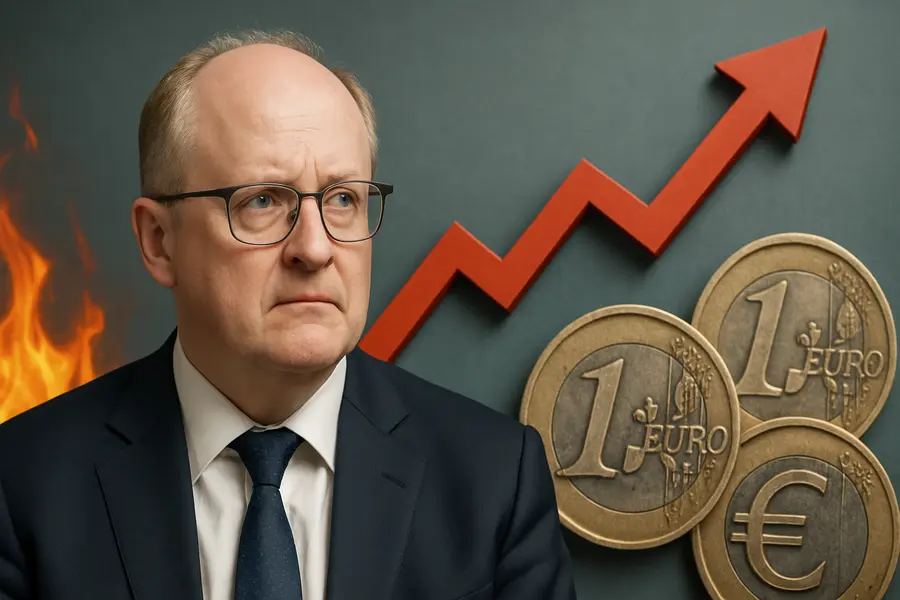
ECB Chief Economist Philip Lane warns further ECB rate hikes are possible as eurozone inflation hit 3.2% in May, well above the bank's 2% medium-term target.
- The ECB raised its deposit facility rate 25 basis points to 2.25% on June 11 — its first hike since September 2023.
- Eurozone inflation accelerated to 3.2% in May, driven by a 10.9% surge in energy costs tied to Middle East supply disruptions.
- New Eurosystem staff projections see headline inflation averaging 3.0% in 2026, far above the bank's 2% target.
Lead
The European Central Bank raised its three key interest rates by 25 basis points on June 11, 2026 — the first ECB rate hike in nearly three years — as Chief Economist Philip Lane signaled that additional tightening remains firmly on the table if eurozone inflation fails to return to the bank's 2% medium-term target on schedule. The deposit facility rate climbed from 2.00% to 2.25%, with the ECB's latest staff projections now placing average headline inflation at 3.0% for the full year.
What Happened
The Governing Council raised the deposit facility rate to 2.25%, the main refinancing operations rate to 2.40%, and the marginal lending facility rate to 2.65%. The decision reversed a directional shift in ECB monetary policy that had been characterized by easing since mid-2024, when the bank cut rates multiple times as inflation approached its target.
Lane, who shapes the bank's economic analysis and holds a central role in rate recommendations, signaled the move in late May, stating the ECB was likely to make a further upward revision to its inflation forecast at the June meeting. He followed with an unambiguous warning: if inflationary pressures prove more durable than the bank's baseline projection assumes, further rate increases will be considered. ECB President Christine Lagarde reinforced the posture in March, stating policymakers stand ready to hike even if the expected surge in inflation proves temporary.
Inflation Drivers
Eurozone inflation rose to 3.2% in May 2026, up from 3.0% in April and its highest reading since September 2023. Energy costs surged 10.9% year-on-year, driven by supply disruptions linked to the ongoing Middle East conflict and persistent pressure on oil flows through critical shipping corridors.Core inflation — stripping out energy and food to isolate underlying price dynamics — climbed to 2.5% in May from 2.2% in April. That acceleration indicates the energy shock is beginning to transmit into wages and services pricing, the precise second-round effect the Governing Council has repeatedly cited as its primary concern. The central bank must weigh whether the energy-driven shock is self-contained or is now seeding a broader and more entrenched inflation dynamic across the eurozone economy.
ECB Monetary Policy Stance
New Eurosystem staff projections accompanying the June decision place headline inflation at an average of 3.0% in 2026, 2.3% in 2027, and 2.0% in 2028. Core inflation — excluding energy and food — is projected at 2.5% in both 2026 and 2027, narrowing to 2.2% in 2028. The 2026 headline figure marks a sharp upward revision from the March projection of 2.6% and reflects both the persistence of the energy shock and its spread into the broader price level.
Lane has framed ECB monetary policy as strictly data-dependent. The conditions he cited as tipping factors are clear: a continued deterioration in the inflation trajectory would warrant further tightening; meaningful improvement in growth and price data could pause the cycle. Governing Council members have collectively flagged wage dynamics and firms' price-setting behavior as the metrics they will monitor most closely between meetings, watching for signs that energy-driven cost increases are becoming embedded in multi-year wage agreements and services pricing.
Strategic Context
The June hike carries deliberate risks that the ECB has chosen to accept. Euro area growth has been subdued, and tighter borrowing conditions add pressure to households and businesses already carrying elevated energy costs. Policymakers acknowledged the difficult trade-off directly, describing the June decision as one that is robust across a range of scenarios mapping out how the supply shock might evolve and affect the medium-term outlook.
Lane's earlier warning that Middle East conflict-driven inflation could persist long after the conflict itself ends is critical to understanding the bank's urgency. The ECB is calibrating not against a short-term energy spike, but against the risk that sustained supply constraints anchor expectations at a structurally higher level.
What Comes Next
Market consensus anticipates a second 25-basis-point increase in September, which would lift the deposit facility rate to 2.50%. The trajectory beyond September remains open, contingent on incoming inflation and growth data. Lane has signaled no preference for a predetermined pace, leaving the Governing Council flexibility to move or pause depending on how the supply shock resolves.
Any sustained easing in energy prices — linked to geopolitical de-escalation in the Middle East — would alter the inflation calculus materially. Until that relief arrives, the ECB rate hike cycle entered in June is the central scenario.
Outlook
The ECB's June rate increase and Lane's explicit warnings of further action represent a decisive transition in ECB monetary policy from cautious observer to active inflation fighter. With eurozone inflation at 3.2%, core prices climbing, and new staff projections keeping headline inflation above target through 2027, additional ECB rate hikes remain the baseline for the second half of 2026. The pace and the terminal rate will hinge on whether energy-driven price pressures feed durably into wages and services, or begin to fade as conditions in the Middle East stabilize.