Pomegra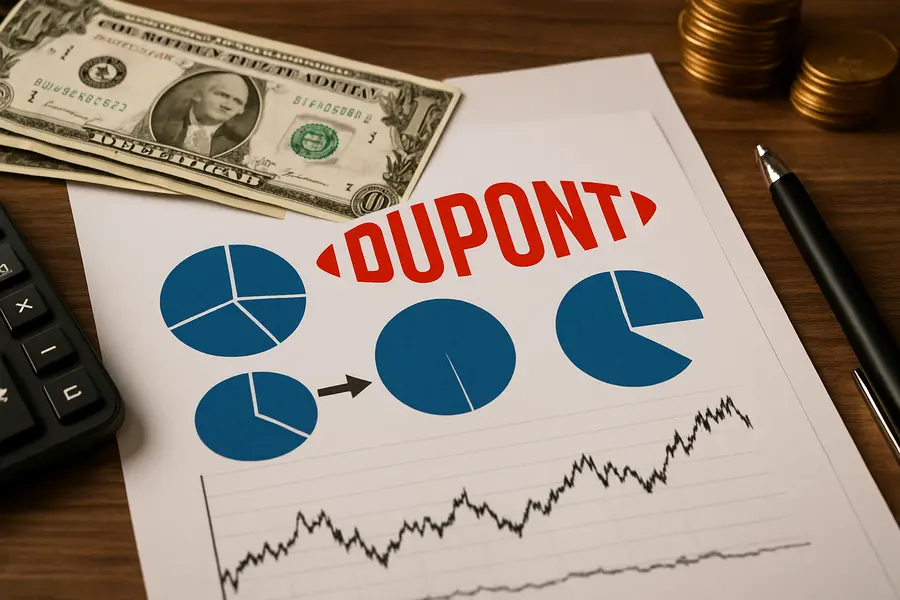
DuPont de Nemours executes a 1-for-3 reversesplit, cutting outstanding shares to 135 million and lifting split-adjusted EPS guidance to $7.02–$7.16 for full-year 2026.
- DD shares consolidated 3-for-1 effective June 24, 2026, reducing outstanding float from 405 million to roughly 135 million.
- Full-year 2026 adjusted EPS guidance reaffirmed at $7.02–$7.16 on a split-adjusted basis, with Q2 at approximately $1.75.
- DD shares fell 3.13% on the effective date, trading below its 20-, 50-, and 200-day moving averages.
Lead
What Happened
DuPont's board signaled the plan on March 18, 2026, when it announced it would seek stockholder authorization for a consolidation ratio ranging from 1-for-2 to 1-for-4. Shareholders approved the amendment on May 21, and the board locked in the 1-for-3 ratio five days later. No fractional shares were issued; holders entitled to a fractional interest received a cash payout through transfer agent Computershare Trust Company.
The reduction in float was accompanied by a proportional cut in authorized shares, bringing that figure from approximately 1.67 billion to 555.6 million — a step that limits future dilution headroom and signals the company does not anticipate large equity issuances in the near term.
Market Reaction
DD shares fell 3.13% on the split's effective date, extending a pattern of underperformance that has left the stock below its 20-day, 50-day, and 200-day moving averages — a configuration that technical observers characterize as medium- and long-term sellers remaining in control. The decline reflects a schism in how institutional investors are reading the corporate action.
A segment of the market views a reversesplit as a structural admission of weakness — a mechanism companies resort to after prolonged share-price erosion to avoid perception thresholds that can trigger index exclusion or institutional selling mandates. DuPont's trailing twelve-month financials, which show negative earnings and notable revenue softness, reinforce that reading for some.
The more constructive interpretation holds that the consolidation is a proactive step to align DD per-share metrics — earnings, book value, dividend yield — with those of U.S. industrial peers that trade at higher nominal prices. By compressing the share count, the split-adjusted EPS of $7.02–$7.16 for full-year 2026 and approximately $1.75 for the second quarter present a per-share profile that maps more neatly onto comparables in the specialty materials and industrial sciences space.
Strategic Context
DuPont's investor-relations positioning frames the reversesplit as a capital-structure optimization rather than a distress signal. The company highlighted that the reaffirmation of guidance — with diluted shares of roughly 137 million now the reference point — demonstrates continuity in its earnings trajectory and that operating performance is driving the numbers, not share-count mechanics.
The move also reduces administrative complexity. A smaller share count lowers the absolute number of fractional-share situations arising from dividend reinvestment plans, employee equity grants, and acquisition considerations. For a company in the middle of reshaping its portfolio following the spinoffs of its electronics and water segments, cleaner per-share math reduces friction in how management communicates value creation to investors.
Honeywell, another diversified industrial in the process of transforming its portfolio, also initiated a reversesplit in the same period — a coincidence that suggests parallel thinking among large-cap U.S. industrials seeking to reposition their equity presentation alongside leaner, higher-price-per-share peers.What Comes Next
The immediate test for DD is whether the split-adjusted share price holds in a range that institutional investors associate with quality. A post-split price in the triple digits would, arithmetically, place DuPont in the company of premium-branded industrials. Whether the stock can sustain such levels depends heavily on whether the company can convert its reaffirmed EPS guidance into reported results when Q2 earnings arrive.
Investors will also watch capital-allocation signals. The authorized-share reduction narrows the board's ability to issue equity at will, which can be read as a commitment to return capital through buybacks or dividends rather than diluting existing shareholders. With approximately 137 million diluted shares outstanding, even modest share repurchases would have a more pronounced per-share effect than was possible at the pre-split count of 405 million.
The critical unknown remains the trajectory of underlying revenue. A reversesplit does not alter the enterprise's cash flows, competitive positioning, or cost structure. If operating results in the second half of 2026 do not validate the adjusted earnings guidance, the mechanical lift from consolidation will erode quickly.
Outlook
DuPont's 1-for-3 reversesplit is now a fait accompli, with DD trading on a split-adjusted basis as of June 24, 2026. The company holds to full-year adjusted EPS guidance of $7.02–$7.16, anchored by approximately 137 million diluted shares. Whether that guidance lands depends on execution over the next two reporting cycles. Near-term sentiment remains cautious, with DD below key technical levels, but the structural case — higher nominal share price, cleaner per-share metrics, constrained authorized share count — gives management a better-positioned equity instrument heading into the second half of the year.