Pomegra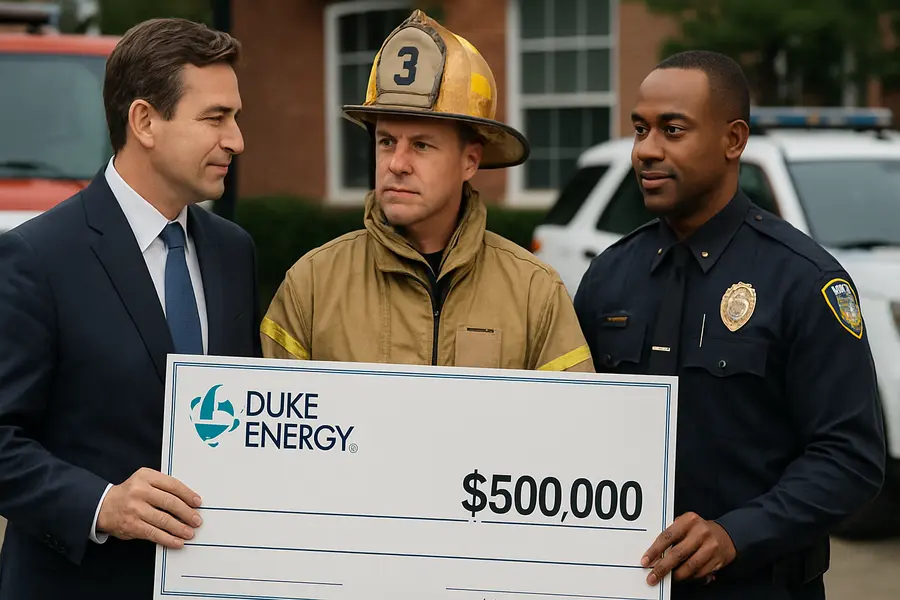
Duke Energy Foundation awards $500,000 through its HERO program to more than 30 South Carolina emergency response organizations, funding equipment, training, and disaster preparedness statewide.
- Duke Energy Foundation's 2026 HERO grant cycle distributed $500,000 to 30+ SC agencies and nonprofits, with individual awards up to $20,000.
- Funds will finance drones, utility task vehicles, communication systems, and specialized first-responder training across South Carolina.
- The program has delivered $2 million in total community aid since its 2022 launch, covering 137 microgrants statewide.
Lead
Duke Energy Foundation awarded $500,000 in emergency preparedness grants to more than 30 South Carolina government agencies and nonprofit organizations in June 2026, the fourth consecutive year the utility has funded its Helping Emergency Response Organizations (HERO) program. Individual grants reaching up to $20,000 each will finance life-saving equipment, specialized training, and communication technology for first responders across the state.What Happened
The 2026 HERO grant cycle opened applications on March 19 and closed April 25 before recipients were announced June 5. Eligible applicants included state and local government agencies alongside 501(c)(3) nonprofits, with priority weighting given to communities hardest hit by recent severe weather and programs serving low-income populations.
Award recipients will use funds to acquire drones, utility task vehicles, chainsaws, vehicle repeater systems, and road barricades — equipment gaps identified in the aftermath of Hurricane Helene and subsequent storm seasons. Training programs covering community storm preparedness and coordinated medical response also qualify for funding.
Community Impact
Prior-year recipients across South Carolina illustrate the program's scope. The Florence Fire Department obtained a vehicle repeater system to strengthen field communications, while Florence County secured a $20,000 award for a utility task vehicle and road barricades. The North Spartanburg Firefighters Foundation received drone equipment funding, and the City of Westminster used a $5,000 grant to purchase chainsaws and pole saws for storm recovery operations. The South Carolina EMS Association directed prior funding toward statewide improvements in coordinated medical response.
Strategic Context
Duke Energy's HERO program reflects a broader utility-sector commitment to embedding community aid and resilience into corporate strategy. Hurricane Helene exposed the critical interdependency between grid recovery operations and local first-responder capacity, reinforcing the business case for proactive preparedness investment.Duke Energy South Carolina President Tim Pearson stated that the lessons of Hurricane Helene demonstrated that preparedness can never be taken too far, and that equipping first responders with the right tools and training is central to the company's emergency preparedness mission.
Since its 2022 launch, the HERO program has distributed $2 million across 137 microgrants in South Carolina, establishing a consistent, multi-year community aid commitment that has expanded in scale each grant cycle.
Outlook
The HERO program is expected to continue on an annual basis, with applications typically opening each March. The 2026 cycle's prioritization of communities impacted by recent severe weather signals the program will remain adaptive to evolving climate-driven disaster risk. With $2 million committed over four years, Duke Energy has positioned emergency preparedness and community resilience as durable pillars of its South Carolina stakeholder strategy — and a model for utility-sector engagement with first-responder networks.