Pomegra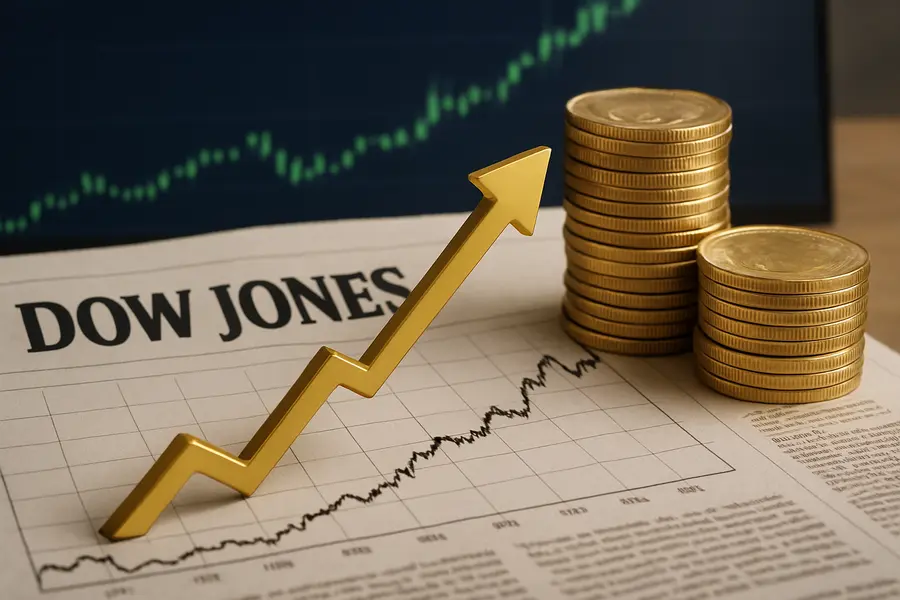
The Dow Jones Industrial Average closed H1 2026 up 8.9%, its strongest first-half performance since 2021, driven by record earnings, tariff relief, and an AI-fueled semiconductor surge.
- The DJIA gained 8.9% in H1 2026, topping 52,000 for the first time and logging its best first half since 2021.
- S&P 500 first-quarter earnings jumped 28% year-over-year, more than doubling analyst forecasts at the start of the season.
- A hawkish Fed pivot under Chair Kevin Warsh, with September rate-hike odds at 66%, clouds the second-half outlook.
Lead
The Dow Jones Industrial Average closed Monday, June 30, 2026, at 52,319.20 — adding 136 points on the final session and capping a first-half gain of 8.9%, the index's best H1 2026 performance in five years. The benchmark blue-chip index, which opened the year at 48,382 on January 2, crossed the 52,000 threshold for the first time in its history on June 29 before consolidating those gains in the final session. The S&P 500 ended the half up 9.4%, while the Nasdaq Composite surged 12.5% — setting the stage for one of the broadest first-half rallies since the post-pandemic rebound of 2021.
What Drove the Rally
Three forces propelled the best first half Dow run in half a decade.
Corporate earnings delivered the clearest lift. S&P 500 revenues for the first quarter of 2026 rose 12% year-over-year, while earnings jumped 28% — more than double the consensus forecast entering the reporting season. Consumer spending, which accounts for roughly two-thirds of U.S. economic output, expanded at a solid pace as households continued to absorb elevated prices without retreating. The labor market added an average of 114,000 jobs per month from January through May, dispelling recession fears that had shadowed late 2025. Tariff relief provided a second catalyst. The U.S. Supreme Court ruled on February 20, 2026, that the administration had exceeded its authority under the International Emergency Economic Powers Act in imposing sweeping reciprocal import taxes. The ruling sent the Dow up 230 points in a single session, with the S&P 500 adding 0.7% and the Nasdaq rising nearly 1%. The administration subsequently pivoted to a 10% global baseline tariff while exploring new legal avenues, reducing the peak uncertainty that had seized markets in late 2025. Wells Fargo estimated the ruling would lift S&P 500 earnings by 2.4% on a full-year basis. AI infrastructure spending provided the third engine. Semiconductor stocks now account for 20% of S&P 500 market capitalization — a record and roughly four times their 2020 weighting. Micron Technology (MU) surged more than 300% year-to-date, while demand for advanced chips kept Dow 30 technology constituents broadly in positive territory. Apple (AAPL) returned approximately 43% over the trailing twelve months, anchoring the index's price-weighted composition. Goldman Sachs (GS) added roughly 18% on a resurgence in M&A activity and IPO issuance. Caterpillar (CAT) climbed nearly 15% year-to-date, crossing a $300 billion market cap for the first time.Stock Market Recap June
The stock market recap June 2026 tells a more nuanced story beneath the headline gain. The month opened with oil price volatility triggered by U.S.-Iran tensions, which drove a brief flight from risk assets before diplomatic channels reopened and shipping resumed. Despite the geopolitical noise, equities found footing as traders rotated aggressively out of high-multiple technology and into cyclicals, financials, and small-cap equities. The Russell 2000 surged 5.39% in June alone and has climbed more than 73% from its April 2025 lows. By contrast, the Nasdaq declined 1.28% in June as the "Magnificent Seven" posted their worst collective month on record, even as the broader index retained its first-half gains.
The banking sector gained roughly 20% in the second quarter, benefiting from steeper yield curves and a rebound in deal flow. Energy stocks faced the opposite dynamic: crude oil fell 17–18% over the quarter — its steepest quarterly drop since 2020 — dragging Chevron (CVX) into negative territory for the year. UnitedHealth Group (UNH) also ended the half in the red, down approximately 2%, weighed by ongoing regulatory scrutiny of the health-insurance sector.
Dow 30 News: Winners and Laggards
Among Dow 30 news standouts, the divergence between industrials and healthcare was pronounced. Boeing (BA) recovered ground after a series of operational stabilization announcements, appearing in positive territory into the half-year close. Honeywell International (HON) lagged the index, falling more than 6% year-to-date as investors questioned the pace of its planned business restructuring. Meta Platforms (META), added to the Dow in a prior recomposition, shed roughly 15% through the first half as its cloud computing expansion drew skepticism from institutional investors despite an ambitious announcement to sell excess computing capacity.
Commodities that had served as safe-haven proxies throughout 2025 broadly retreated. Gold fell 8% for the half as real interest rate expectations rose, silver declined 19%, and palladium shed 24%.
Federal Reserve: The Looming Variable
Stock market recap June conversations are incomplete without the Federal Reserve. Chair Kevin Warsh, confirmed earlier in the year, has adopted a noticeably more hawkish posture than his predecessor. With inflation running at more than twice the 2% target, markets now price a 66% probability of a rate increase at the September 2026 meeting, according to CME FedWatch data. That repricing capped equity upside in the final weeks of the half and injected a competing narrative into what had otherwise been a straightforward risk-on environment.Outlook
The Dow Jones H1 2026 performance of 8.9% — the best first half in five years — reflects a genuine broadening in corporate profitability and a partial resolution of the tariff uncertainty that rattled markets into early 2026. The structural tailwinds from AI capital expenditure and consumer resilience remain intact. However, with September rate-hike odds at 66%, inflation above target, and U.S.-Iran tensions unresolved, the second half arrives with fewer of the tailwinds that defined the first. Whether the Dow builds on its record 52,000 close or consolidates will hinge on whether the earnings growth that underpinned H1 can outlast a tighter monetary policy stance.
Mentioned tickers: DJI, AAPL, GS, CAT, CVX, UNH, HON, META, BA, MU, SPX, COMP, RUT