Pomegra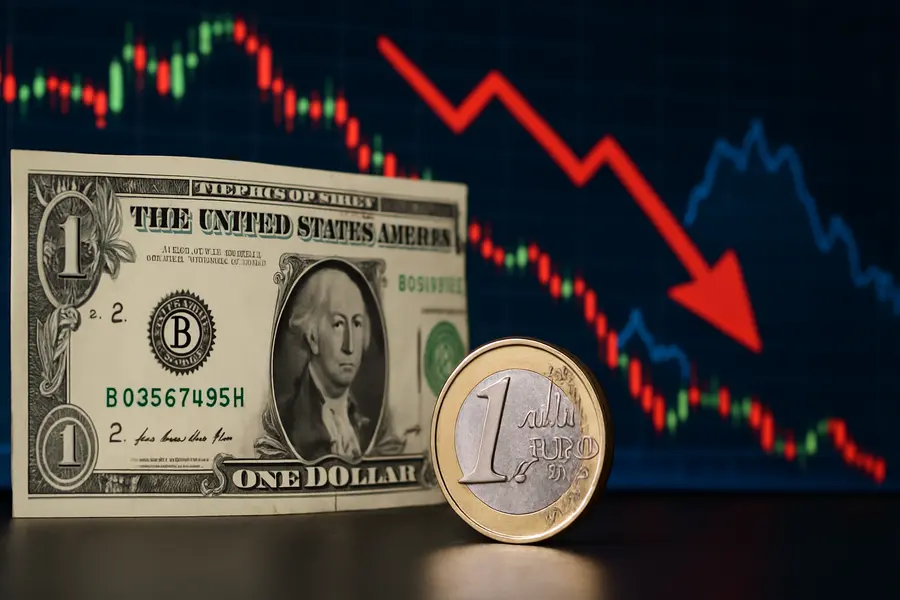
The US Dollar Index rises above 101.60 to a 13-month high as hawkish Fed rate-hike bets and elevated PCE inflation push EUR/USD to yearly lows near 1.1330.
- The DXY climbed to 101.60 on June 24 — its strongest since May 2025 — extending its June advance to roughly 2.5%.
- Nine of 18 FOMC members now project at least one 2026 rate hike; CME FedWatch puts September odds at 70%, up from 29% a week prior.
- EUR/USD dropped from a 2026 high of 1.20 to a 13-month trough near 1.1330 as the Fed-ECB rate gap holds above 125 basis points.
Lead
The US Dollar (USD) advanced for a third consecutive session on June 24, 2026, pushing the US Dollar Index (DXY) to 101.60 — its highest level since May 2025 — as a hawkish Federal Reserve pivot and persistent consumer-price pressures drove a sharp repricing of near-term interest-rate expectations. EUR/USD, which had reached 1.20 earlier in 2026, slipped to 1.1330 on June 25, testing a 13-month low, as the policy-rate differential between Washington and Frankfurt widened further against the euro.
What Happened
The catalyst was Federal Reserve Chair Kevin Warsh's inaugural Federal Open Market Committee (FOMC) meeting on June 17, at which the central bank held its benchmark rate steady at 3.50%–3.75% but released a materially more hawkish Summary of Economic Projections. Nine of 18 FOMC participants pencilled in at least one rate increase before year-end, lifting the median 2026 year-end rate forecast from 3.4% to 3.8%. Only one official projected a cut, and 17 of 18 judged inflation risks as tilted to the upside.
Markets repriced rapidly. The probability of a 25-basis-point hike at the July meeting surged to 37% from 8.5% in the week before the meeting, while September odds jumped to 70% from 29%, and December pricing rose to 85.5%, all according to CME FedWatch data.
Those expectations found additional support on June 25 when the Bureau of Economic Analysis reported that core PCE — the Federal Reserve's preferred inflation gauge — rose 3.4% year-on-year in May, up from 3.3% in April, matching consensus estimates. Headline PCE accelerated to 4.1% annually, its fastest pace since April 2023. On a monthly basis, core PCE held at 0.3%, sustaining pressure on the Fed to follow through on its hawkish guidance.
Market Reaction
The DXY posted gains in each session following the June 17 FOMC decision, gaining roughly 2.5% through June 24 to breach the 101.50 handle. Fresh flash PMI data reinforced the dollar's momentum: the S&P Global US Composite PMI rose to 52.2 in June from 51.5 in May, with manufacturing output climbing to 55.7 and the services component edging higher to 51.3 — signalling resilient economic activity inconsistent with an imminent rate-cutting cycle.
Strategic Context
The euro's weakness has persisted despite the European Central Bank (ECB) delivering its own hawkish move on June 11, raising its deposit rate by 25 basis points to 2.25% — its first increase since 2023 — in response to energy-driven inflationary pressures linked to Middle East supply disruptions. Markets, however, interpreted the ECB's action less as durable yield support and more as evidence that the eurozone is tightening monetary conditions into decelerating growth momentum, a combination that blunts the traditional currency-positive effect of higher rates.
The residual rate gap remains substantial: the Fed's 3.50%–3.75% target range sits more than 125 basis points above the ECB's 2.25% deposit rate. In the current environment, the USD is functioning simultaneously as a yield instrument and a safe-haven asset — a combination that historically imposes sustained downward pressure on EUR/USD. Since the June FOMC meeting, the greenback has effectively positioned itself as the only major-economy currency backed by a central bank still willing to tighten into a growth and inflation shock.
Geopolitical Dimension
Elevated energy prices stemming from geopolitical tensions in the Middle East have complicated central-bank calculus on both sides of the Atlantic. For the ECB, oil-driven inflation created an unwanted stagflationary dynamic that triggered the June rate increase despite softening eurozone economic data. For the Fed, the same price pressures reinforced the case for maintaining a restrictive stance. The net effect on EUR/USD has been asymmetric: the Fed's hawkish credibility under Warsh has translated into dollar strength, while the ECB's move has been read primarily as a growth constraint on the eurozone.
What Comes Next
With the next FOMC meeting scheduled for late July, near-term direction in EUR/USD will depend on the incoming data flow. The July CPI reading and labor-market reports will be critical in confirming or challenging the case for a hike. Any upside surprise in US inflation data will cement July as a live meeting and push the DXY toward the 102 area, with EUR/USD testing the 1.13 support zone. A softer-than-expected reading could prompt a technical relief bounce, but the broader repricing of Fed policy is unlikely to fully unwind absent a decisive turn lower in core PCE.
On the European side, any ECB communications signalling a pause following the June hike could widen the rate differential further, entrenching the euro's structural disadvantage against the dollar through the second half of 2026.
Outlook
The USD's ascent to a 13-month high reflects a fundamental realignment in Federal Reserve policy expectations, validated by core PCE running at 3.4%, nine FOMC members projecting further tightening, and September hike odds firmly above 70%. EUR/USD faces sustained pressure at the 1.13 support zone, with the rate differential and safe-haven demand providing a dual tailwind for the greenback. The near-term trajectory will be governed by US inflation data; the structural case for a stronger dollar against the euro remains intact so long as the Fed-ECB divergence persists.