Pomegra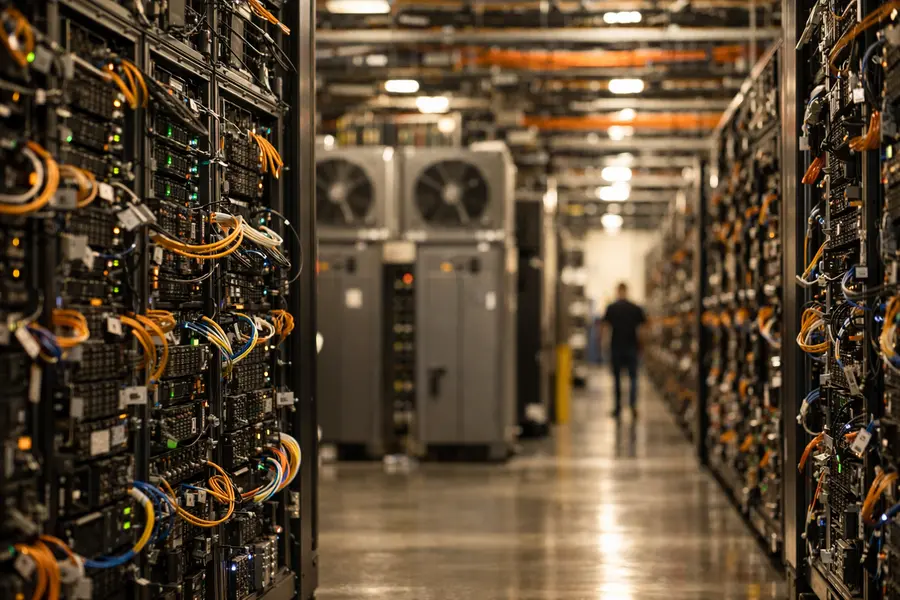
CoreWeave posted record Q2 2026 revenue of $2.58 billion, surpassing estimates as its $104 billion backlog and raised full-year guidance drove a 14% after-hours stock surge.
- Q2 2026 revenue reached $2.58 billion, up 112% year-over-year, beating the $2.56 billion consensus estimate.
- Adjusted EBITDA margin expanded to 59%, with full-year revenue guidance raised to $12.4–$13.2 billion.
- Revenue backlog surged 246% year-over-year to $104 billion, underscoring durable demand for AI compute infrastructure.
Lead
CoreWeave (CRWV) reported second-quarter 2026 revenue of $2.58 billion on August 11, up 112% from $1.21 billion a year earlier and 24% sequentially from Q1 2026, as hyperscale customers accelerated spend on GPU-dense cloud infrastructure. Adjusted EBITDA of $1.51 billion exceeded the $1.43 billion analyst consensus, driving the stock up 14% in after-hours trading — a reversal after five consecutive post-earnings declines that had averaged 17%.What Happened
CoreWeave delivered adjusted earnings per share of negative $1.03, significantly better than the negative $1.20 expected. Adjusted operating income reached $128 million, nearly double the $66.6 million consensus. GAAP net loss widened to $626 million from $290 million in the year-ago period, reflecting accelerating capital deployment and rising interest expenses as the company funds what is now the fastest infrastructure buildout in cloud history.The revenue backlog — a closely watched indicator of future contracted income — stood at $104 billion as of quarter-end, up 246% year-over-year from $25.4 billion in mid-2025. Early in Q3 2026, CoreWeave disclosed an additional $25 billion in new customer commitments, extending the demand runway well into the decade.
Infrastructure Expansion
CoreWeave operates 51 active data centers with 1.5 gigawatts of live compute power at quarter-end. Capital expenditures for Q2 reached $9.4 billion, slightly above the high end of prior guidance, reflecting accelerated hardware procurement and site development. The company raised its full-year 2026 capital expenditure target to $35–$39 billion, up from a prior $31–$35 billion range, as contracted power commitments reached 4.2 gigawatts. Management targets 1.85 gigawatts of active power by year-end 2026 and has set an 8-gigawatt milestone for 2030.Market Reaction
Shares surged as much as 16% in extended trading following the earnings and guidance revision, recovering a significant portion of losses accumulated since the company's March 2025 IPO at $40 per share. The strong print validated the core investment thesis: that AI training and inference workloads would absorb capacity as fast as CoreWeave could bring data centers online. Adjusted EBITDA margin of 59% — against the 55.4% consensus — offered evidence that pricing power remains intact in a supply-constrained GPU market.
Strategic Context
New enterprise agreements with Anthropic and Meta in Q2 expanded CoreWeave's customer base beyond its early anchor relationship with Microsoft. The company's managed inference platform, a higher-margin software-layer business, grew annual recurring revenue from roughly $1 million to over $100 million during the first half of 2026, with management targeting $250 million by year-end.
CoreWeave's weighted average contract length of approximately five years differentiates it from transactional cloud competitors. Customers pay for GPU capacity regardless of utilization, providing revenue predictability that supports the capital structure underpinning its aggressive buildout.AI and Technology Angle
The CoreWeave model — purpose-built GPU clusters leased on multi-year terms to AI laboratories, enterprises, and hyperscalers — benefits from structural scarcity in high-end compute. NVIDIA H100 and B200 GPU clusters remain constrained, allowing CoreWeave to command pricing premiums and lock in long-term contracts before competitors can source equivalent hardware. The shift toward inference workloads, which require continuous, sustained compute rather than burst training runs, extends demand durability and supports the infrastructure investment cycle.
The managed inference platform's rapid ARR growth signals CoreWeave's strategic move up the value stack — from raw GPU-hours to software-orchestrated AI serving — where margins are structurally higher.