Pomegra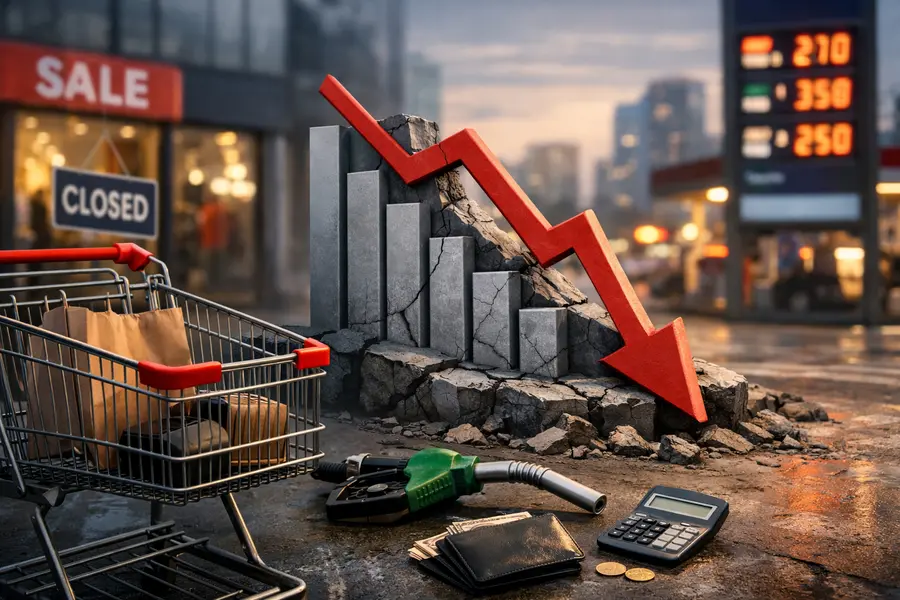
U.S. consumer confidence dropped to 90.8 in July 2026, a third straight current-conditions decline, as elevated food and energy prices continue to weigh on households.
- The index fell 1.4 points to 90.8 in July, missing the 92.3 consensus, as the Present Situation Index logged its third consecutive decline.
- The Present Situation Index dropped 3.6 points to 114.9; the Expectations Index held at 74.7, still below the recessionary-signal threshold of 80.
- Elevated food, grocery, and gasoline prices dominated consumer write-ins, reshaping household spending at the shoppers mall and across discretionary categories.
Lead
The Conference Board Consumer Confidence Index fell 1.4 points to 90.8 in July 2026—below the Dow Jones consensus of 92.3 and down from an upwardly revised 92.2 in June—marking the third consecutive monthly decline in the Present Situation Index and extending a softening trajectory that has defined U.S. consumer sentiment since late 2021.
What Happened
Surveyed between July 1 and 22, Americans reported growing discomfort with both business conditions and labor market availability. The Present Situation Index, which tracks assessments of current economic circumstances, fell 3.6 points to 114.9. The share of respondents describing business conditions as "good" slipped to 18.9% from 20.2%, while those calling conditions "bad" rose to 17.8% from 16.5%.
Labor market readings followed a similar trajectory. The proportion of consumers reporting jobs as "plentiful" edged down to 24.6% from 25.5%, while those finding jobs "hard to get" held near flat at 21.5%. The net labor differential narrowed to 3.1 percentage points, down 0.7 from June.
The Expectations Index—reflecting the six-month outlook for income, business, and labor conditions—held at 74.7, unchanged from June. That reading has remained below the 80-point threshold historically associated with recessionary signals for the better part of recent quarters.
Why Confidence Is Falling
Rising food and energy costs dominated open-ended consumer responses. Write-in mentions of food and grocery prices increased in frequency relative to June, while oil and gas references intensified, reflecting pump prices still running above year-ago levels. The all-items Consumer Price Index through May 2026 registered a 4.2% year-over-year increase—the largest 12-month gain since April 2023—keeping real purchasing power under sustained pressure.
The survey window also overlapped with continued conflict in the Middle East, a factor that historically adds geopolitical uncertainty to short-term sentiment readings. Dana Peterson, Chief Economist at The Conference Board, noted that "consumer confidence moderated slightly in July, continuing a general downward sloping trajectory since late 2021."
The confidence chart over recent months reflects that consistency: headline confidence has drifted lower in five of the past seven readings, with modest upticks followed by renewed pullbacks. The composite index now sits roughly 15 points below levels recorded in early 2022.
Consumer Spending Patterns
Beneath the headline figure, spending intentions reveal a bifurcated consumer. Households continue to allocate toward restaurants, takeaway food, beauty products, and streaming services—categories with modest ticket sizes or perceived essential value. Demand for higher-priced discretionary goods remains under pressure, with consumers showing heightened selectivity in home improvement, apparel, and electronics.
That shift is evident in physical retail. Foot traffic data through mid-July suggests shoppers mall visits remain below 2019 baselines in several major metropolitan markets, as price-sensitive households consolidate trips and prioritize essential spending. Digital commerce continues to absorb a portion of the volume shift, though average online basket sizes have also contracted year-over-year.
Consumer inflation expectations for the 12-month horizon were slightly less elevated in July than in June, a modest signal that longer-run price anchoring remains relatively stable—even as near-term pessimism over grocery and fuel costs runs high enough to compress discretionary activity.
Market Context
The July reading missed consensus estimates, adding to a run of softer sentiment prints that have complicated the Federal Reserve's assessment of household demand strength. Retail and consumer discretionary equities have underperformed the broader market in recent sessions, with investors pricing in cautious same-store sales guidance ahead of second-quarter earnings releases from major retailers.
The 40.2-point spread between the Present Situation Index (114.9) and the Expectations Index (74.7) signals a meaningful divergence: consumers view current conditions as substantially better than near-term prospects—a configuration that typically foreshadows caution on big-ticket purchase decisions and can dampen durable-goods orders in subsequent months.
Outlook
Three consecutive declines in current-conditions sentiment place the index in territory that has historically preceded a deceleration in consumer spending growth, particularly in categories sensitive to household balance sheet stress. With the Expectations Index pinned below 80 and inflation still running above Federal Reserve targets, a recovery in confidence remains contingent on a material easing in core goods and services prices. The August survey, covering consumer attitudes through late summer, will be a key indicator of whether the present erosion stabilizes or deepens ahead of the critical autumn retail season.
Mentioned tickers: XLY, XRT, WMT, TGT, COST