Pomegra
China's October producer prices rose 5.7%, the fastest since June 2022, while consumer inflation eased to 0.7%, as Asian equities rebounded on Monday.
- China's producer price index rose 5.7% in October from a year earlier, the highest since June 2022 and above the 5.3% forecast.
- Consumer prices rose 0.7%, down from 0.9% in September, widening the factory-to-shop gap to about five percentage points.
- Taiwan's Taiex gained nearly 5% and Japan's Nikkei 225 rose 3.25% as AI-linked shares recovered.
Lead
China's producer price index rose 5.7% in October from a year earlier, the National Bureau of Statistics said on Monday. That was the sharpest increase since June 2022, up from 5.0% in September and above the 5.3% market forecast. Consumer prices moved the other way. Headline consumer inflation slowed to 0.7% from 0.9%, its first deceleration after two months of gains and slightly below the 0.8% expected. Asian shares rebounded the same day.
What Did China's October Price Data Show?
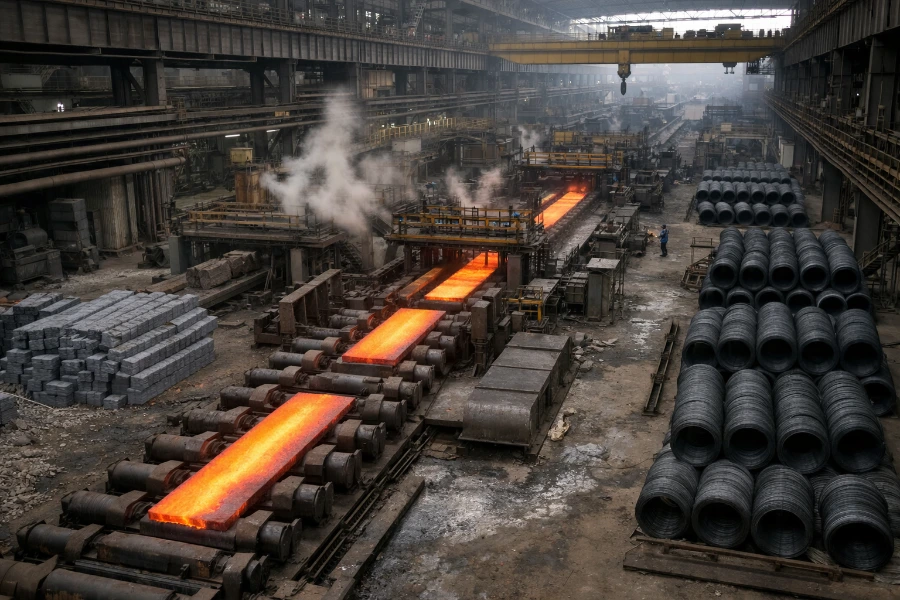
Producer prices rose 0.7% on the month, and the annual rate has now climbed for consecutive months. Nine industries, including coal mining, oil and gas extraction and fuel processing, together contributed more than 6 percentage points of the annual gain.
Consumer prices were unchanged from September. Core consumer inflation, which strips out food and energy, eased to 0.8%. The gap between factory-gate and retail prices is now about five percentage points, one of the widest in the modern history of the two series.
Why Is Producer Inflation Outrunning Consumer Prices?
Producer prices are being pushed up by input costs that households do not directly feel. Energy is the largest channel. Brent crude has hovered near $100 a barrel on Middle East tensions, and China entered its winter peak-demand preparation period with higher demand for coal and natural gas for power generation and heating.
A second driver is investment in artificial intelligence. Data-centre construction and equipment orders have lifted demand for metals, power equipment and electronics components.
Consumer prices have not followed because domestic demand remains soft. Many manufacturers cannot pass higher costs on to buyers. Absorbing those costs squeezes margins, particularly for downstream and mid-stream firms that sit between commodity suppliers and retail customers.
How Did Asian Markets React?
Asian shares rose broadly on Monday as AI-related stocks recovered part of the ground lost in the previous week's sell-off. That sell-off was triggered by US midterm election results and by concern that Democratic-controlled legislatures could slow the rollout of data centres. It wiped roughly $2.5 trillion from US equities in a single session on Thursday.
Taiwan's Taiex led regional gains with a rise of nearly 5%. Taiwan Semiconductor Manufacturing Co. (TSM) gained about 4.7%. Japan's Nikkei 225 rose 3.25%. Nvidia (NVDA) shares had risen 2.8% in the US session on Friday, after falling 9.3% and 3.2% in the two sessions before it.
Gains elsewhere were smaller. Hong Kong's Hang Seng Index rose about 0.1% to 24,507.83, and the Shanghai Composite added 0.3% to 3,660.79. South Korea's Kospi fell 0.8% to 5,018.85 after rising earlier in the session, and Australia's S&P/ASX 200 edged up 0.1% to 9,029.70.
Mainland markets showed little reaction to the inflation data, which pointed in two directions. Higher producer prices can lift the profits of upstream commodity producers, while weak consumer prices point to limited pricing power further down the chain.
Brent crude fell 1.8% to $96.60 a barrel and US benchmark crude lost 1.3% to $89.67. The dollar traded at 158.16 yen. S&P 500 futures were up 0.3% and Dow futures up 0.6%. On Friday the S&P 500 had closed 0.3% higher, leaving it down 2.7% for the week.
What Does the Gap Mean for Interest Rates and Policy?
The divergence complicates the policy picture for Beijing. Consumer inflation of 0.7% leaves little pressure on the People's Bank of China to tighten, and weak demand argues for continued support. Producer prices running at 5.7% limit how aggressively policymakers can cut interest rates without adding to cost pressures in energy-intensive industries.
In practice, the central bank has room to keep policy accommodative while the consumer data stays subdued. Policymakers are more likely to lean on targeted measures aimed at consumption and on fiscal support than on broad monetary stimulus.
The data also matters beyond China. China is the world's largest exporter of manufactured goods, and rising factory-gate prices can feed into export prices over time. That would add to costs for importers in the US, Europe and emerging markets, although the effect depends on how far Chinese producers can lift export prices in a competitive market.
Outlook
The near-term path depends on energy. If crude stays near current levels and winter heating demand lifts coal and gas consumption, annual producer inflation is likely to remain elevated into the end of the year. Base effects from last year's weak prices will also keep the year-on-year figure high.
Consumer prices are more likely to stay subdued unless household demand improves. A persistent gap would keep pressure on industrial margins and leave China's inflation profile out of step with the energy-driven price pressure seen elsewhere.
For markets, the next test is whether the AI-linked rebound holds. Taiwan, Japan and South Korea remain the most exposed to swings in chip and data-centre sentiment, as the past week showed.