Pomegra
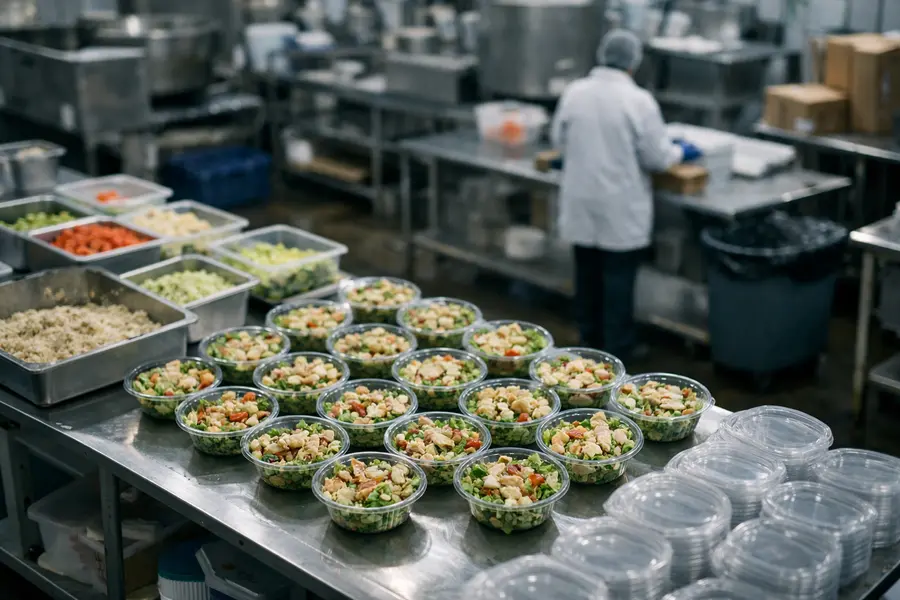
Cava (CAVA) shares fell about 11% after hours as Q3 2026 results missed estimates, with cyclospora fears cutting same-restaurant sales by 150 basis points.
- Cava shares dropped roughly 11% in extended trading after Q3 revenue and adjusted EPS of $0.11 missed estimates.
- Cyclospora concerns trimmed same-restaurant sales by about 150 basis points, leaving growth at 3.1%.
- Full-year same-restaurant sales guidance rose to 6% to 7%, while the restaurant-level margin outlook was cut.
Lead
Cava Group (NYSE: CAVA) fell about 11% in after-hours trading on Wednesday, November 4, after the Mediterranean fast-casual chain reported third-quarter results that fell short of Wall Street expectations. Revenue rose 22.1% to $353.7 million, but adjusted earnings of $0.11 per share came in below the $0.12 consensus. The company said a multistate cyclospora outbreak tied to iceberg lettuce, and the wider wariness it triggered toward fresh produce, reduced same-restaurant sales by roughly 150 basis points in the 12 weeks ended October 4.What Happened to Cava's Third-Quarter Results?
Cava's third-quarter growth stayed strong on the top line but slowed at the restaurant level, and profit moved the wrong way. Same-restaurant sales rose 3.1%, almost entirely from menu pricing and product mix (3.0%), with guest traffic only slightly positive. Net income fell to $13.2 million from $14.7 million a year earlier.
Restaurant-level profit margin declined 120 basis points from a year earlier to 23.4%. The company pointed to labor investments, a higher share of third-party delivery orders and increased maintenance costs. Average unit volume reached about $3.1 million, up from $2.9 million.
Expansion continued on schedule. Cava opened 24 net new restaurants in the quarter and 102 so far this year, lifting its footprint to 500 locations.
Why Did Cyclospora Hurt Cava If It Was Not Implicated?
Cyclospora hurt Cava because consumer behavior shifted away from salad-heavy menus regardless of which brands were named. U.S. public health authorities identified a multistate outbreak of cyclosporiasis, an intestinal illness caused by a parasite, linked to iceberg lettuce in July. No ingredient in Cava's supply chain was implicated.
Even so, the chain's bowls and salads put it in the category most exposed to produce-safety headlines. The company's estimate of a 150 basis point drag on same-restaurant sales means that, without the outbreak, comparable growth would have been near 4.6%. Management also cited other pressures in the period, including higher gasoline prices after Labor Day, and described the business as structurally stronger than ever.
What Does Cava's Updated 2026 Outlook Mean?
Cava's updated outlook points to a faster sales trajectory and a thinner margin than previously guided. The company raised full-year same-restaurant sales growth to 6.0% to 7.0%, from 4.5% to 6.5% set on August 11. It also lifted planned net new openings to 76 to 78, from 75 to 77.
Profitability guidance moved lower. The restaurant-level margin range narrowed to 23.7% to 24.0%, from 23.7% to 24.3%, trimming the top end. Adjusted EBITDA guidance tightened to $184 million to $189 million from $181 million to $191 million, leaving the midpoint essentially flat at about $186.5 million.
Market Reaction
The sell-off reflected the combination of a double miss and a lower margin ceiling. Cava has traded at a premium multiple relative to restaurant peers on the strength of rapid unit growth and double-digit comparable sales in earlier periods, so deceleration to 3.1% weighed on sentiment even with the raised annual sales range. The after-hours decline of about 11.5% was the sharpest reaction to a Cava earnings report in recent quarters.
Strategic Context
The quarter highlights how exposed a growth-driven restaurant model is to sector-wide food-safety scares. Cava's strategy rests on opening roughly 15% more restaurants a year, while holding unit economics steady through pricing, menu innovation and throughput. Pricing carried nearly all of the comparable-sales gain in the third quarter, a pattern that leaves little cushion if traffic stays soft. Management said a salmon offering will extend through the spring, part of a menu cadence meant to support visits.
Outlook
Investors will now watch whether produce-safety concerns fade through the fourth quarter and whether traffic turns more clearly positive. The raised sales range implies a stronger finish to the year than the third quarter delivered, while the lower margin ceiling puts labor, delivery mix and maintenance costs in focus. Cava's 500-restaurant base and continued openings keep the revenue growth rate above 20%, but profit conversion is the metric the market is now scrutinizing.