Pomegra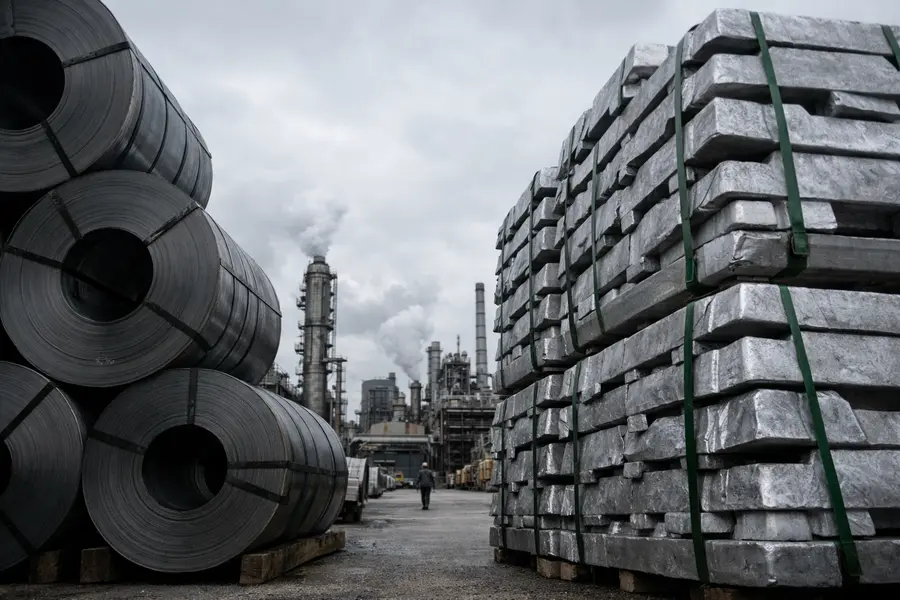
Canada's $7.6B tariffs on 700 U.S. goods hit September 8, sinking the Dow 588 points as trade collapse and Iran oil shock create back-to-back pressure on the FOMC.
- Canada imposed levies of up to 50% on 700 U.S. goods categories including steel, dairy, electronics, and agriculture, effective September 8.
- The dow industrials average fell 588 points at the open; SPY and QQQ registered broad losses across large-cap and technology indexes.
- With Iranian oil disruptions running in parallel, the Federal Open Market Committee faces two simultaneous supply-side inflation shocks heading into its September 15-16 meeting.
Lead
Ottawa activated $7.6 billion in counter-tariffs on the United States at 12:01 a.m. Eastern on Monday, deploying levies of up to 50% across 700 product categories spanning steel, dairy, consumer electronics, and agricultural goods - the broadest Canadian trade action in a generation. The measures took effect as diplomatic channels went silent, trade talks having collapsed without a framework agreement over the prior weekend. At the New York open, the dow industrials average dropped 588 points, or roughly 1.4%, as markets priced in a supply-side inflation shock compounding an already deteriorating macro backdrop driven in part by Iranian oil-supply disruptions.What Caused the Collapse in Trade Talks?
Negotiations between Ottawa and Washington broke down after the two sides failed to agree on even a partial rollback of existing U.S. tariffs on Canadian steel and aluminum. Canada had conditioned any new trade framework on a suspension of prior sector levies; Washington declined to move on that baseline. With no deal in place before the September 8 deadline, Canada's retaliatory schedule activated automatically under previously enacted domestic legislation, leaving no administrative grace period.
The 700 targeted product categories were calibrated for political leverage in U.S. swing-state manufacturing regions. Steel and aluminum topped the schedule at 25% to 50% rates, followed by dairy substitutes, consumer electronics components, and a range of processed agricultural goods. Canadian officials described the measures as proportional and explicitly reversible upon resumption of good-faith negotiations, though no date for renewed talks has been set.
Market Reaction
Equity markets responded sharply across all major indexes. SPY (SPDR S&P 500 ETF Trust) fell 1.6% in early trading, while QQQ (Invesco Nasdaq-100 ETF) dropped 1.9%, with technology names bearing disproportionate losses on electronics supply-chain exposure. WMT (Walmart) and other large-format retailers with cross-border sourcing networks declined between 1.2% and 2.1% as investors modeled higher input costs on imported goods.
AAPL (Apple) shed more than 2% on concerns about both Canadian consumer-market exposure and secondary disruptions to components sourced or routed through Canadian manufacturing facilities. Domestic U.S. steel producers briefly rallied on the prospect of reduced Canadian import competition before retreating as risk-off sentiment broadened.Bond markets saw a flight-to-safety move, pulling 10-year Treasury yields down 6 basis points to 4.31%. The U.S. dollar strengthened 0.4% against the Canadian dollar. Crude oil held near elevated levels as Iran-related supply concerns kept energy markets on edge, preventing the kind of commodity-price relief that might otherwise have cushioned equity losses.
How Does This Affect the Fed's September 15-16 Decision?
The Federal Open Market Committee convenes September 15-16 with two distinct supply-side inflation shocks now active simultaneously - precisely the scenario that most constrains the Fed's room to maneuver. Supply-driven price increases push headline inflation higher while simultaneously compressing real growth, offering no clean policy lever in either direction.
Canada's tariffs introduce direct cost pressure across steel, food processing, and electronics supply chains. Iranian oil-supply disruptions have independently pushed Brent crude above prior reference levels, adding an energy-price component to the inflation calculus. Core goods inflation, which Fed officials had been monitoring closely for signs of durable disinflation through 2026, now faces renewed upward pressure from both channels at once.
Interest rates futures markets have shifted decisively toward a hold at the September meeting, with the probability of a cut falling to the lowest level in two months. The debate among rate watchers has moved from timing the next cut to assessing whether the FOMC will signal an extended pause or begin conditioning language around what a resumption of easing in late 2026 would require. If tariff-driven inflation proves persistent rather than one-time, the Fed's path narrows considerably and the prime rate trajectory extends flat.
Geopolitical Dimension
The Canada escalation does not stand alone. Iran's stepped-up posture in regional shipping lanes has placed an energy-price floor under Brent crude that complicates both headline and core inflation readings independently of the trade war. The convergence of a tariff shock from a G7 neighbor and an oil-supply shock from a sanctioned producer arriving in the same week represents an unusual and policy-unfriendly combination.
For Washington, the dual shock raises the diplomatic stakes on two separate tracks with no structural linkage between them. A resolution with Canada requires revisiting the U.S. tariff architecture on steel and aluminum - a politically sensitive reversal. A de-escalation with Iran requires a separate diplomatic process entirely. Neither negotiation benefits from urgency-driven concessions, yet the longer both run, the deeper and more entrenched the inflationary footprint on the U.S. economy becomes.
Outlook
Canada's $7.6 billion retaliatory package is structured as reversible, but the condition for reversal - a U.S. concession on sector tariffs - remains unmet with no talks scheduled. Markets will track the September 15-16 FOMC statement closely for any signal that the Fed intends to treat tariff-driven price increases as transitory, or whether policymakers frame the dual supply shock as grounds for a sustained hold. The dow industrials average and broader equity indexes face continued volatility until at least one of the two macro shocks shows measurable signs of resolution. The September CPI print, due before month-end, will be the first data release to partially capture tariff pass-through and will likely set the tone for fourth-quarter rate expectations.
Mentioned tickers: SPY, QQQ, WMT, AAPL