Pomegra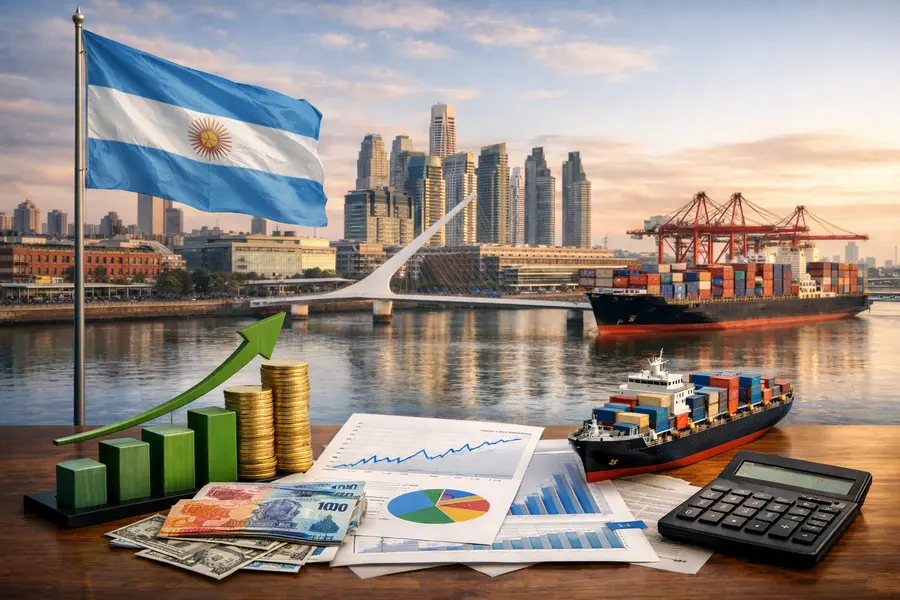
Argentina's trade surplus reached US$11.3 billion in 2025, extending a positive run into 2026 as two consecutive years of fiscal surpluses reshuffled the country's position in South American trade.
- Argentina posted a US$11.3 billion trade surplus in 2025, sustaining 25 consecutive months in the black under President Javier Milei.
- A primary fiscal surplus of 1.4% of GDP in 2025 marked the first back-to-back financial surplus since 2008, anchoring Argentina economic recovery.
- Vaca Muerta and lithium drove energy and mining exports to an all-time record of US$16.6 billion, diversifying South American trade flows.
Lead
Argentina closed 2025 with a merchandise trade surplus of US$11.286 billion, according to figures from the national statistics institute INDEC, as exports of US$87.077 billion comfortably outpaced imports of US$75.791 billion. The result extended an unbroken run of monthly surpluses to 25 — a streak that began precisely when Javier Milei assumed the presidency in December 2023 — and cemented what economists describe as the most consequential Argentina economic recovery in at least a generation.
What Happened
The 2025 surplus was smaller than the record US$18.9 billion posted in 2024, when an import collapse and a bumper agricultural rebound combined to produce an outsized result. Last year's narrowing reflected a deliberate reopening: imports jumped 25% as domestic demand recovered and the government eased exchange controls, yet export momentum — particularly from the energy sector — absorbed the pressure and preserved Argentina's positive trade position.
January 2026 provided an early signal that the trend is durable. The monthly Argentina trade surplus came in at US$1.987 billion, with exports rising 19.3% year-on-year to US$7.057 billion while imports fell 11.9% to US$5.070 billion. Over the first two months of 2026, the cumulative surplus reached nearly US$3.0 billion.
Fiscal Policy Impact
The fiscal dimension of the recovery is equally striking. Full-year 2025 closed with a primary surplus of 1.4% of GDP and a financial surplus of 0.2% — down from 2024's 1.8% and 0.3% respectively, but still sufficient to mark the first consecutive years of financial surplus Argentina had achieved since 2008. Before Milei took office, the country had not recorded a surplus in its public accounts since 2010.
The fiscal policy impact in Argentina was engineered through a combination of subsidy elimination, public-sector workforce reductions, and frozen capital expenditure budgets. Total government spending fell 27.2% in nominal terms over two years, compressing primary expenditure from 185 trillion pesos to 134 trillion pesos. The fiscal correction drew backing from the IMF, which approved a US$20 billion loan program in April 2025 and described the adjustment as "unprecedented in Argentina's modern history." The U.S. Treasury simultaneously extended a US$20 billion currency swap line.
For 2026, the Congress-approved budget targets a primary surplus of 1.2% of GDP on total spending of US$101.8 billion, signaling that consolidation continues even as policy settings shift from emergency tightening toward stabilization.
Export Diversification and South American Trade
The structural story underneath the headline numbers is a shift in Argentina's export composition that is beginning to reshape South American trade patterns. Soybean meal and oilcake remain the country's largest single export category, followed by corn and wheat, but the most significant movement is in hydrocarbons and minerals.
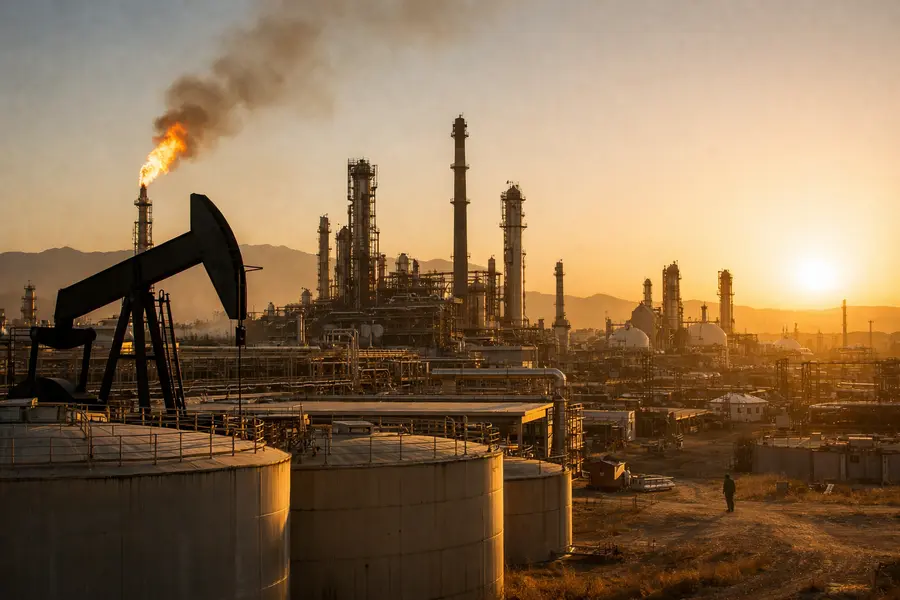
Vaca Muerta, the Neuquén shale formation, increased oil production from roughly 29,000 barrels per day in 2016 to approximately 500,000 barrels per day by 2025. That expansion powered an energy trade surplus of US$7.815 billion in 2025, up 12.8% year-on-year, and is expected to exceed US$14 billion in 2026 as new pipeline capacity comes online. Combined with lithium output from the Puna plateau, Argentina's energy and mining exports reached a record US$16.6 billion in 2025. The Vaca Muerta Sur pipeline, once operational, is projected to generate US$15 billion in annual export revenue by 2027.The government's RIGI large-investment incentive program has attracted US$69.2 billion in proposed projects across energy, mining, and infrastructure, a figure that implies sustained export capacity growth for years ahead.
Macroeconomic Context
The trade and fiscal surpluses unfolded against a broad macroeconomic recovery. GDP expanded 4.4% in 2025 after a sharp contraction in 2024, as consumption and investment rebounded from the shock of Milei's initial austerity measures. Annual inflation declined from 211% at the end of 2023 to 33% by early 2026, restoring purchasing power gradually. The poverty rate fell to 28.2%, the lowest reading since 2018.
Outlook
Argentina's trajectory into 2026 reflects a fiscal framework that is producing measurable results: consecutive surpluses in both the trade and public accounts, falling inflation, rising GDP, and a diversifying export base anchored by Vaca Muerta and critical minerals. The main risks are execution risks — sustaining the fiscal path through a congressional election cycle, managing peso volatility, and translating investment commitments into production. If energy and mining exports continue their structural ascent, Argentina's role in South American trade is set to expand materially over the next three to five years.
Mentioned tickers: None