Pomegra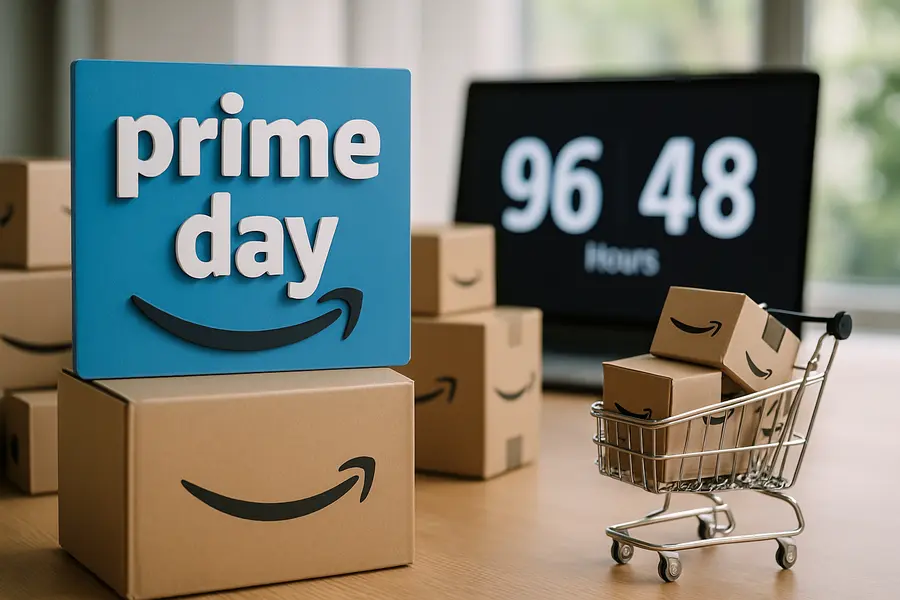
Amazon's 96-hour PrimeDay 2026 launched June 23, with Bank of America projecting $21.6 billion in gross merchandise value — a 5% rise from last year's expanded sale.
- Prime Day 2026 runs June 23–26, marking the second consecutive 96-hour event and the first June edition since 2021
- Bank of America estimates $21.6B in total GMV: $11.6B first-party and $10B third-party marketplace, with $8.5B in net-new revenue
- Average AMZN order size fell to $48.36 from $58.37 in 2025; 59% of tracked households had placed multiple orders by mid-day June 23
Lead
SEATTLE — Amazon.com (AMZN) opened its 12th annual PrimeDay sale at 12:01 a.m. PDT on June 23, launching a 96-hour member-exclusive shopping event running through June 26. Bank of America projects the four-day sale will generate $21.6 billion in gross merchandise value — a 5% year-over-year gain — with $8.5 billion in net-new incremental revenue above the company's baseline trading pace.
What Happened
The 2026 edition maintains the expanded 96-hour format introduced last year and arrives in June for the first time since 2021, pulled forward from Amazon's traditional July window. Deals span electronics, Amazon Devices, beauty, apparel, fresh groceries, and third-party marketplace goods, with new offers refreshing three times daily — at midnight, 8 a.m., and 1 p.m. Pacific — to sustain engagement across all four days.
Bank of America estimates first-party GMV at $11.6 billion, a 4.5% year-over-year increase, with third-party marketplace sales contributing $10 billion, up 5%. The $21.6 billion combined total reflects a moderation from 2025's 55% surge, which was driven by the event's initial expansion from 48 to 96 hours rather than underlying demand acceleration. BofA also forecasts $12.4 billion in incremental Q2 gross merchandise volume above the four-day baseline and $8.5 billion in net-new revenue for Amazon across the sale window.Consumer Behavior
Early transaction data show an average order size of $48.36 in the opening hours of the event, down from $58.37 at the same point in Prime Day 2025. Average household spend stands at approximately $89, compared with $106 a year earlier. Despite the compression in basket size, 59% of tracked households placed two or more separate orders by mid-day June 23, indicating strong engagement with the multi-day format as consumers spread purchases across sessions rather than consolidating them.
Top-selling products in early trading include Premier Protein Shakes, Hefty Ultra Strong Trash Bags, and Liquid I.V. Hydration Packets — everyday consumables rather than high-ticket electronics — a mix that keeps unit volumes high while weighing on average order values.
Market Reaction
AMZN shares were steady at the June 23 open. Wall Street consensus stands at a Strong Buy, with 45 Buy ratings and one Hold. The average price target of $319.14 implies roughly 31% upside from current levels. PrimeDay serves as an important near-term sentiment signal, with event-period GMV feeding directly into Q2 revenue and operating income estimates ahead of Amazon's summer earnings release.Strategic Context
The calendar shift to June positions PrimeDay ahead of the back-to-school spending season, allowing Amazon to capture summer discretionary demand and early school-supply purchases within a single promotional window, while separating the event from a crowded Q3 retail calendar. The 96-hour structure extends merchant advertising spend, supports Prime membership acquisition and renewal, and amplifies cross-divisional revenue — from sponsored-product placements to Amazon Devices activations.
Third-party marketplace GMV of $10 billion underscores Prime Day's dual function: a consumer shopping event and a high-margin platform revenue driver, where fees, fulfillment charges, and advertising tied to the sale contribute to Amazon's services segment well beyond first-party retail margins.
Outlook
With $21.6 billion in projected GMV and $8.5 billion in net-new revenue, PrimeDay 2026 is positioned among the largest single e-commerce events on record. Growth has normalized to mid-single digits following 2025's format-driven spike, and early data point to a more measured consumer — smaller baskets, more frequent sessions — reflecting broader discretionary spending caution. Final event totals will be available after June 26, with Q2 earnings providing the first formal accounting of Prime Day's contribution to AMZN's retail, advertising, and third-party services revenue lines.
Mentioned tickers: AMZN