Pomegra
Amazon's stock reached a fresh all-time high above $286 on August 3, 2026, propelling its market cap past $3 trillion as Meta, Microsoft, Alphabet, and Oracle posted sharp one-day gains on record AI infrastructure commitments.
- Amazon closed at $286.16 on August 3, up 5.37% on the day and 26% over three sessions — its strongest such run since 2009.
- AWS posted Q2 revenue of $42.2B, up 36.7% year-over-year, with operating margin widening to 39.4%.
- The four largest hyperscalers collectively project $725B in 2026 capital expenditure, up 77% from 2025.
Lead
Amazon.com (AMZN) shares closed at $286.16 on Monday, August 3, 2026 — a fresh all-time high — after the company's second-quarter results revealed accelerating growth at Amazon Web Services and management raised full-year capital expenditure guidance to $220 billion. The session print pushed Amazon's market capitalization above $3 trillion for the first time. Shares have gained 26.26% over three trading days, the steepest such advance since October 2009. The move anchored a broad rally in hyperscaler data center operators, with Meta, Microsoft, Alphabet, and Oracle each recording gains between 5% and 8%.What Happened
Amazon's Q2 2026 results, reported July 30, showed total revenue of $200.6 billion — up 20% year-over-year — and operating income of $27.5 billion, up 43%. AWS, the company's cloud division, generated $42.2 billion in revenue, a 36.7% year-over-year increase, with an operating margin of 39.4%. AWS operating income reached $16.6 billion, up from $10.2 billion a year earlier. Management guided Q3 net sales of $197 billion to $202 billion and raised its 2026 cash capital expenditure target to approximately $220 billion, citing AI-driven demand and a growing infrastructure backlog.
Market Reaction
The post-earnings move in Amazon set a constructive tone for the entire hyperscaler data center complex. Meta Platforms (META) gained 7% to $593.15. Alphabet (GOOGL) added 5% to $374.40. Microsoft (MSFT) rallied 7% in after-hours trading after its finance chief signaled continued growth in capital expenditures into fiscal year 2027, pointing to broad demand across its cloud and AI portfolio. Oracle (ORCL) rose 8% to $139.80, drawing support from an expanded AI partnership with Google Cloud and sympathy buying across the AI infrastructure sector, even as the stock remains down approximately 28% year-to-date. The moves reflected a recalibration of sentiment: investors who had punished the group for ballooning capital budgets rotated back as revenue metrics validated the spending case.
Strategic Context
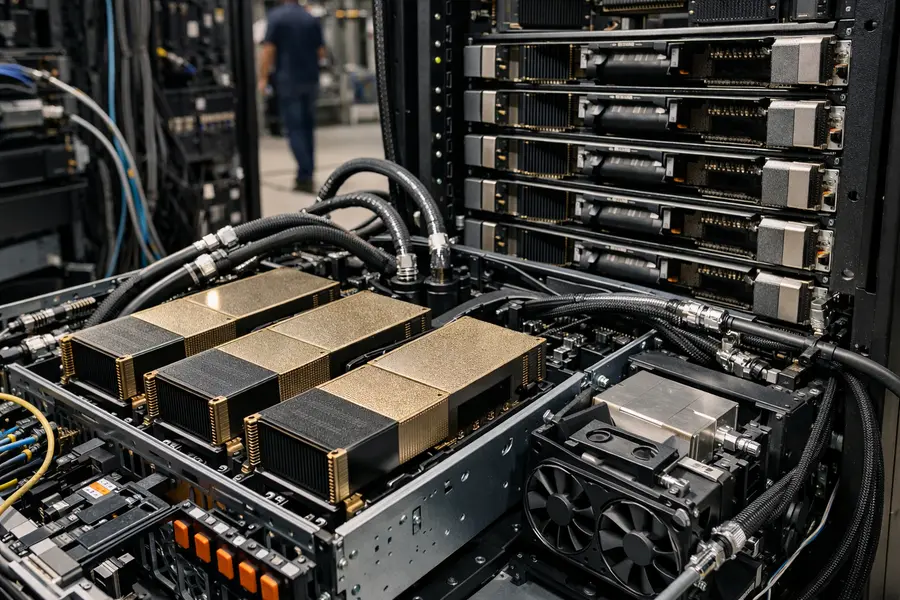
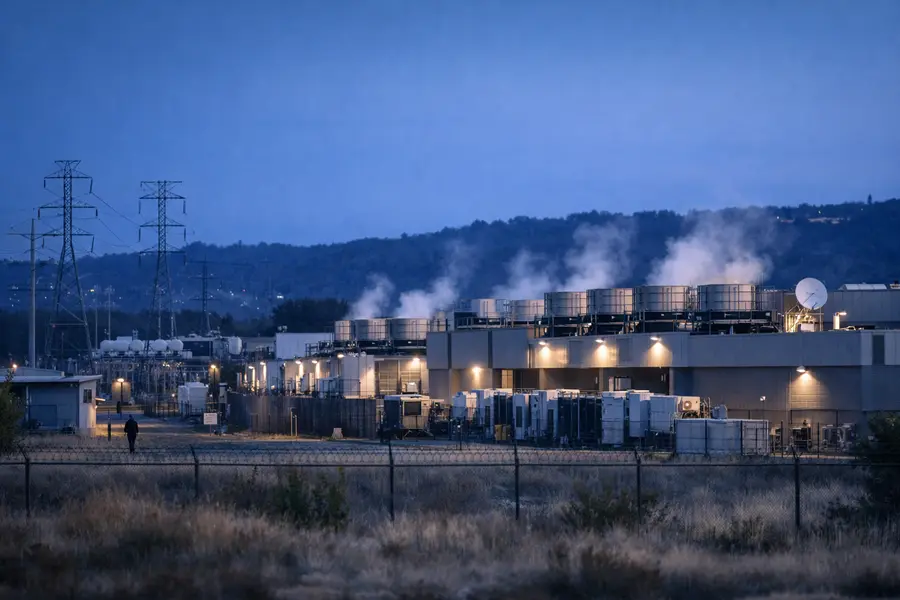
The current investment cycle among the major cloud operators is without historical precedent in both scale and pace. Amazon, Alphabet, Meta, and Microsoft are collectively projected to deploy $725 billion in capital expenditure during 2026 — a 77% increase over 2025's record $410 billion. Amazon accounts for $220 billion of that figure, Alphabet $195 billion to $205 billion, Microsoft approximately $190 billion, and Meta $115 billion to $135 billion. Roughly 75% of the aggregate — approximately $450 billion — is directed at AI-specific infrastructure: data centers, graphics processing units, networking fabric, and custom silicon.
The strategic logic is consistent across all four companies: AI compute is a zero-sum resource in the near term, and operators that fail to secure sufficient hyperscaler data center capacity risk ceding workloads to rivals. Microsoft's Azure backlog alone is estimated to exceed $80 billion in demand it cannot currently fulfill. Alphabet's Google Cloud reported 82% revenue growth to $24.8 billion in Q2 2026 and raised its full-year capex guidance to $195 billion to $205 billion in direct response to that demand signal.
AI and Technology Angle
AWS's 36.7% revenue growth — accelerating from prior quarters — reflects demand from enterprise customers migrating workloads and deploying AI inference and training services. The division's annualized revenue run rate now stands at approximately $169 billion. The operating margin expansion to 39.4% is particularly significant: it demonstrates that the heavy capital deployment is generating measurable returns rather than merely expanding infrastructure ahead of demand.
Oracle's position in this ecosystem is distinct. The company's oracle logo has become closely associated with large-scale AI training contracts, particularly through its relationship with OpenAI. While Oracle remains under pressure — shares have shed roughly 28% since the start of 2026 amid investor skepticism about execution risk — the expanded partnership with Google Cloud announced in recent weeks repositioned the company within the hyperscaler supply chain, contributing to Monday's 8% advance. Oracle's cloud infrastructure business, though smaller than AWS or Azure, is increasingly viewed as overflow capacity for workloads that the primary hyperscalers cannot accommodate.
What Comes Next
The collective free cash flow of the hyperscaler group has turned negative or near-zero at Amazon, Alphabet, and Meta as capital budgets overwhelm operating cash generation. The sustainability of that dynamic depends on revenue growth continuing to accelerate — a threshold that Q2 results, broadly, cleared. The trailing-12-month operating cash flow for the leading hyperscalers grew 34% to $660 billion in Q2 2026, providing a foundation for the investment cycle to continue through year-end and into 2027.
Microsoft's forward capex signal — fiscal 2027 spending expected to exceed 2026 — and Amazon's raised guidance suggest the infrastructure buildout is unlikely to moderate in the near term. Rising memory prices, cited by Amazon management as a factor in the higher capex estimate, add a cost variable but have not altered the strategic direction.
Outlook
Amazon's crossing of the $3 trillion market capitalization threshold on the back of accelerating AWS growth and raised capex guidance marks a defining moment in the current AI infrastructure cycle. With Meta, Microsoft, Alphabet, and Oracle all posting significant single-session gains, market sentiment toward hyperscaler data center operators has shifted from capital-discipline anxiety toward revenue-validated confidence. The question for the remainder of 2026 is whether AI workload demand continues to absorb the historic level of supply being built — and whether operators can maintain the margin expansion that justified Monday's broad rally.