 Pomegra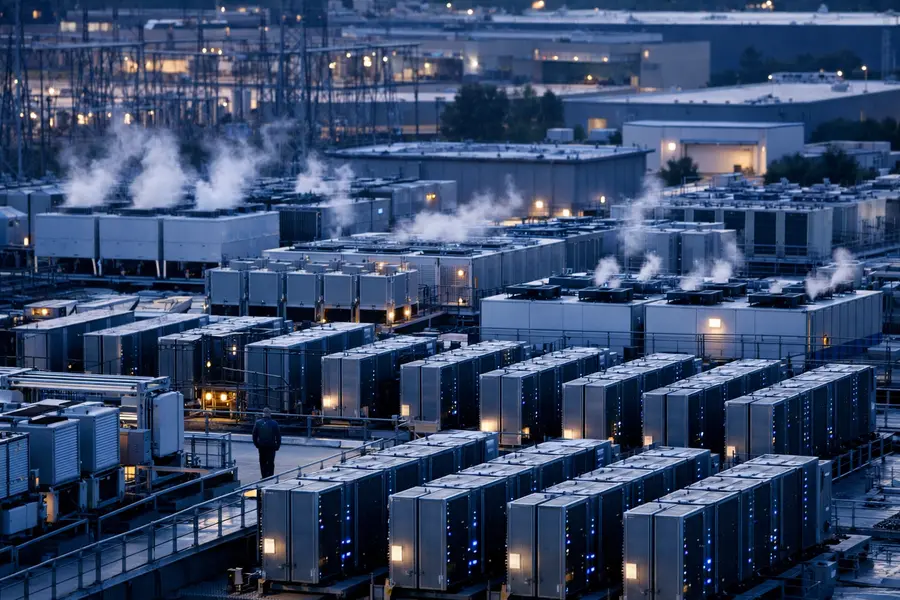
Alibaba's HK$80 billion Hong Kong share placement closed August 26 with nearly three times oversubscription and over HK$200 billion in total orders, with all proceeds directed to full-stack AI infrastructure in a direct challenge to US hyperscaler dominance.
- Alibaba (BABA) raised HK$80 billion ($10.2 billion) in the largest-ever primary follow-on offering by a Hong Kong-listed company.
- More than 40% of the order book came from sovereign and long-term institutional funds across the Middle East, Europe, and Asia.
- 100% of net proceeds will fund full-stack AI infrastructure spanning chips, data centers, and model development and deployment.
Lead
Alibaba Group (BABA, 9988.HK) closed its HK$80 billion ($10.2 billion) share placement in Hong Kong on August 26, 2026, after the deal attracted nearly three times more demand than supply, with orders exceeding HK$200 billion. Sovereign and long-term investment funds accounted for more than 40% of the book, underscoring institutional confidence in Alibaba's pivot to artificial intelligence infrastructure at a moment of intensifying competition with US technology giants.
Largest Hong Kong Follow-On Ever
The offering priced 710 million new ordinary shares at HK$112.70 apiece - a 3.6% discount to the most recent closing price - setting a new benchmark as the largest-ever primary follow-on offering by a Hong Kong-listed company. Globally, the deal ranks as the third-largest primary follow-on share sale of 2026, behind only offerings from Alphabet (GOOGL) and Intel (INTC). The closing marks the culmination of what Alibaba internally code-named Project Turing, a reference that signals the scope of strategic ambition embedded in the fundraise.
Why Did Sovereign Funds Drive 40% of Orders?
Sovereign and long-term funds concentrated more than 40% of the total order book, reflecting a structural shift in how state-backed capital is allocating toward AI infrastructure. Orders originated from sovereign pools across the Middle East, Europe, and Asia - regions where governments have established explicit mandates to build or back AI capacity. The nearly 3x oversubscription, against a book that grew to HK$200 billion, reflects demand well in excess of the original target, which Alibaba elected to cap rather than upsize.
Full-Stack AI Build-Out
Alibaba earmarked 100% of net proceeds for what it describes as full-stack AI capabilities: chips, data center infrastructure, large language model development, and deployment at scale. The framing is deliberately comprehensive - covering silicon through software - mirroring the vertical integration strategy pursued by leading US hyperscalers. Alibaba's cloud and AI division has been the fastest-growing segment of the company, and management has signaled that capital intensity will accelerate significantly over the next 24 months.
How Does This Position Alibaba Against US Hyperscalers?
The placement is explicitly framed as a competitive response to US hyperscaler dominance in AI infrastructure. Microsoft (MSFT) and Amazon (AMZN) have each committed hundreds of billions of dollars to AI infrastructure buildouts; Alibaba's $10.2 billion raise represents a concentrated bet that Chinese sovereign and institutional capital - combined with domestic demand - can sustain a parallel and competitive AI stack. The deal arrives as US export controls on advanced semiconductors continue to constrain Chinese AI players' access to leading-edge chips, making domestic infrastructure investment both a business imperative and a geopolitical signal.
Market Reaction
Alibaba's Hong Kong-listed shares (9988.HK) came under pressure when the placement was announced on August 23, 2026, falling in reaction to the dilutive pricing - a pattern common to large block transactions priced at a discount. The deal's rapid book-building and near-3x oversubscription helped stabilize sentiment ahead of the August 26 close. The US-listed ADR (BABA) tracked similar volatility through the booking period. The share placement dilutes existing holders by approximately 3.4% relative to the pre-deal share count.
How to Invest in AI via Chinese Tech
For investors assessing ai stocks in the Chinese technology sector, the placement signals that institutional appetite for the category remains robust despite ongoing regulatory and geopolitical uncertainty. The sovereign fund concentration specifically suggests that large allocators view Alibaba's AI infrastructure as a strategic asset rather than a speculative position - a distinction that has historically supported more stable long-term holding patterns versus retail-driven momentum flows. Nvidia (NVDA), whose advanced chips remain subject to US export restrictions limiting direct sales to Chinese buyers, remains a benchmark for the global AI infrastructure buildout against which Alibaba's domestic stack will be measured.
Outlook
With the HK$80 billion placement closed and proceeds committed to full-stack AI infrastructure, Alibaba enters its next fiscal period as the best-capitalized Chinese technology company by AI-specific war chest. The sovereign fund concentration in the order book signals that the deal's significance extends beyond corporate finance - it represents coordinated institutional capital positioning an Asian counterweight to US hyperscaler infrastructure. Execution risk now shifts to deployment speed and whether the infrastructure generates commercial returns before the next competitive inflection point in the global AI race.
Mentioned tickers: BABA, GOOGL, INTC, MSFT, AMZN, NVDA