Pomegra
A broad AI infrastructure advance on August 12 lifted Dell +10%, Micron +5%, Cisco +3%, and Nebius +34%, signaling the market is pricing in a structural, multiyear buildout supercycle across every hardware layer.
- Dell AI server revenue surged 757% year-over-year to $16.1 billion, with a $51.3 billion backlog providing strong visibility into fiscal 2027.
- Nebius Group soared 34% after securing a $1 billion-plus multi-year compute deal with AI startup Reflection AI, adding to a $27 billion Meta agreement.
- Combined hyperscaler capital expenditure for 2026 stands at roughly $725 billion — approximately three times the level deployed in 2024.
Lead
On August 12, 2026, four companies spanning every critical layer of the AI hardware stack moved sharply higher in a single session. Dell Technologies (DELL) rose 9.87% to $484.50, Micron Technology (MU) gained 5%, Cisco Systems (CSCO) added 3%, and Nebius Group (NBIS) surged 34.14% to close at $259.20. The simultaneous advance across servers, memory, networking, and cloud infrastructure reinforced the view that AI capital spending is a structural, multiyear phenomenon — not a pair of isolated earnings reactions.
What Happened
Dell Technologies closed at $484.50, its highest level of 2026, ahead of a September 3 earnings date. The move reflects a 757% year-over-year surge in AI server revenue to $16.1 billion within total group revenue of $43.8 billion. Dell's AI server backlog stands at $51.3 billion, providing earnings visibility through fiscal 2027, for which management has guided revenue of $165–$169 billion — with AI server revenue alone targeted at $60 billion. Dell servers have become a primary fulfillment vehicle for hyperscaler GPU rack buildouts. The company functions as a large-scale assembler of Nvidia-based systems, and while memory and interconnect shortages create friction, the order pipeline consistently absorbs available capacity. Micron Technology advanced on the back of a fiscal third-quarter revenue print of $41.46 billion, well above the $35.69 billion consensus. Cloud memory revenue reached $13.77 billion in the quarter, against $3.39 billion a year earlier. High-bandwidth memory shipments under the HBM4 standard for Nvidia's Vera Rubin platform began in March 2026, with the ramp proceeding at roughly twice the rate of the preceding HBM3E generation. Adjusted operating margins reached 81.2%, reflecting both supply constraints and pricing discipline. Micron has raised capital expenditure to approximately $20 billion to expand HBM capacity. Cisco Systems reported record full-year revenue of $63.3 billion, up 12% year-over-year, with the fourth quarter contributing $17.3 billion — an 18% increase. AI-related orders reached $9.3 billion for the full fiscal year, including $4 billion in Q4 alone. Networking revenue rose 28% year-over-year in Q4, driven by triple-digit growth in hyperscaler orders. Chief Executive Chuck Robbins characterized the environment as a multiyear networking super cycle tied to AI infrastructure deployment. Non-GAAP earnings per share reached $1.22 for the quarter, up 23%. Nebius Group recorded the sharpest single-session move, gaining 34.14% from an intraday low of $216.11 to close at $259.20. The Amsterdam-listed, Nasdaq-traded AI cloud operator — backed by a $2 billion Nvidia investment — signed a multi-year compute supply agreement with AI startup Reflection AI worth more than $1 billion through 2029. Nebius reported second-quarter revenue growth of 454% year-over-year, with an adjusted EBITDA margin of 41%. Its contracted pipeline also includes a five-year, $27 billion computing agreement with Meta Platforms. As a vertically integrated AI cloud operator with data-center capacity in Europe and North America, the Nebius brand represents a pure-play AI infrastructure position outside the mega-cap technology tier — a distinction that attracted fresh institutional interest during the session.Market Reaction
The session's structure was notable. Rather than treating individual names as idiosyncratic earnings reactions, the market bid up the entire AI supply chain simultaneously — servers, memory, networking, and cloud compute — in a pattern consistent with institutional investors revising their models for the duration and breadth of the AI capital-spending cycle.
Strategic Context
Combined capital expenditure from the four largest cloud operators — Microsoft, Amazon, Alphabet, and Meta — is on track for approximately $725 billion in 2026, roughly three times the 2024 level and up 77% from 2025. An estimated 75% of that spending is AI-specific, and aggregate big-tech capex is projected to exceed $1 trillion in 2027.
The breadth of August 12's move maps directly onto where that spending goes. Hyperscaler data center buildouts require servers and storage (Dell), memory (Micron), networking fabric (Cisco), and compute-as-a-service capacity (Nebius and peers). A cycle that concentrates capital in AI infrastructure lifts every layer of the stack in proportion to its supply constraints.
Memory supply tightness across HBM, DRAM, and NAND is expected to persist well beyond calendar 2026, sustaining pricing power for Micron. Dell's $51.3 billion server backlog implies demand is pacing ahead of the company's fulfillment capacity. Cisco's AI infrastructure revenue is projected at $7.5 billion for fiscal 2027. Each figure points in the same structural direction.
Geopolitical Dimension
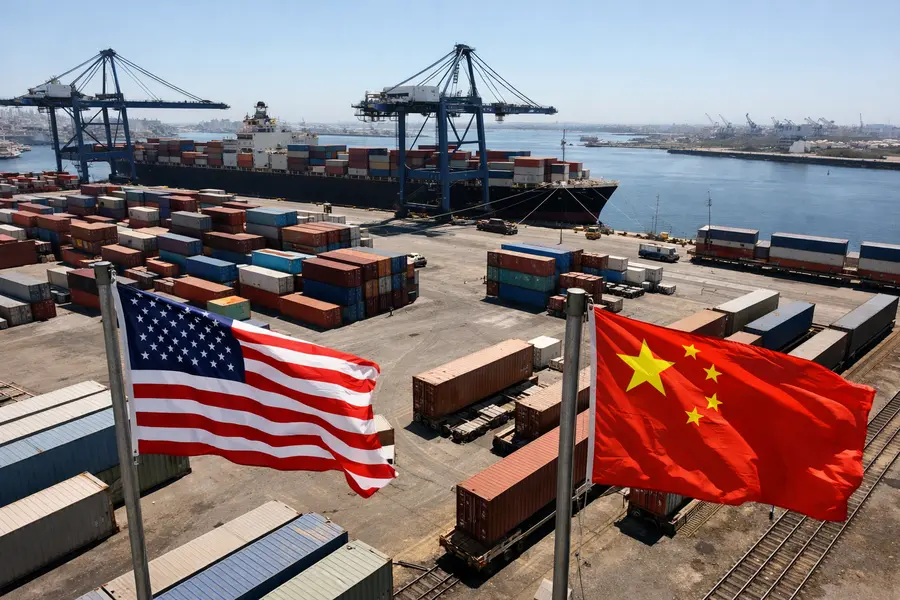
Nebius's European data-center footprint carries a strategic dimension that extends beyond its financial profile. As U.S.–China technology tensions continue to restrict advanced chip flows to Chinese buyers, demand for AI compute capacity in Europe and from non-Chinese markets is expanding. Nebius, operating outside the U.S. hyperscaler tier and designed with European data-sovereignty compliance built in, is positioned to absorb compute demand that cannot be directed to Chinese cloud providers or, for regulatory reasons, to U.S. operators. That positioning adds a geopolitical premium to an already-accelerating revenue base.
Outlook
August 12's rally reflects a market treating AI infrastructure investment as a multiyear structural theme rather than a quarter-by-quarter earnings story. Dell's backlog, Micron's supply-constrained HBM ramp, Cisco's super cycle framing, and Nebius's billion-dollar contracted pipeline collectively point to sustained demand through at least 2027. Supply constraints across the stack support margins industry-wide. The next major data point is Dell's September 3 earnings report, which will test whether guidance for $60 billion in AI server revenue for fiscal 2027 holds — or moves higher.
Mentioned tickers: DELL, MU, CSCO, NBIS, NVDA, META, MSFT, AMZN, GOOGL