Pomegra
Bulls declare the AI debate settled as the S&P 500 tops 7,600, but CAPE ratios near 40 and a $1 trillion chip selloff warn of a potential stock market top.
- The S&P 500 closed above 7,600 for the first time, with 80% of its 11% YTD gain concentrated in ten technology companies.
- The Nasdaq fell 4.2% on June 5, erasing more than $1 trillion in semiconductor market value after Broadcom left full-year AI revenue targets unchanged.
- A Shiller CAPE ratio approaching 40 and a VIX at multi-year lows signal stretched valuations even as AI earnings momentum remains robust.
Lead
NEW YORK — The S&P 500 notched its first close above 7,600 on the back of nine consecutive weekly gains, as the bull case for artificial intelligence emerged ascendant in a months-long debate over whether the technology's market premium is justified or a repeat of dot-com excess. The index settled at 7,609.78 on June 2, with the Dow Jones Industrial Average adding 228.91 points, or 0.45%, to 51,307.79, and the Nasdaq Composite edging 0.03% higher to 27,093.90. Three days later, a single earnings report sent more than $1 trillion in semiconductor market value to the floor—a jolt that redefined the market outlook without settling the underlying argument.
What Happened
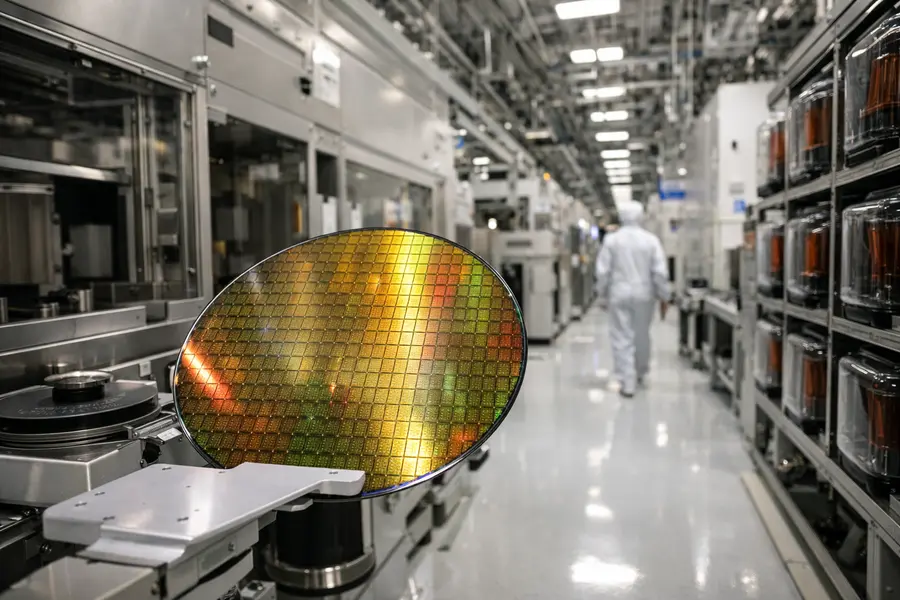
The S&P 500's nine-week streak was powered overwhelmingly by the technology sector. Approximately 80% of the benchmark's 11% year-to-date gain came from just ten companies, all in technology, with seven being semiconductor manufacturers. The Philadelphia Semiconductor Index (SOX) surged 65% year-to-date before the correction, while the iShares Semiconductor ETF (SOXX) was trading roughly 60% above its 200-day moving average—one of the most extreme technical extensions in the index's history.
Individual AI-adjacent gains were historic. Micron Technology crossed $1 trillion in market capitalization, having doubled from $500 billion in fewer than 50 trading sessions. Western Digital shares exceeded $550, representing a gain of more than 950% over twelve months. Hewlett Packard Enterprise surged 19.5% in a single session following earnings that attributed record results to customers building AI infrastructure.
The AI Bubble Debate
The central debate on Wall Street pits two historical analogies against each other: is the AI rally in a 1997-like phase—real infrastructure buildout with years of runway ahead—or does the pattern of street-level enthusiasm and vertical price moves signal something closer to late 1999, months before the dot-com collapse?
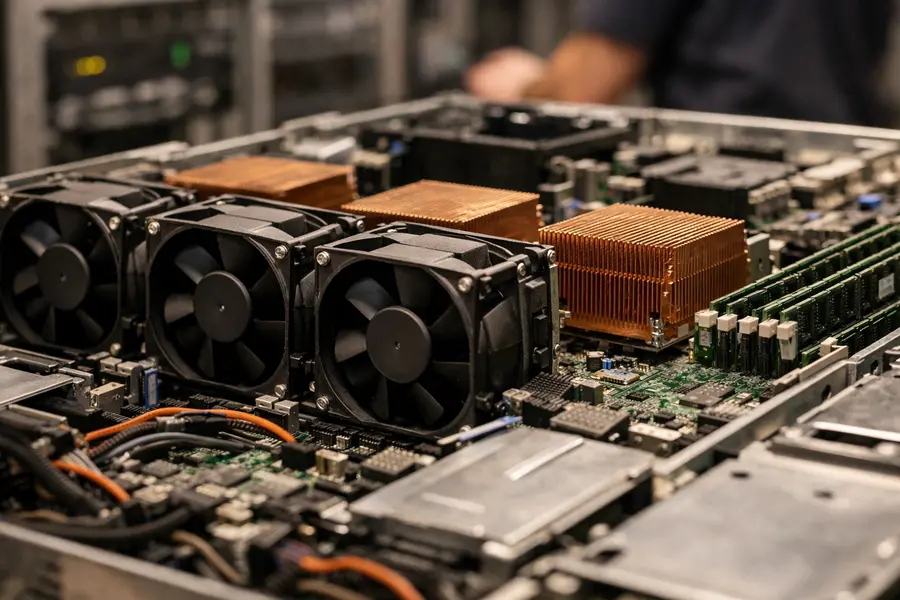
Morgan Stanley raised its S&P 500 year-end 2026 price target to 8,000 and its 12-month target to 8,300, framing the rally as "an earnings story, not a multiple expansion one." The data supports that framing: median stock earnings growth is running at 16%, double the trailing four-quarter average, and small-cap forward earnings growth is approaching 20%. The benchmark's forward price-to-earnings ratio of roughly 25 times compares favorably with the 58x recorded at the dot-com peak in March 2000, and market breadth has widened meaningfully compared with 1999-2000.The bear case centers on the monetization gap. The top five U.S. hyperscalers—Microsoft, Alphabet, Meta Platforms, Amazon, and Oracle—are collectively projected to spend $720 billion in capital expenditures in 2026, with approximately 75% directed toward AI infrastructure: GPU clusters, high-bandwidth memory, data centers, and power systems. Against that, pure-play AI software companies are on track to generate less than $35 billion in combined revenue—a ratio of roughly 20-to-one between infrastructure investment and monetizable output. Fewer than 40% of enterprises that have adopted AI have scaled it beyond pilot projects.
Market Reaction
Broadcom's decision on June 5 to leave its full-year AI chip revenue targets unchanged—rather than raising them—proved sufficient to trigger the Nasdaq's worst session since April 2025. The index fell 4.2%, erasing more than $1 trillion in market value in a single day. Marvell Technology dropped approximately 16%, Micron fell around 13%, and both Intel and AMD shed roughly 11%. Broadcom itself declined more than 7%.The severity of the move illustrated a structural fragility: with the technology sector representing more than 39% of the S&P 500's total market capitalization, a single chip name's guidance revision transmits directly into benchmark-level volatility. The top three semiconductor stocks alone account for approximately 80% of the combined market cap of the ten largest global chip companies.
Stock Market Top Warning Signs
Several indicators associated with past market tops are simultaneously elevated. The Shiller CAPE ratio—a valuation measure that smooths earnings over a ten-year cycle—is approaching 40, nearly double its long-run historical average of approximately 17. The ratio has reached such levels on only two prior occasions: in the late 1920s ahead of the Great Depression, and during the AI bubble of the dot-com era, when it peaked at 44.
The CBOE Volatility Index (VIX) registered 16.06 heading into the June correction, in the lower quartile of its trailing twelve-month range—broad complacency at precisely the moment valuations are at historic extremes. Margin debt has expanded alongside rising collateral values, a pattern typical of late-cycle positioning in which leverage amplifies eventual losses. A 57% majority of economists and market analysts in a Deutsche Bank survey identified a plunge in technology valuations as the single greatest risk to global market stability in 2026.
What Comes Next
Approximately $8 trillion remains in money market funds, a reservoir that equity strategists cite as potential dry powder for any sustained pullback. Big Tech capital expenditures are projected to exceed $1 trillion in 2027, a commitment that locks in AI spending regardless of near-term sentiment shifts. Meta is targeting capital expenditure equivalent to roughly 70% of revenue. Amazon's free cash flow is projected to turn negative in 2026 under the weight of data center buildout. Hyperscalers raised $108 billion in new debt during 2025 alone to finance the cycle, with projections of $1.5 trillion in total debt issuance over the coming years.
The broadening of S&P 500 profits beyond AI names remains real but fragile: when AI infrastructure and energy companies are stripped out, 2027 earnings-per-share estimates are essentially flat year-to-date.
Outlook
The AI bull market has established a credible earnings foundation that distinguishes it from the dot-com era's profit-free speculation. Nine straight weekly gains, record index closes, and above-trend earnings growth validate the bull case in the near term. Yet the cluster of stock market top indicators—a Shiller CAPE approaching dot-com levels, a complacent VIX, extreme sector concentration, and a leverage cycle deep into its expansion—constitutes a configuration that has preceded significant market dislocations in prior cycles. The June 5 semiconductor selloff demonstrated how quickly the market's single-point-of-failure structure can convert earnings ambiguity into systemic price moves. The market outlook for the second half of 2026 turns on whether AI revenue scales into enterprise applications at a pace that justifies the expectations already embedded in equity prices at 7,600 on the S&P 500.
Mentioned tickers: SPX, DJIA, COMP, AVGO, MRVL, MU, WDC, HPE, INTC, AMD, SOXX, META, MSFT, GOOGL, AMZN, ORCL