Pomegra
US-brokered Russia-Ukraine talks in Abu Dhabi ended without a breakthrough while refinery strikes cut Russian diesel exports and keep global fuel prices high.
- Abu Dhabi talks on Nov. 10-11 produced only a prisoner-exchange agreement in principle, with no ceasefire terms.
- Ukrainian strikes since Oct. 30 have disrupted nine of Russia's 35 major refineries, about 30% of national capacity.
- Russian diesel shipments fell 31% in the first week of November, and Brent crude settled near $96 a barrel.
Lead
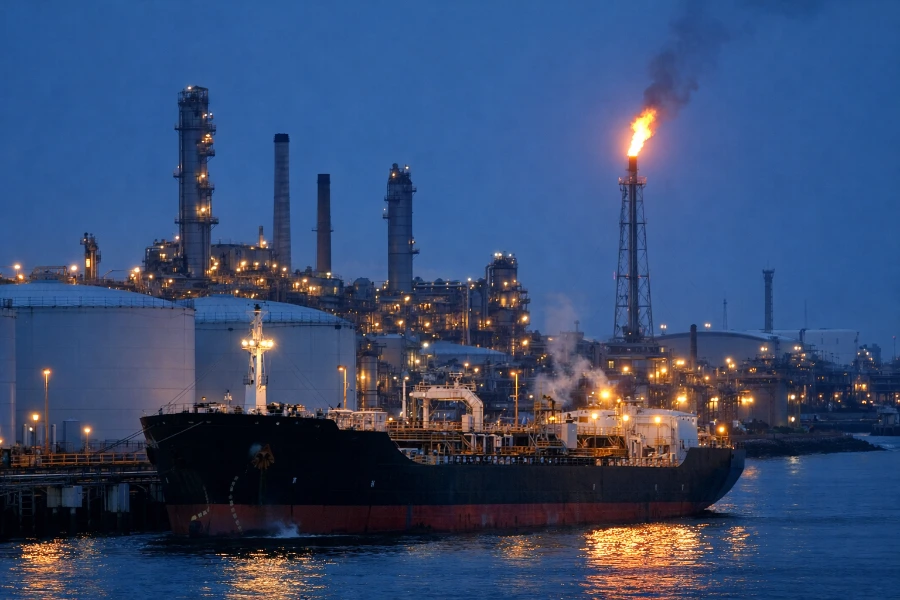
Three-way talks between the United States, Russia and Ukraine ended in Abu Dhabi on Nov. 11 with no announced breakthrough. Fighting and energy strikes continued throughout the negotiations. Ukrainian drones set fire to the Kirishi refinery near St. Petersburg, Russia's second-largest, on Nov. 9, the day before the talks opened. Russian diesel exports have fallen sharply as a result, tightening a global distillate market that was already short of supply.
What Happened at the Abu Dhabi Talks?
The talks ended after two days with one concrete result: an agreement in principle on another prisoner exchange, with numbers to be settled later. US special envoy Steve Witkoff and Jared Kushner took part, as did Russian chief negotiator Vladimir Medinsky. Observers from France, the United Kingdom, Germany and Italy were also present.
Medinsky described the outcome in limited terms. "We exchanged our positions. In some areas we found common ground, while in others we did not," he said. The US delegation then moved on to Moscow for talks with Vladimir Putin, while Volodymyr Zelenskyy prepared to meet the American envoys in Dublin.
The central disputes are unchanged. Moscow demands that Kyiv withdraw unilaterally from all of the Donbas region. Ukraine rejects unilateral concessions and wants security guarantees before any settlement. Russia has also steered discussion toward wider European security arrangements, which could delay agreement on ceasefire terms.
How Badly Have Refinery Strikes Hurt Russian Fuel Output?
Ukraine's campaign has disrupted nine of Russia's 35 major refineries since drone strikes resumed on Oct. 30. Those plants hold about 30% of national capacity, or roughly 2.2 million barrels a day. Plants in Ryazan, Yaroslavl and the Volga region have been hit, and the Ust-Luga export port near St. Petersburg was also targeted during the talks.
Kirishi is one of six refineries that together produce about half of Russia's diesel, so damage there has an outsized effect. The strikes follow a sustained pattern. Ukraine has hit Russian refineries at least 100 times since August 2025. The International Energy Agency has estimated that a Russian refinery was successfully struck about once every three days in the first eight months of 2026. The agency expects Russian refinery runs to stay severely constrained through year-end.
Why Have Russian Diesel Exports Fallen So Sharply?
Russian diesel exports have fallen because the refineries that supply them are offline or running at reduced rates. Diesel and gasoil flows averaged about 337,000 barrels a day through Nov. 7, down 31% from the prior week. Turkey and Brazil took most of the cargoes.
The longer trend is steeper. Diesel exports dropped more than 75% in September to 141,000 barrels a day, from 608,000 a year earlier, a decade low for what was once Russia's largest fuel export. Moscow banned diesel exports in July to protect domestic supply.
Russia is shifting what it sells rather than selling less overall. Total oil product exports rose 4% to 1.64 million barrels a day in the week to Nov. 7, the highest weekly figure since June. Fuel oil exports rose 63% and shipments of vacuum gasoil, a refinery feedstock, nearly quadrupled. Those products need less processing than diesel, and the shift suggests damaged plants are sending out unfinished or lower-value streams.
What Role Does the US-Russia Diesel Arrangement Play?
Washington waived several sanctions in October under an arrangement that lets Moscow restore some diesel exports, including to the United States. The agreement set targets of 75,000 barrels a day for October and 124,000 for November. Critics say it supplies Moscow with revenue to sustain the war. The expected US-bound cargoes have not materialized, and one tanker remains anchored offshore with an unconfirmed destination. Russia had set an internal November target of about 2.15 million metric tons of diesel exports, which refinery damage now puts in doubt.
What Does It Mean for the Crude Oil Price?
The impact shows up more in diesel than in crude. Brent settled at $95.82 a barrel on Nov. 12 and traded near $96.50 the next day, after dipping below $90 earlier in the week. Diesel is the tighter market. US retail diesel averaged $6.32 a gallon in late October, nearly 75% above a year earlier, and the IEA has warned that diesel constraints are likely to persist into 2027.
Russia is the world's second-largest diesel supplier. Reduced shipments leave importers in North Africa and Brazil competing for cargoes with European buyers, who have leaned more heavily on US exports. Middle Eastern and Indian supply is also limited, which keeps refining margins elevated.
Geopolitical Dimension
The refinery campaign gives Kyiv leverage that negotiators cannot ignore. Strikes at ports and plants cut export earnings and strain domestic fuel supply in Russia, while the sanctions waiver for diesel gives Moscow a partial offset. This runs against the stated aims of the US diplomatic effort. Washington is seeking a settlement while its own policy has eased pressure on a sector Ukraine is attacking.
Moscow benefits from the pause in negotiating momentum while it holds its territorial demands. Kyiv's counter is to raise the economic cost of the war inside Russia. Neither side has an incentive to halt energy strikes before a framework emerges, and one analyst proposal under discussion would separate a broad principles agreement on European security from immediate ceasefire terms.
Outlook
Over the next three to six months, the diplomatic track appears set for slow, incremental steps such as prisoner exchanges, while energy strikes continue. Russian refinery runs are expected to stay constrained through year-end, which points to low diesel exports and tight distillate supply into winter. Any ceasefire covering energy infrastructure would be the quickest route to relief for fuel markets. Nothing from Abu Dhabi indicates one is close.
Mentioned tickers: None