 Pomegra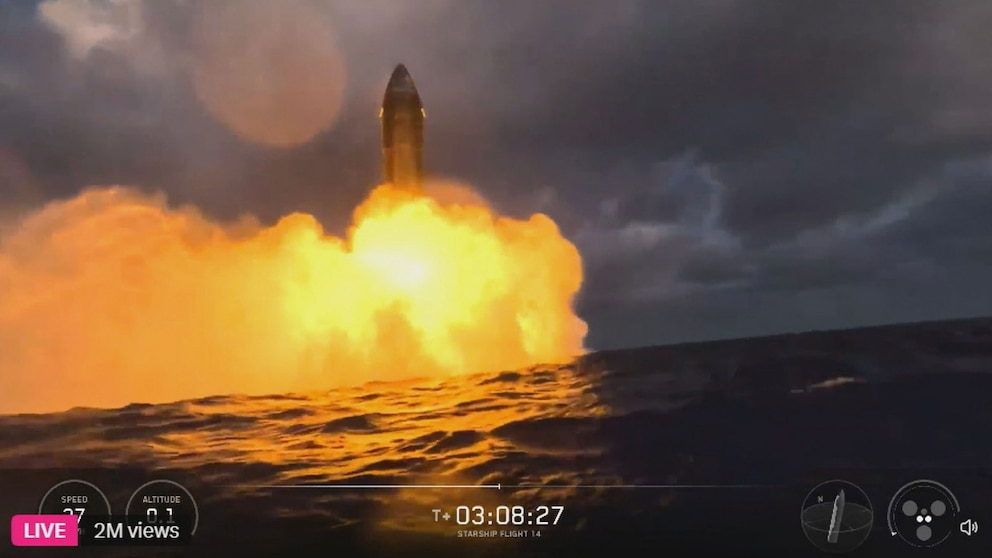
Starship Reaches Orbit for First Time With 26 Starlink Satellites
Why did SpaceX Starship reach orbit for the first time?
SpaceX's Starship reached Earth orbit for the first time on Monday, deploying 26 Starlink V3 satellites from 275 km up, despite losing one Raptor engine during ascent on Flight 14.
Key numbers
| Starlink V3 satellites deployed | 26first operational Starship payload; all 26 confirmed contact post-deployment |
|---|---|
| Network bandwidth added | 26 Tbps~10x a single Falcon 9 Starlink V2 mini launch |
| Orbital altitude | ~275 km32° inclination; Starlink Group 31-1 deployment orbit |
| Mission duration | 3 hrs 9 mincut short from planned ~10 hrs following engine fault caution |
| Starship payload to LEO (reusable) | 100 tvs Falcon 9 ~7.5 t in reusable Starlink mission mode |
| Raptor engine shortfall | 1 of 6 failedRaptor vacuum engine shut down mid-ascent; orbit achieved on remaining 5 |
What happened
SpaceX's Starship reached Earth orbit for the first time on Monday, deploying 26 Starlink V3 satellites from 275 km up, despite losing one Raptor engine during ascent on Flight 14. Ship 41 lifted off at 12:48 UTC from Starbase, Texas atop Booster 21, the most powerful rocket ever to reach orbit. Mission controllers spent roughly 22 minutes assessing the engine fault before clearing the vehicle for orbital insertion. All 26 satellites were released — adding 26 Tbps of bandwidth, about 10 times a single Falcon 9 Starlink launch — before Ship 41 de-orbited and splashed down in the Pacific after 3 hours 9 minutes.
Why it matters
Starship is the first rocket to carry over 100 tonnes to orbit in one trip — up to 20 times Falcon 9's roughly 7,500 kg payload in reusable mode — and that capability gap could push launch costs from about $2,700 per kilogram today toward $100. That pricing shift threatens every rival launch provider and makes a crewed Mars mission financially credible for the first time. For investors, the key question is which public space companies — led by Rocket Lab — can survive as SpaceX rewrites launch economics.
Who this affects
- MarketbullishHigh impact
- Space economy stocks repriced higher on landmark launch success.
- CompanybullishHigh impact
- SpaceX validates commercial payload model; Starlink revenue path secured.
- CompetitorsbearishHigh impact
- Rocket Lab, Northrop Grumman face intensifying launch pricing pressure.
- IndustrybullishHigh impact
- Launch cost floor shifts sharply toward $100 per kilogram.
SpaceX vs Rocket Lab, Northrop Grumman, Lockheed Martin
| SpaceXprivate | — | — | — | — |
|---|---|---|---|---|
| Rocket LabRKLB:NASDAQ | $43.2B | -2.4% | — | 3208x |
| Northrop GrummanNOC:NYSE | $71.9B | -0.9% | — | 17x |
| Lockheed MartinLMT:NYSE | $121.0B | flat | +7.9% | — |
As of 2026-09-28
How we got here
Flight 1 first integrated launch; vehicle destroyed ~4 min after liftoff
Flight 4 first mission where both stages splashdown successfully
Flight 5 Super Heavy Booster caught by Mechazilla tower arms
Flight 14 first orbital insertion; 26 Starlink V3 satellites deployed
What to watch
- FAA license expansion for higher Starship launch cadence from StarbaseQ4 2026
- Flight 15 targeting first Ship upper-stage catch and rapid reuse turnaroundQ1 2027
- NASA Artemis III HLS contract milestone requiring Starship orbital refueling demo2027
Educational content only. Not investment advice.
More briefsAll briefs →
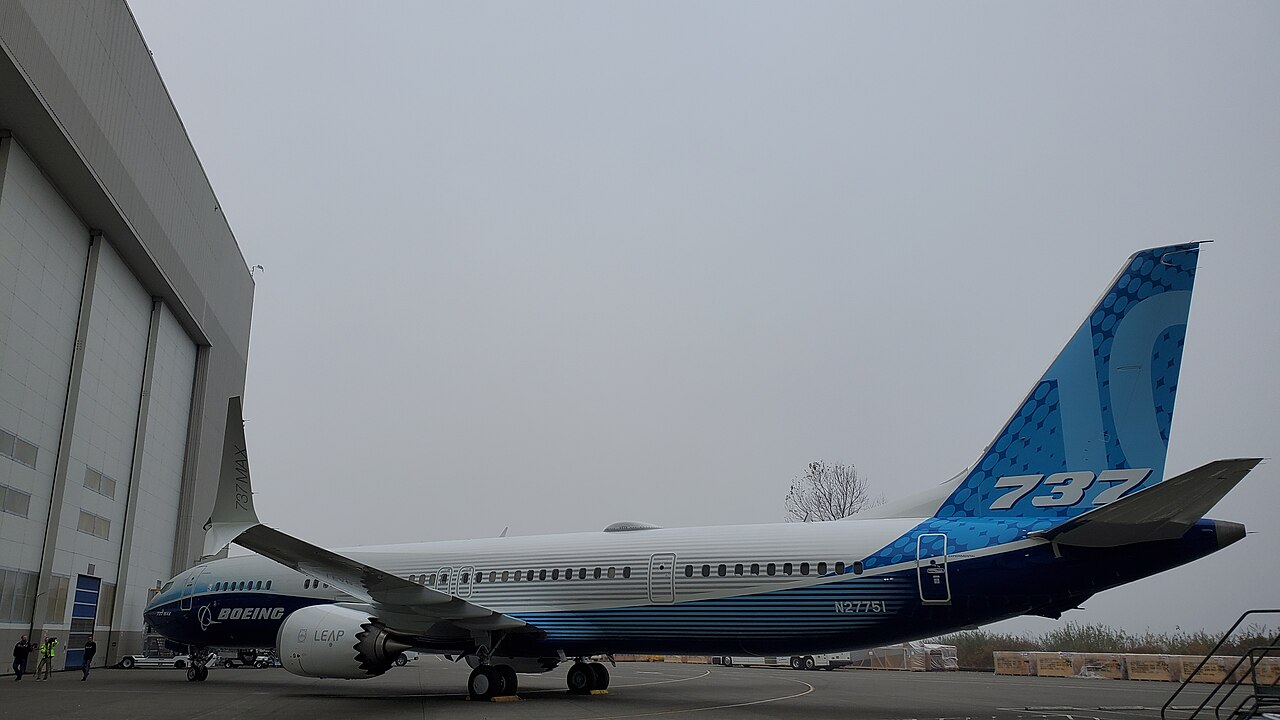
Boeing Stock Falls 7% as FAA Blocks 737 Max 10 Certification
Boeing (BA) shares tumble 7% as FAA refuses to certify the 737 Max 10 over VNAV software flaw.
Kodiak Sciences Stock Jumps 178% on DAYBREAK Phase 3 Data
Kodiak Sciences (KOD) scored two AMD endpoint wins in DAYBREAK Phase 3; 17% of the float was short.

Akamai Stock Jumps 9% on Record $11.6B Anthropic Cloud Deal
Akamai (AKAM) wins its biggest contract ever: $11.6B cloud deal with Anthropic, including a 5% equity warrant.