Pomegra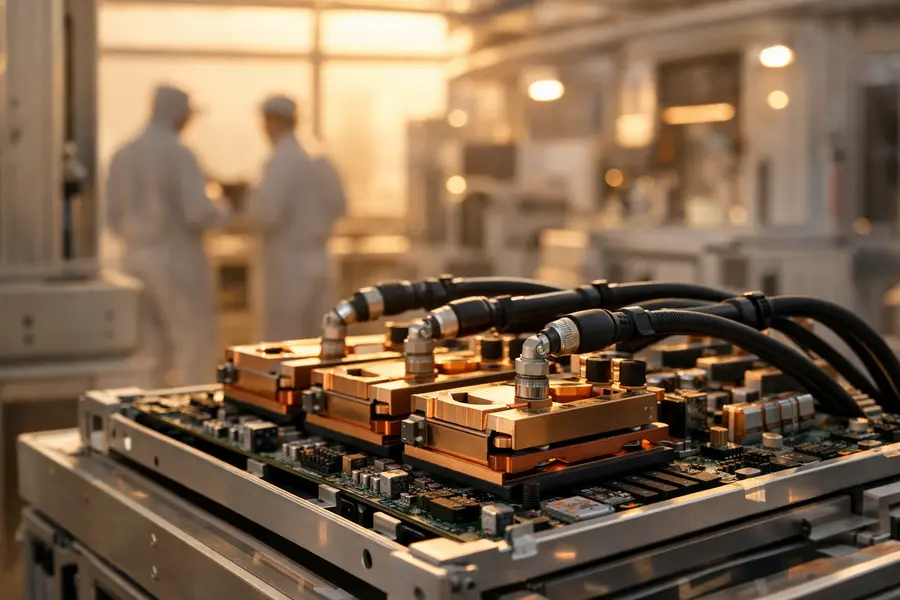
Israeli cooling startup ZutaCore closes a $100M Series C backed by Mitsubishi Electric, Carrier, and Samsung Ventures, valuing the company at roughly $600M.
- ZutaCore's waterless, two-phase direct-to-chip system eliminates water consumption and cuts cooling energy roughly in half compared to conventional air setups.
- The round, announced June 2, 2026, brings ZutaCore's total disclosed funding to approximately $200M at a ~$600M valuation.
- Three strategic investors - a Japanese electronics giant, a global HVAC leader, and a Korean conglomerate's CVC - give ZutaCore distribution footholds across three continents simultaneously.
Lead
ZutaCore, the Israeli startup that cools AI chips by boiling dielectric fluid directly at the processor, closed a $100 million Series C on June 2, 2026. Mitsubishi Electric, Carrier, and Samsung Ventures co-led the round. No single financial sponsor anchored the deal - the structure is all strategic, which is either a feature or a tell, depending on your read. The round values ZutaCore at approximately $600 million, Goldman Sachs acted as exclusive placement agent, and total funding now sits near $200 million. Proceeds will fund global commercialization and R&D targeting next-generation processors with thermal envelopes above 4,000 watts.
How Does ZutaCore's Cooling Actually Work?
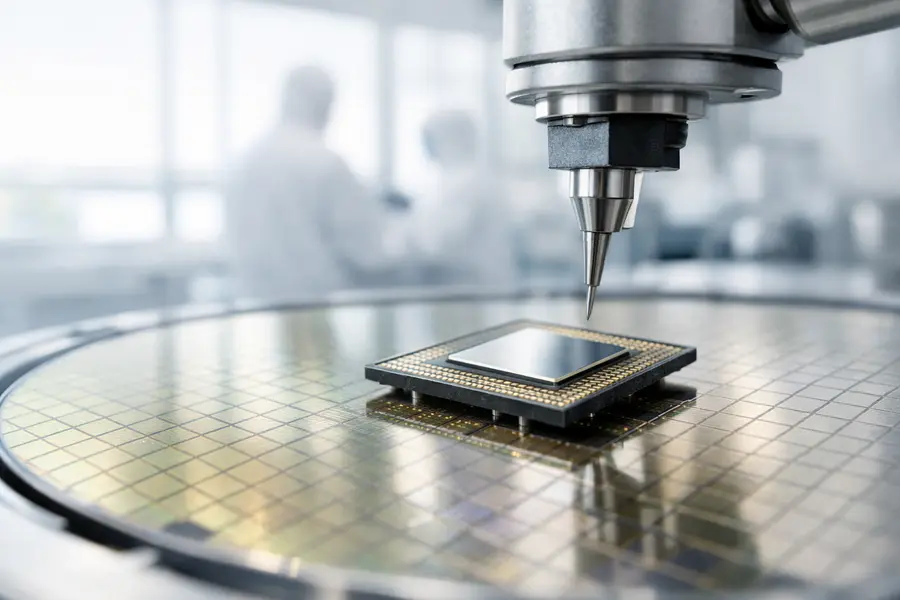
The system uses a dielectric fluid with a low boiling point that circulates directly to the chip surface, absorbs heat through phase change, and carries it away as vapor. No water touches the server at any point. That distinction matters: water-based liquid cooling dominates the current market, but it introduces leak risk, corrosion, and, in arid geographies, a water-sourcing problem. ZutaCore claims its two-phase approach halves cooling energy versus air systems and handles sustained chip power far beyond what air or single-phase water loops can manage at scale. The company says it has completed more than 75 deployments across the Americas, Europe, and Asia - most of them at the pilot or early-production stage.
Why Did Industrial Investors Lead Instead of VCs?
The answer is distribution. Each investor arrives with a specific go-to-market asset. Mitsubishi Electric runs a large industrial cooling and power systems business with deep relationships in Japanese and Southeast Asian data centers. Carrier is one of the world's largest HVAC companies and already sells into the hyperscale and colocation markets. Samsung Ventures, the CVC arm of Samsung Electronics, connects ZutaCore to one of the world's largest chipmakers and a company that builds its own data centers. For a company selling physical hardware into enterprise infrastructure, these partnerships can compress sales cycles in ways that financial capital alone cannot.
Market Context
The timing reflects a structural shift in AI infrastructure spending. As GPU clusters scale toward megawatt-class power densities, air cooling reaches its physical limits. Nvidia's Blackwell platform and AMD's MI300 series each push per-chip thermal loads well past what legacy cooling infrastructure handles efficiently. That has forced data center operators - hyperscalers, national research labs, and colocations alike - to evaluate liquid cooling not as a niche upgrade but as a baseline requirement for new builds. Several major colocation providers have already announced liquid-cooling mandates for new AI-oriented racks. ZutaCore competes in that window against water-based direct-to-chip vendors and immersion cooling providers, each with different installation complexity and infrastructure requirements.
What Does a $600M Valuation Signal About the Previous Round?
ZutaCore's prior financings were considerably smaller - the company raised roughly $40 million through its Series B in 2023. A jump to a $600 million valuation in three years implies either that revenue has grown sharply, that the market re-rated the entire sector upward on AI infrastructure demand, or some combination. The all-strategic investor base means there is no independent price-setting from a financial lead with a clean incentive to avoid overpaying. Strategic investors frequently accept higher entry valuations in exchange for commercial access. That does not make the valuation wrong, but it is worth holding separately from a market-clearing price.
Outlook
ZutaCore is moving from pilot deployments to what it describes as megawatt-class production scale. The three-investor structure - one HVAC giant, one electronics manufacturer, one chipmaker's CVC - gives ZutaCore regional reach that would take years to build independently. The question is whether commercial velocity can match the implied $600 million price. If next-generation AI chip platforms lock in liquid cooling as standard, ZutaCore's installed base becomes a durable advantage. If data center operators consolidate around one or two dominant cooling platforms, late movers with deeper pockets could compress margins quickly.