Pomegra
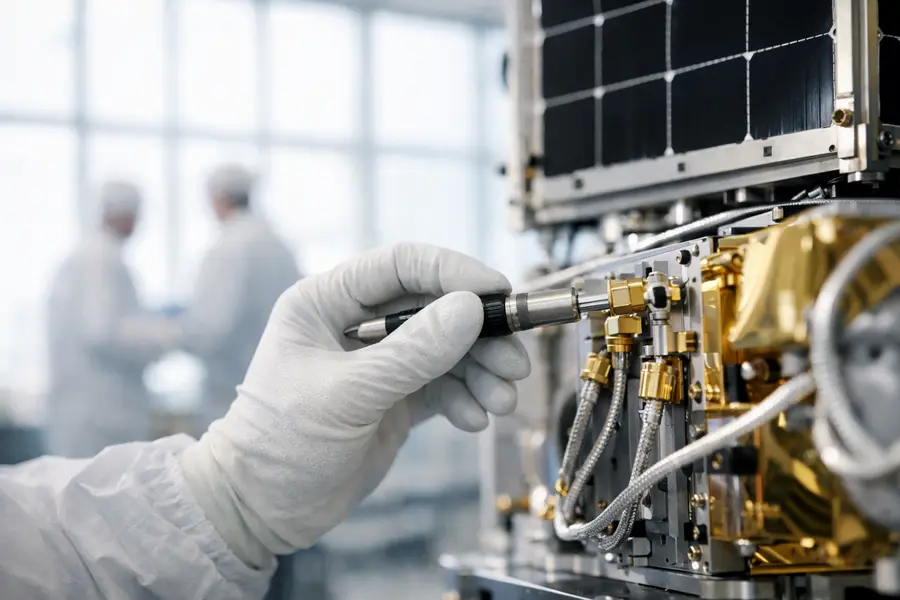
Watchtower Labs came out of stealth on October 21, 2026 with a $35M seed round to build AI planning software for military logistics, led by Shield Capital and Conviction.
Key Takeaways
- Watchtower Labs raised a $35M seed led by Shield Capital and Conviction, with Founders Fund participating.
- The Seattle startup was incubated inside Shield Capital and starts with military logistics planning.
- It was picked by the Defense Innovation Unit in January 2026 for the Joint Sustainment Decision Tool program.
Lead
Watchtower Labs emerged from stealth on October 21, 2026 with $35M in seed financing to build AI-native decision tools for military operations. Shield Capital and Conviction co-led the round, and Founders Fund participated. Valuation was not disclosed.
The Seattle company sells software that helps military planners anticipate what happens next in an operation, compare options and decide while there is still time to act. It starts with logistics: transport, spare parts, fuel, munitions, routes and time.
Who Is Behind Watchtower Labs?
Watchtower was co-founded by Akhil Iyer, Souren Aghajanyan and John Morman. Iyer is the CEO, a former Marine special operations officer who worked as an investor at Shield Capital. Aghajanyan and Morman are former Microsoft engineering leaders with experience building large-scale distributed systems.
The company was incubated inside Shield Capital before launch. Raj Shah, Shield's founder, serves as Watchtower's chairman, so the lead investor is also a parent of sorts. That lowers the usual information gap between a seed lead and a first-time founding team. It also means the round's price discovery rested partly on Conviction, the independent co-lead led by Sarah Guo.
What Does Watchtower Actually Build?
Watchtower builds decision software that combines AI, simulation and optimization to model hundreds of possible operational futures against real-world constraints. The system generates executable options, shows the assumptions and trade-offs behind each, and lets planners query it in plain language. Final decision authority stays with human commanders.
The first product targets sustainment and logistics planning, where fuel, munitions and transport capacity can decide whether a mission is feasible at all. That is a narrower and less glamorous starting point than the autonomous weapons and sensor-fusion platforms that dominate defense tech funding headlines. It also sits in a function where planners have historically relied on spreadsheets, slide decks and manual deconfliction.
The incumbents Watchtower would displace are less a single vendor than a set of workflows: legacy planning tools and staff processes that take days to produce a plan that conditions can overtake in hours.
What Government Validation Does It Have?
Watchtower has two named government relationships. It began working with the Naval Postgraduate School in 2025 to ground its approach in operations research. In January 2026, the Defense Innovation Unit selected it under the Joint Sustainment Decision Tool program.
Neither disclosure includes contract values, user counts or deployment timelines. The company has not disclosed headcount or revenue. A DIU selection is a route to a prototype or production agreement, not a guarantee of one, and many defense startups have stalled between pilot and program of record.
Why Is a $35M Seed Notable?
A $35M seed is large by any measure. Market data cited by Dealroom places the round in roughly the top 1% of US enterprise software seed rounds on record, drawn from a sample of more than 12,000 deals. The size reflects both the capital intensity of selling to the Pentagon and investor appetite for defense software built on foundation-model capabilities.
The skeptical reading is that the round prices in a team and a thesis more than traction. With no disclosed revenue and a single DIU selection, the investors are betting that AI planning tools will become a standard layer of military staff work. Shield's own stated rationale is that AI in military decision-making demands more than model access: it needs proprietary workflows, mission understanding and deep integration with users.
Guo framed the opportunity in similar terms, saying AI is accelerating the pace, quality and communication of decision-making, and that its impact in national security is nascent but will be decisive.
What Are the Risks Ahead?
The main risk is procurement. Defense buyers move slowly, and logistics planning tools must integrate with existing systems and classified environments before they can influence real decisions. A startup that cannot clear accreditation and data-access hurdles will struggle regardless of model quality.
A second risk is trust. Planners need to understand why a system recommends a given option, which is why Watchtower emphasizes visible assumptions and human authority. Tools that produce plausible but wrong plans in contested conditions would damage adoption quickly.
A third is competition. Larger defense software firms and well-funded startups are pursuing military planning and decision support, and logistics is an obvious wedge for many of them.
Outlook
Watchtower Labs enters the market with $35M, a Shield Capital incubation, a Conviction co-lead and Founders Fund participation. Its early validation comes from a Naval Postgraduate School collaboration and a DIU program selection. The next tests are converting that selection into funded programs, expanding beyond logistics into wider operational planning, and showing that planners will trust AI-generated options under real constraints. Revenue, headcount and valuation remain undisclosed.