 Pomegra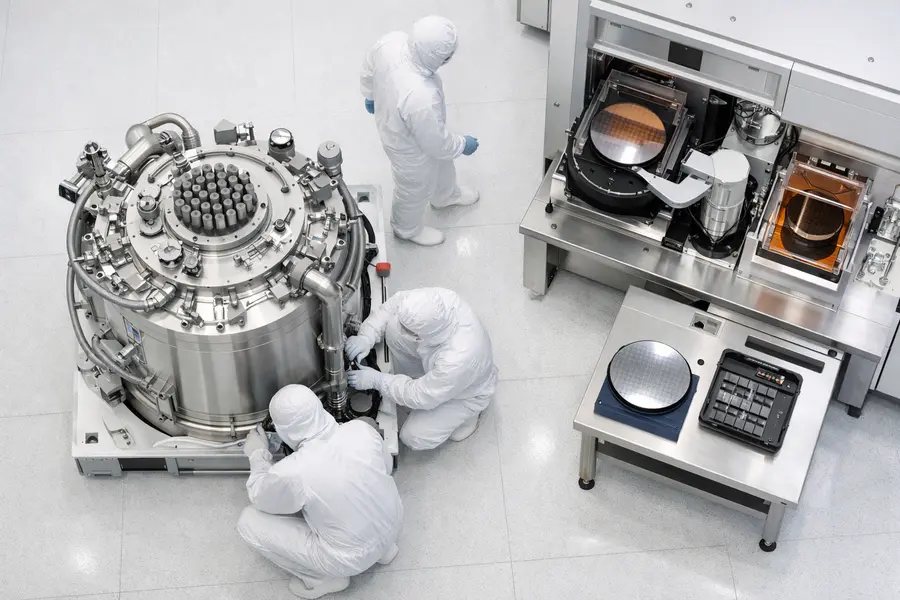
Sequoia leads an August 2026 round for the helium-cooled nuclear microreactor startup that directly powered an Nvidia Blackwell chip in a live demo - tripling its valuation in four months.
- Valar Atomics raised $1B in a Series B led by Sequoia, valuing the company at $6B post-money, including the new investment.
- The round triples Valar's $2B valuation from its $450M raise in April 2026 - a four-month gap between the two.
- Its Ward 250 reactor powered Nvidia Blackwell AI chips in a live demonstration in June 2026, a first for an advanced nuclear reactor.
Lead
Valar Atomics closed a $1 billion Series B on August 3, 2026, led by Sequoia Capital, valuing the company at $6 billion. The round triples the $2 billion valuation Valar carried after its $450 million financing just four months earlier, and brings total capital raised to roughly $1.58 billion since the company's $130 million Series A in November 2025.
Shaun Maguire, a Sequoia partner who led the deal, joins the board. Atreides Management, Point72, Snowpoint Ventures, Valor Equity Partners, and Conviction also participated. Separately, Valar secured a $200 million credit facility from Erebor, J.P. Morgan, Crescent Cove, and Hercules Capital - a signal the company is beginning to finance physical assets rather than runway.
What Does Valar Atomics Actually Build?
The company builds small, factory-made nuclear microreactors cooled by helium rather than water. Its Ward 250 test reactor reached self-sustaining criticality on June 18, 2026 - meaning the fission chain reaction sustains itself without external input - and generated electricity to power an Nvidia Blackwell GPU running AI workloads one week later. That demonstration was, by all available accounts, the first time an advanced reactor directly powered commercial AI infrastructure.
The waterless design targets a specific constraint facing AI data centers: water scarcity. Large-scale liquid cooling for AI clusters requires enormous volumes of water, which limits where facilities can be sited. Helium-cooled reactors sidestep that constraint entirely.
Why Did Sequoia Lead This Round?
The answer sits in the timing and the Nvidia relationship. Sequoia committed during the same period Valar announced an expanded Nvidia partnership to build a complete 30-megawatt nuclear-powered AI facility in Utah - a full production deployment, not a proof of concept. For Sequoia, this is infrastructure-layer AI exposure: not the model companies, not the chip companies, but the power layer that makes both possible at scale.
Proceeds will fund the shift from reactor demonstration to volume production. Factory nuclear - building standardized reactor units rather than bespoke plant-scale installations - is the core model. Whether that transition holds to schedule is the open question every nuclear startup has historically struggled to answer.
What Does the Valuation Compression Imply?
The math warrants a close read. In November 2025, Valar raised $130 million in its Series A. By April 2026, the valuation reached $2 billion on $450 million raised. Now, four months later, it sits at $6 billion - a 3x step-up in a single quarter.
Rapid valuation expansion at this stage reflects one of two things: genuine milestone achievement, or investor competition bidding up a scarce asset in a hot sector. Valar can credibly claim the former. The Ward 250 criticality event and the Nvidia live demo were concrete technical results, not roadmap projections. A $6 billion valuation for a company still building its first commercial facility nonetheless prices in nearly everything going right.
Early backers include Palmer Luckey, founder of Anduril, and Shyam Sankar, Palantir's chief operating officer - investors more associated with defense-adjacent infrastructure than conventional cleantech. Isaiah Taylor, who founded Valar at 27 after leaving school before graduating, has positioned the company at the intersection of national energy security and AI compute demand.
What Comes Next for Valar?
The Utah facility, built with Nvidia, is the first real operational test at commercial scale. Thirty megawatts is modest by power-plant standards but substantial for a first production deployment of a new reactor architecture. The facility's specific timeline has not been made public.
Regulatory clearance is the other variable. Advanced nuclear reactors require licensing through the Nuclear Regulatory Commission, and that process has historically run in years, not quarters. The credit facility - $200 million in debt alongside $1 billion in equity - adds pressure on that timeline, since debt carries carrying costs that equity does not.
Outlook
Valar Atomics enters the back half of 2026 with more capital than any microreactor startup has carried to date, a live Nvidia partnership anchored to a specific site, and a valuation that reflects high confidence in execution. The Ward 250's June milestone cleared the most basic technical bar. The harder work - factory production, regulatory licensing, and power delivery at the cost the valuation assumes - lies ahead.