Pomegra
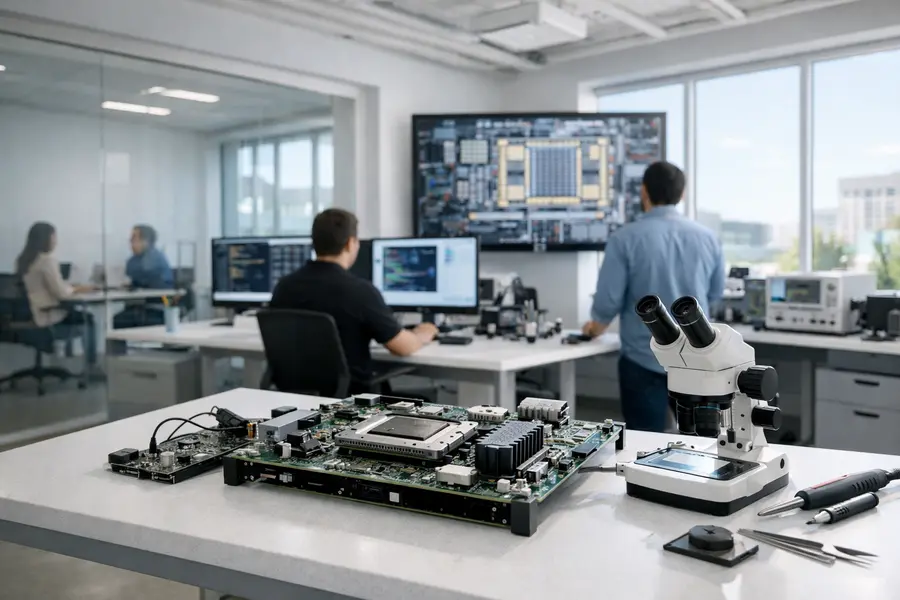
Tenstorrent has raised $1.5B in Series E funding at a $6.2B valuation, more than double its 2024 mark, as it scales RISC-V AI server production after turning down Intel and Qualcomm.
Key Takeaways
- Tenstorrent closed a $1.5B Series E at a $6.2B post-money valuation, announced October 19, 2026.
- Trace Capital and Innovation X led the round. Fidelity, T. Rowe Price, Morgan Stanley, ARK Invest, Sandisk and Tether Investments also joined.
- The valuation is up from $2.6B in December 2024. The company says it turned down Intel and Qualcomm takeover interest this year.
Lead
Tenstorrent, the Santa Clara AI-chip and RISC-V company run by CEO Jim Keller, announced on October 19, 2026 that it closed a $1.5B Series E at a $6.2B post-money valuation. Trace Capital and Innovation X led the round. The company will spend the money on volume manufacturing of its Galaxy servers and on global commercial expansion.
The valuation is 2.4 times the $2.6B set when the company raised its Series D in December 2024. Tenstorrent has about 1,150 employees across Santa Clara, Austin, Toronto, Belgrade, Tokyo and Bangalore.
Who Invested in Tenstorrent's Series E?
Trace Capital and Innovation X co-led the round, with a long list of new and existing backers joining them. Trace Capital was founded in 2026 by Ben Mahdavi, who previously co-founded Quiet Capital. Innovation X is a late-stage venture firm founded in 2016 by Roger Monteforte.
Participants include Agostinelli Group, ARK Invest, Brett Barna, Cadence Ventures, Eclipse, Fidelity Management & Research Company, Maverick Silicon, Morgan Stanley, Protagonist, Sandisk, T. Rowe Price, Tether Investments, Troluce Capital, Virtu Financial and XTX Markets. Mutual-fund managers such as Fidelity and T. Rowe Price are a common sign of a company being positioned for later-stage or public-market scrutiny. The presence of a memory maker (Sandisk) and an EDA-linked fund (Cadence Ventures) points to supply-chain interest as well as financial return.
What Does Tenstorrent Actually Sell?
Tenstorrent sells AI hardware and licenses chip designs, and it keeps both businesses on a single architecture. The hardware side is the Galaxy server line, plus workstations, running open-weight models including large language models and video generation. The licensing side covers the TT-Ascalon RISC-V CPU and Tensix AI cores, which customers such as Samsung and LG use to design their own silicon.
The company also publishes an open-source software stack for deploying models locally. Keller framed the model this way in the announcement: "We built one architecture and sell it at every size. The future of compute is open, scalable, and owned by the people building on it."
George Bousis of Protagonist offered an investor's reading of the same point: few companies design both the chip and the software that runs on it, and Tenstorrent does both.
Why Did Tenstorrent Raise Instead of Sell?
Tenstorrent raised because it says it prefers independence at a price it can reach alone. Intel and Qualcomm each explored a takeover earlier in 2026, and a Qualcomm deal was rumored at $8B to $10B. Keller denied in June that Qualcomm talks were under way, and he later told Bloomberg the company chose to raise money rather than sell.
The $6.2B mark sits well below that rumored range, so the round carries a discount relative to the reported takeover figures. Private investors are therefore paying less than a strategic buyer was said to be willing to pay. Whether that gap closes depends on volume production, which the company has yet to demonstrate at scale.
How Does the Round Compare With the Series D?
The Series D in December 2024 raised about $693M at a $2.6B valuation, and the Series E more than doubles both the check size and the price. The jump follows a year in which demand for inference hardware that does not depend on Nvidia grew, particularly among sovereign buyers and chip designers who want to own their compute stack. Tenstorrent has pointed to a May demonstration running DeepSeek models as a turning point for customer interest.
The company has not disclosed revenue, order backlog or Galaxy shipment volumes. A 2.4x step-up in valuation therefore rests mostly on technology credibility, the licensing relationships with Samsung and LG, and Keller's track record as architect of Apple's A4 and A5, AMD's Zen and Tesla's Full Self-Driving chip.
Competitive Context
Tenstorrent competes with Nvidia, AMD and Broadcom, along with a field of other AI-chip startups chasing the same inference workloads. Its pitch differs from most of them on two points: an open RISC-V instruction set instead of a proprietary one, and a licensing line that sells designs rather than only finished chips. Licensing diversifies revenue but also means partners can eventually build competing products from Tenstorrent's own IP.
What Comes Next for Tenstorrent?
The next test is manufacturing. Deploying Galaxy servers "at scale" requires foundry capacity, packaging and memory supply, and the Sandisk investment suggests the company is working on the last of those. Investors will watch for named volume customers and disclosed revenue, since a $6.2B valuation will be hard to defend on demonstrations alone.
If production ramps on schedule, a later round or public listing becomes a realistic path, and the mutual-fund investors on the cap table fit that route. If it slips, the Intel and Qualcomm interest shows that strategic buyers remain an option, though likely at a different price.
Outlook
Tenstorrent has $1.5B, a valuation of $6.2B and a stated plan to build and ship Galaxy servers at volume while licensing its RISC-V and AI IP to chip designers. The round validates the open-architecture approach financially, but the company still has to show revenue and shipment numbers. Production execution over the next several quarters will decide whether the 2.4x valuation increase holds.