Pomegra
Redmond startup Starcloud closed a $250M Series A extension led by Manhattan West Ventures, with Nvidia contributing $25M, doubling its valuation to $2.3B in five months.
- Manhattan West's Lauren Selig joined as board observer; Nvidia, Cisco, Benchmark, EQT, NFX, 776, and four new funds also participated.
- Valuation doubled from $1.1B to $2.3B since March 2026, when Starcloud closed its $170M initial Series A.
- Starcloud-3, a 200-kilowatt spacecraft, is planned for SpaceX's Starship - the company has already filed for FCC authorization to operate 88,000 satellites.
Lead
Starcloud, the Redmond, Washington startup building data centers in low Earth orbit, added $250 million to its Series A on August 21, closing the extension at a $2.3 billion post-money valuation. Manhattan West Ventures led the round; the firm's Ken Abdalla and Lauren Selig oversaw the deal, with Selig joining as a board observer. Nvidia separately contributed $25 million of the total. The raise brings Starcloud's aggregate funding to $450 million since its 2024 founding.
What Is Starcloud Actually Building?
The company's premise is that low Earth orbit is a more efficient place to run large AI workloads than a terrestrial facility. Satellites can generate power continuously via solar panels and shed heat passively into the cold of space, eliminating the active cooling systems that dominate ground-based data center costs and energy consumption.
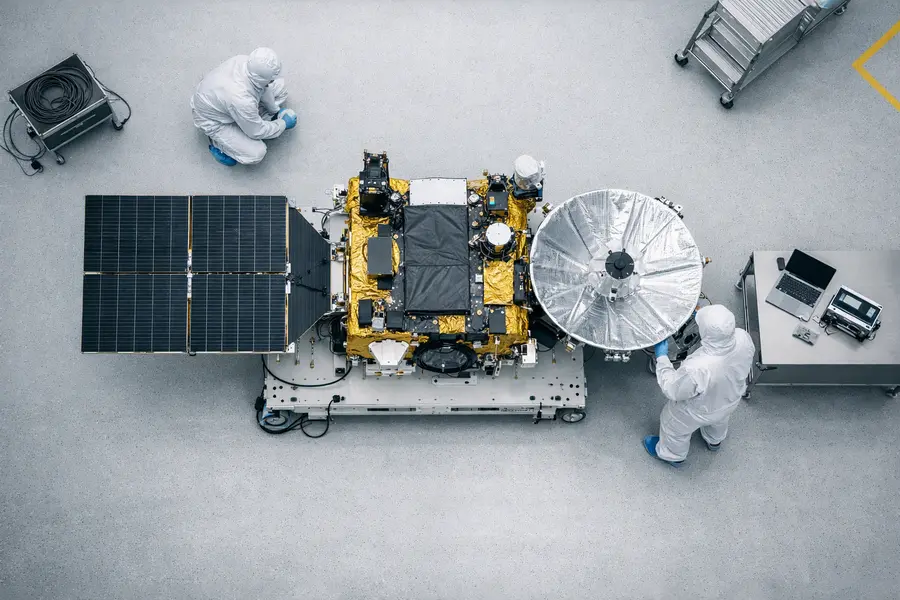
Starcloud-1, launched in November 2025, carried the first Nvidia H100 GPU into orbit. By December, the satellite had trained a nano GPT model - the first large language model trained in space. The next generation, Starcloud-2, consists of 8-kilowatt compute satellites targeting rideshare missions in 2027, with planned inference workloads for commercial and US government customers. The roadmap scales to Starcloud-3, a 200-kilowatt system designed around SpaceX's Starship payload capacity, carrying graphics cards, specialized cooling, and heat dissipation hardware.
Why Did the Valuation Double in Five Months?
The $2.3 billion figure is more than double the $1.1 billion set in March 2026. Five months is a short interval for a valuation that size to move that far. Two factors drove it: rapid technical validation and a structural shift in AI infrastructure economics.
Training an LLM in orbit within the same quarter as launch compresses the execution risk profile sharply. At the same time, terrestrial GPU capacity remains constrained. Hyperscale data center buildouts still face multi-year permitting timelines, power interconnection queues, and water access disputes across the US and Europe. Orbital compute sidesteps most of those bottlenecks - which has made the category attractive to investors who believe AI inference demand will outrun what ground infrastructure can supply by the end of this decade.
What Does Launch Scarcity Mean for the Strategy?
The same dynamic that makes orbital compute attractive also creates its central operational risk. Falcon 9 rideshare slots are filling quickly, and SpaceX Starship's commercial cadence remains unsettled. Starcloud has responded by pre-securing launch slots and filing with the FCC to operate up to 88,000 spacecraft - a figure that signals ambitions well beyond its current three-satellite roadmap.
The Starship dependency is direct. Starcloud-3's 200-kilowatt power profile exceeds what any currently operational rocket can carry; it is explicitly designed around Starship's payload. Any slip in Starship's commercial timeline feeds directly into Starcloud's most ambitious hardware schedule.
Investor Lineup
Existing investors Benchmark, EQT, Soma, NFX, and 776 all returned for the extension. New entrants include Nvidia ($25 million), Cisco Investments, Cedar Capital, Goanna Capital, and Standard Capital. Nvidia's direct equity stake is strategically consistent - the chipmaker benefits from seeing H100 and successor GPUs deployed in orbital clusters, and its participation formalizes an engineering collaboration already underway. Cisco's involvement points toward the networking layer: routing data between orbital compute nodes and terrestrial customers at scale is a non-trivial telecommunications problem, and Cisco holds both the technology and government relationships Starcloud is targeting.
What Are the Remaining Risks?
Starcloud has moved from founding to in-orbit LLM training in under two years. The $2.3 billion valuation reflects that pace and the size of the addressable market, not yet revenue. The 2027 Starcloud-2 launches are the first concrete commercial test: whether government agencies and enterprises will route inference workloads through an orbital cluster at prices that make the unit economics work.
Outlook
Starcloud's strategy - pre-securing launch capacity, co-developing hardware with Nvidia, and accumulating capital before competitors can replicate the technical baseline - is the rational response to a window that may not stay open long. The orbital data center category is new enough that Starcloud carries a first-mover advantage; it is early enough that the first mover can still be overtaken by a better-capitalized or better-connected rival. The 2027 launch cadence and Starship's commercial schedule will both be telling. Neither is within Starcloud's control.