Pomegra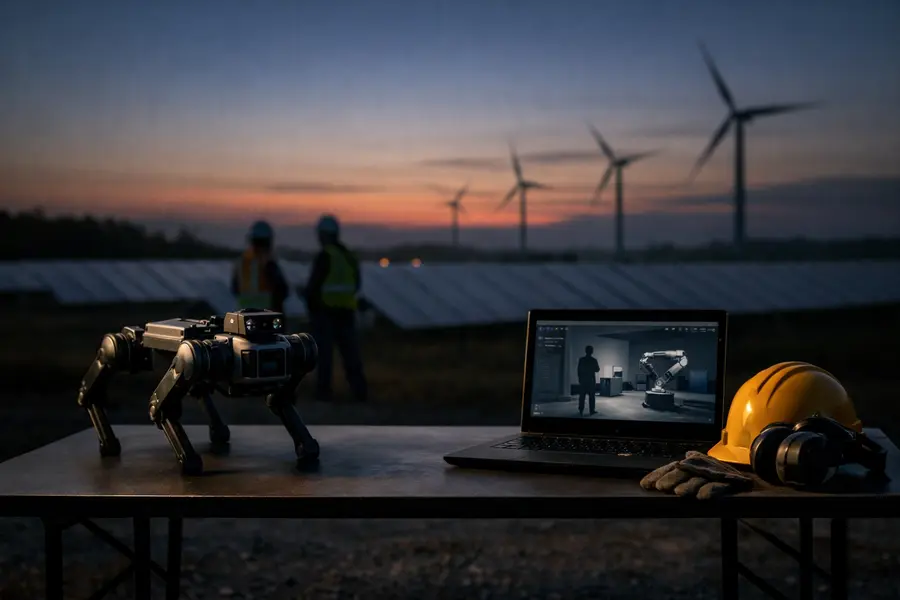
SafeWorld, a Carnegie Mellon spinout, exited stealth on October 5, 2026 with a $12.2 million seed round to simulate how AI-driven robots behave around humans.
Key Takeaways
- SafeWorld raised a $12.2M seed co-led by Shine Capital and a16z Speedrun; valuation was not disclosed.
- Carnegie Mellon's Ding Zhao co-founded the firm with Kyle Wong and Simo Rachidi.
- Gritt Robotics, a solar-installation robot developer, is the one customer named so far.
Lead
SafeWorld, a US startup building simulation tools that test whether robots can work safely around people, came out of stealth on October 5, 2026 with a $12.2 million seed round. Shine Capital and a16z Speedrun co-led the financing. The company was founded by Dr. Ding Zhao, who directs the Safe AI Lab at Carnegie Mellon University, a former Google DeepMind researcher and an NSF CAREER Award recipient. Valuation, headquarters and headcount were not disclosed.
The product targets a specific gap. Robots driven by generative AI behave probabilistically, so a single passed test says little about the next run. SafeWorld's answer is to run thousands of simulated scenarios, including rare and hazardous ones that are expensive or dangerous to stage with physical machines.
Who Is Behind SafeWorld and Who Funded It?
SafeWorld has three co-founders: Zhao, Kyle Wong as CEO, and Simo Rachidi. Wong previously founded Pixlee and led StartX at Stanford. Rachidi was a principal security and machine learning engineer at Salesforce Einstein.
Beyond the two lead investors, the round includes Box Group, the Carnegie Mellon University Endowment, Innovation Endeavors and SV Angel. Ovo Fund, Valkyrie, Zelda Ventures, Alpha Square Group, Founders Future and Brave Capital also participated. Individual backers come from Nvidia, Google DeepMind, Waymo, Meta and DoorDash.
An undisclosed valuation and a university endowment on the cap table are typical of a lab-to-company transition. The a16z Speedrun co-lead suggests the round was assembled quickly around Zhao's research record rather than around revenue.
What Does SafeWorld Actually Build?
SafeWorld sells software that evaluates robotic control systems inside simulated environments populated with realistic human models. Customers feed in a robot's control policy and see how it responds to unpredictable human movement before it ships to a factory floor or a field site. The platform works with physics simulators such as Genesis and MuJoCo.
The target is the robot's AI policy rather than its hardware. That distinguishes it from conventional machine safeguarding, which certifies fixed behavior through sensors, stops and standards compliance. A model that generates actions on the fly cannot be certified the same way.
The tool displaces something less formal: the in-house test suites that robot makers build for themselves. SafeWorld's pitch is a third-party evaluation that buyers and regulators may trust more than a manufacturer's own results.
Who Is Using It?
Gritt Robotics, which develops machines that install solar panels at industrial-scale farms, is using SafeWorld to test its AI. Solar farms combine uneven terrain, changing weather and human crews working beside heavy equipment, which makes them a demanding first case.
Separately, the company says it is running pilots with automotive manufacturers, warehouse automation providers and medical device makers. It did not name them. Until those pilots convert to paid contracts or published results, the commercial evidence rests on one named customer.
Why Does Robot Safety Testing Matter Now?
Safety validation matters now because generative AI is moving robots out of fenced cells and into shared workspaces. Wong framed it directly: "As robotics moves from impressive demos to everyday deployment, safety becomes a prerequisite for adoption."
Zhao described the problem as two parts. "The safety challenge is a combination of really advanced generative AI probabilistic evals and the trust part, and you need both to deploy a robot," he said.
The counterargument is fidelity. Simulated humans are an approximation, and a robot that passes thousands of virtual scenarios can still fail on the one behavior nobody modeled. Simulation also cannot settle liability, which sits with the operator and manufacturer regardless of what a test report says. SafeWorld's value therefore depends on how well its scenarios match real incident data, and on whether insurers and standards bodies accept its outputs.
What Comes Next for SafeWorld?
SafeWorld's next step is turning pilots into named, paying customers across its three early sectors. The seed money should fund engineering of the scenario library and the human-modeling layer, the two components that determine whether the test results mean anything.
Two outcomes would signal traction. One is a robot maker citing SafeWorld results in a regulatory or insurance filing. The other is a larger customer disclosing contract terms. Without either, the company remains a credible research team with a well-timed thesis.
Outlook
SafeWorld enters a market where robot deployment is outrunning the methods for proving robots are safe. Its $12.2 million seed, two co-lead investors and a founder with a long record in safe autonomy give it runway to build. The open questions are simulation fidelity, third-party acceptance and the conversion of unnamed pilots into revenue.