Pomegra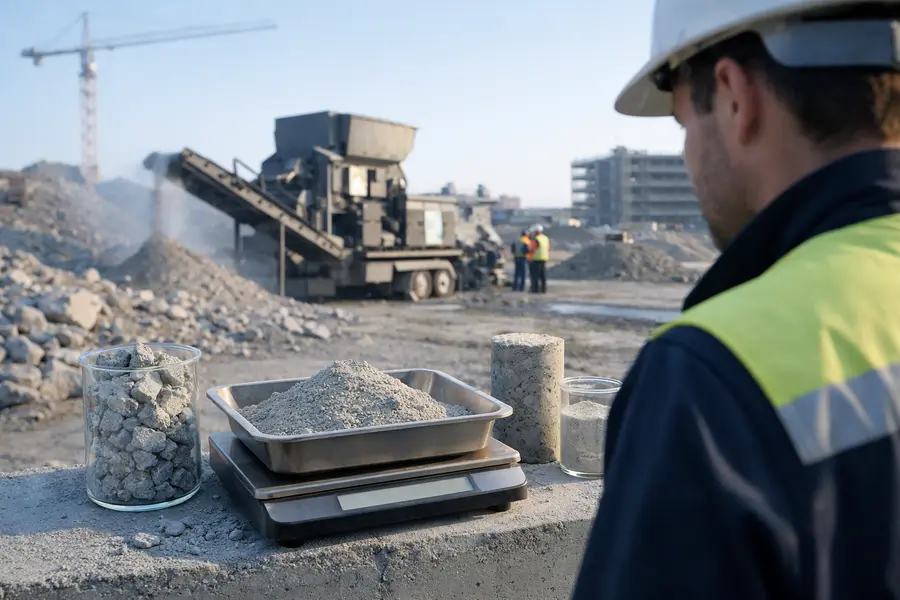
Melbourne University spinout R2Crete raised A$750K pre-seed from Genesis and Uniseed to build a pilot plant turning waste concrete into cement replacement.
Key Takeaways
- R2Crete closed a A$750K pre-seed round backed by the University of Melbourne's Genesis Pre-Seed Fund and Uniseed.
- Pilot plant construction is due to finish by end of 2026, with field trials in early 2027.
- The company claims it recovers up to 75% of cement from waste concrete and cuts emissions by 50%.
Lead
R2Crete, a University of Melbourne research spinout, has raised A$750,000 in pre-seed funding to commercialise a process that turns demolished concrete into clean aggregates and a cement replacement. The round, reported on October 1, 2026, came from the university's Genesis Pre-Seed Fund and venture investor Uniseed. A lead investor and valuation were not disclosed. The money will pay for a pilot plant, the step between laboratory results and a machine that handles real demolition waste.
What Does R2Crete Actually Do?
R2Crete takes waste concrete and separates it into two outputs: clean aggregate and a supplementary cementitious material that can substitute for part of the cement in new concrete. The company says its patented process recovers up to 75% of the cement in the waste stream. It also says concrete made with the recovered material performs like conventional concrete while cutting emissions by 50%.
The system is built around containerised units. According to the university's translation program, the units are designed to be placed on site without major construction or regulatory approvals. That design would put the company in competition with conventional crushing and landfill operators, which mostly produce lower-grade aggregate. It would also compete with cement makers' own supplementary materials, such as fly ash and slag, which are getting harder to source as coal plants close.
The technology comes from roughly a decade of research by co-founder Dr Tuan Nguyen, a senior lecturer at the University of Melbourne. Warren Overton is managing director, and Professor Mahdi Miri Disfani is also a co-founder.
How Large Is the Waste Problem?
Australia produces an estimated 7 million tonnes of waste concrete each year, and most of it ends up in landfill. Globally, concrete production runs at about 35 billion tonnes annually and generates more than 2 billion tonnes of waste, according to the company's own figures. Concrete accounts for roughly 8% of global CO2 emissions, most of it from cement manufacturing.
Those numbers describe the market the company would like to address, not the one it can reach in the next three years. A single pilot plant will process a small fraction of Australia's 7 million tonnes. The commercial question is whether the economics hold at a scale where cement producers and demolition contractors will sign supply and offtake agreements.
Who Backed the Round and What Does It Signal?
The investor pairing is typical for a university spinout at this stage. Genesis is the university's in-house vehicle for turning research into companies, and Uniseed is a research commercialisation investor with a long record in Australian university spinouts. Neither named a lead, and the A$750K total is small beside the capital intensity of building industrial plant.
The round is a bet on technical proof, not revenue. Overton said the funding "enables us to move from laboratory success to real-world deployment." Bourne of Uniseed said R2Crete "is well-positioned to become a leader in sustainable construction materials." Neither statement includes customer commitments, and none were disclosed.
Earlier support came as proof-of-concept funding from the University of Melbourne and a place in the 2025 cohort of the TRAM Air program. A federal commercialisation grant for the university's concrete recycling work was also reported earlier in 2026. That grant is separate from this round.
What Comes Next for R2Crete?
Construction of the pilot plant is expected to finish by the end of 2026, and field trials are scheduled for early 2027. Those trials will test the headline claims, namely the 75% cement recovery rate and the 50% emissions reduction, on real waste rather than lab samples. The location of the plant was not disclosed.
A seed round would logically follow successful trials, and it would need to be larger to fund a first commercial unit. The risks are conventional for materials startups. Recovered cement must meet Australian concrete standards, builders and engineers must accept it, and the process must be cheap enough to compete with landfill fees and virgin material prices. Construction-sector adoption of recycled inputs tends to move slowly, and a trial result alone rarely settles it.
Outlook
R2Crete has A$750K, two institutional backers and a timeline that puts its first real-world data in early 2027. The emissions and recovery claims come from the company and remain unverified by independent trials. If the pilot confirms them, the next round will be the real test of investor appetite for industrial concrete recycling. If it falls short, the company will have spent a modest sum learning where the process breaks.