Pomegra
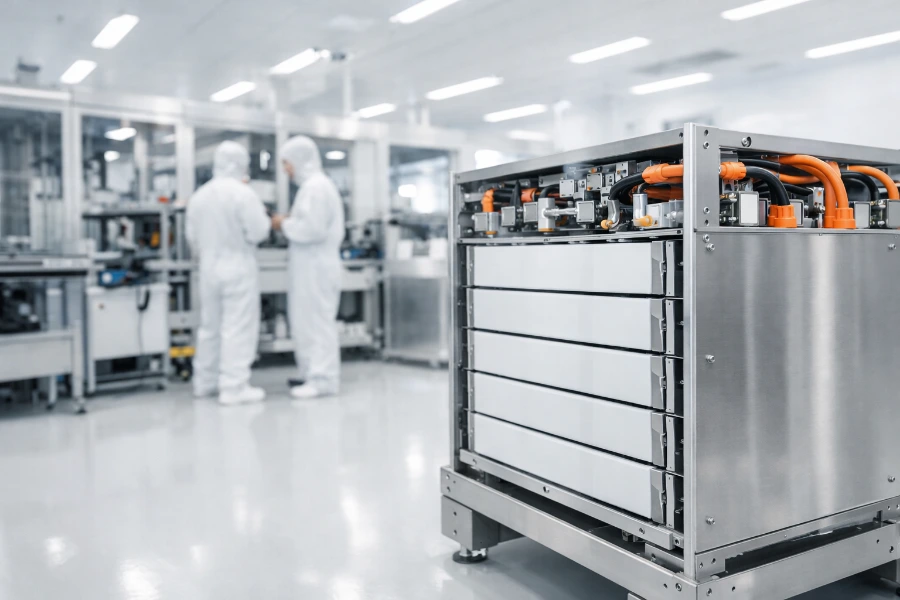
Peak Energy expanded its Series B to $157M, including a $25M HSBC debt facility, to build sodium-ion storage for grids and data centers at a Sacramento plant.
Key Takeaways
- Peak Energy's Series B now totals $157M: $132M equity and a $25M HSBC debt facility.
- General Motors Ventures leads. The round grew by $49M from the $108M announced in October 2026.
- Valuation is undisclosed. Peak cites $2.5B+ in customer agreements, with commercial deliveries from 2027.
Lead
Peak Energy, a US maker of sodium-ion battery storage systems for utilities and data centers, expanded its Series B to $157M on November 24-25, 2026. The total comprises $132M in equity and a $25M debt facility from HSBC. General Motors Ventures leads the round, as it did when the first $108M tranche was announced on October 21.
The company did not disclose a valuation or the size of GM Ventures' check. It says customer agreements now exceed $2.5B, and it plans first commercial deployments in 2027.
Who Is Backing Peak Energy?
GM Ventures leads, with Maverick Silicon, Infinite Capital, Eclipse, Xora Innovation and LG Technology Ventures also named as investors. Xora led the $55M Series A in July 2024, so the Series B is nearly three times the size of that round on the $157M total.
The numbers show a round that grew by $49M within about a month. Only $24M of that increase is equity, because $25M is debt. Taking on a bank facility this early is typical for a hardware company that must pay for factory equipment before it books revenue.
What Does the $157M Pay For?
The money goes mainly to a 183,000-square-foot factory in Sacramento, California. The plant is designed for 4 GWh of annual capacity, with roughly $71M in capital investment and production slated to start in the first quarter of 2027. Today Peak assembles systems in Burlingame, California, using cells it sources from manufacturers in China, built to its specifications.
That supply arrangement matters. The factory is domestic, but the cell chemistry is not yet. In June 2026 Peak agreed to co-develop next-generation sodium-ion cells with General Motors at GM's Michigan battery labs, which is the likeliest route to reducing that dependence.
Why Are Data Centers Driving Demand?
Data centers are driving demand because AI workloads have pushed up electricity needs faster than grid connections can be built. Operators want on-site or nearby storage to smooth load and shorten interconnection waits. Peak CEO Landon Mossburg said customers need "a lot more energy storage" and "better options," especially as data centers add a new wave of power demand.
Peak's disclosed contracts reflect both markets. Jupiter Power has agreed to take up to 4.75 GWh between 2027 and 2030, about 720 MWh of it in 2027. Energy Vault has committed 1.5 GWh for AI data centers, and RWE is running a pilot in the MISO market, capacity undisclosed.
How Does the Technology Compare With Lithium-Ion?
Peak's systems use sodium-ion cells and passive cooling, which removes the chillers and fans that lithium-ion containers need. The company claims this lowers storage costs by up to 20%, eliminates scheduled maintenance and allows 30 years of operation without augmentation. Those figures are the company's own and have not been verified through public field data.
Sodium-ion avoids lithium and tolerates heat better, but it stores less energy per kilogram than lithium-ion. Stationary storage is where that penalty matters least, because weight and size are secondary to cost and lifespan. That is the commercial logic behind Peak's choice of market.
What Are the Risks?
The main risk is the gap between agreements and deliveries. The $2.5B figure covers customer agreements, not shipped product, and the company reported roughly $1B in existing orders earlier in the fall. No sodium-ion system of this scale has yet shown a 30-year service life, and the factory has not started producing. Any slip in the Sacramento schedule would push back the 2027 deliveries on which contracts such as the Jupiter Power deal depend.
Competition is also real. Lithium iron phosphate storage prices have fallen sharply, and incumbents can respond on price while Peak is still ramping.
Outlook
Peak Energy has $157M, a GM-backed development path and a large book of customer agreements. It has no production line running and has not disclosed a valuation. The next checkpoints are the start of Sacramento output in early 2027, the first commercial deliveries that year and any progress on the GM cell program. Those milestones will show whether sodium-ion's cost and maintenance claims hold up outside the lab.