Pomegra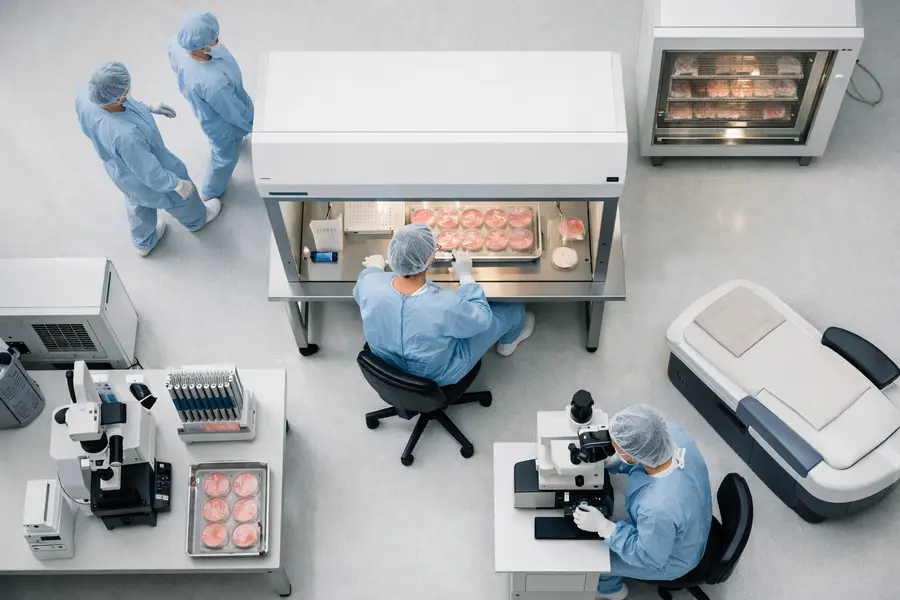
Outer Biosciences exits stealth with $23 million and a platform that keeps donated skin tissue alive for four weeks to train machine learning models on how compounds affect skin aging.
- Michael Polansky co-founded the company in 2020; Lady Gaga sits on the board, not as a co-founder.
- Wing Venture Capital led the round, joined by Initialized Capital, Lightspeed Venture Partners, and SV Angel.
- The platform, called Yuna, has tested 10,000+ compounds and generated over 10 terabytes of tissue response data.
Lead
Outer Bio, the Los Angeles-based skin longevity biotech founded in 2020, emerged from stealth on August 21, 2026, announcing $23 million in seed and Series A funding. The company's core bet: that training AI on data generated from living human tissue - not cell lines, not synthetic proxies - will produce compound candidates that actually survive clinical contact. Total funding now stands at $27.3 million across all rounds.
What Does Outer Bio Actually Do?
The company keeps surgically discarded human skin alive in controlled conditions for up to four weeks. Each tissue sample is exposed to potential active compounds, and sensors capture over 30,000 data points per compound-sample pairing. Those readings feed into Yuna, Outer Bio's proprietary machine learning platform, which learns to predict biological response before any compound reaches a human volunteer.
The sourcing model depends on vetted nonprofit and commercial biobanks that collect skin from surgical waste - tissue that would otherwise be discarded. The company says it has tested more than 10,000 candidate treatments so far, generating 10-plus terabytes of data in the process. Six active leads are currently in the pipeline, with several dozen additional "hits" identified but not yet advanced.
Why Does This Round Signal More Than a Skincare Play?
Wing Venture Capital led the round and published a detailed thesis alongside the announcement - unusually transparent for a Series A in this space. The framing from Wing goes beyond cosmetics: the argument is that skin tissue, because it is accessible and abundant, offers a faster and cheaper training surface for biological AI than internal organs or synthetic constructs. If Yuna's predictive accuracy holds up at scale, the platform becomes infrastructure, not just a product pipeline.
Outer Bio is already generating revenue through platform access deals with biopharma teams and consumer brands, and one disclosed research partnership focuses on how cancer drugs affect skin as a side effect. That biopharma adjacency matters. Skincare is a large market, but oncology-adjacent data licensing is a different business entirely.
Who Built This?
Michael Polansky, CEO and co-founder, comes from a technology background rather than life sciences. Chris Hinojosa, co-founding CTO, and several team members carry Harvard-trained biotech credentials and prior work building commercially deployed organ-on-chip systems. Lady Gaga - Polansky's fiancée and founder of the Haus Labs cosmetics brand - sits on the board. Her name has driven significant press attention since a November 2025 Rolling Stone profile first surfaced her involvement, but she is not a co-founder.
The celebrity association invites skepticism, and the company has not been immune to it. What matters operationally is whether the tissue model produces compound candidates that perform differently from what conventional high-throughput screening would surface. At 10,000 compounds tested, Outer Bio has enough data to start making that case - but has not published peer-reviewed results to date.
What Does the Competitive Field Look Like?
Several well-funded AI drug discovery companies already operate platforms that screen vast compound libraries against biological targets. The distinction Outer Bio is pressing is the use of intact human tissue rather than isolated cell cultures or computational models alone. Intact tissue preserves the structural complexity and cell-to-cell signaling that dissociated cultures lose. Whether that added complexity translates into meaningfully better predictive accuracy is the empirical question the company has not yet answered publicly.
Companies with established organ-on-chip platforms and those working in longevity biology broadly defined represent the nearest competitive overlap. None have announced a direct skin-longevity focus with the same combination of living tissue models and large-scale compound screening.
Outlook
Outer Bio enters public view with a specific technical claim - living tissue, sustained for four weeks, generating granular compound-response data - and a platform that is already producing revenue and pipeline candidates. The $23 million round buys time to generate the kind of published, independently reproducible data that will determine whether Yuna is a genuine predictive engine or an expensive data-collection apparatus. Wing's lead position and the presence of Lightspeed and Initialized suggest the investor community finds the former more plausible. Whether Outer Bio can advance any of its six active leads into validated clinical use will be the next meaningful test.