 Pomegra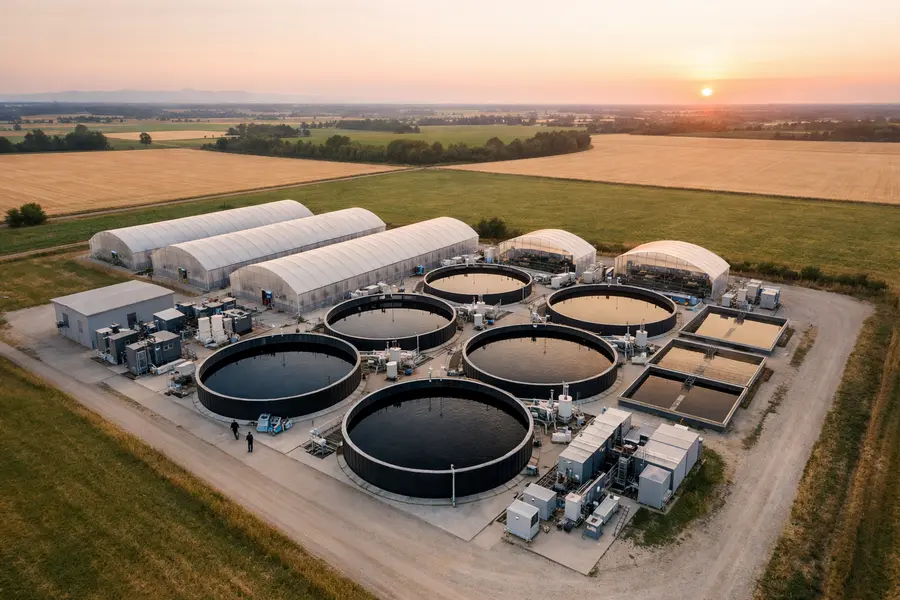
Munich's Oceanloop secured €38.5M via Hatch Blue equity and a €32M EIB debt facility to scale land-based Giant Grouper farming across Europe for the first time.
Key Takeaways
- The €38.5M package combines equity from Hatch Blue's Blue Revolution Fund and Stolt Ventures with a €32M EIB venture-debt tranche backed by the EU's InvestEU program.
- Oceanloop's Strande farm near Kiel began Giant Grouper commercial sales in April 2026 through retail brand Honest Catch, completing the pivot from R&D to live revenue.
- A 250-ton Kiel expansion breaks ground by end of 2026; a 2,000-ton Gran Canaria facility carries a planned construction start of 2029.
Lead
Oceanloop, the Munich-based recirculating aquaculture systems company, announced up to €38.5 million in new financing in August 2026 to scale its software-driven farming technology and bring commercially farmed Giant Grouper to European markets for the first time. The capital combines fresh equity from Hatch Blue's €92 million Blue Revolution Fund and Stolt Ventures - the venture arm of shipping and tank-container conglomerate Stolt-Nielsen - with a €32 million venture-debt facility from the European Investment Bank, drawn under the InvestEU guarantee. Valuation was undisclosed.
What Is Oceanloop and How Did It Get Here?
Oceanloop was assembled in 2023 from two predecessor operations: Crusta Nova, one of Europe's first commercial land-based shrimp producers, founded in 2015 in Bavaria by Dr. Fabian Riedel, and the marine RAS engineering lineage of Sander, acquired through its subsidiaries Förde Garnelen and neomar. The merger gave the combined company two operating farms - one in Bavaria, one near Kiel - plus roughly two decades of proprietary water-management engineering. All product from those farms sells through Honest Catch, Oceanloop's retail sister brand.
The company's core claim is that its RAS software stack, which manages water chemistry, feeding cycles, and system monitoring in integrated feedback loops, narrows the cost-per-kilogram gap that has historically made land-based aquaculture economically uncompetitive against sea-cage and import alternatives.
Why Giant Grouper, and Why Now?
Giant Grouper commands some of the highest per-kilogram prices in Asian and high-end European restaurant markets, and is currently produced almost exclusively in Southeast Asia. Oceanloop frames its European production as a proximity trade: shorter supply chains, no transatlantic freight, and the ability to deliver fresh or live fish to continental buyers within hours. The first commercial Giant Grouper sales from its Strande facility near Kiel started in April 2026.
The EIB debt facility is meaningful context here. The bank, which supports EU strategic priorities under InvestEU, does not routinely finance early-stage science bets. Its participation - originally negotiated in October 2024 and expanded in July 2026 to cover the grouper production line specifically - implies that Oceanloop's unit economics at Strande cleared a commercial diligence threshold. That is distinct from a venture fund making a thesis bet.
How Does the Capital Stack Read?
The "up to €38.5M" framing is worth parsing. The headline figure includes tranches likely tied to construction or production milestones rather than a single cash disbursement. The €32M EIB debt component is the larger and more structured piece; the equity portion from Hatch Blue and Stolt Ventures has not been separately quantified in public filings. The equity is real but its size is not.
Stolt Ventures' parent, Stolt-Nielsen, already holds aquaculture interests through Stolt Sea Farm and operates a global fleet of chemical tankers and tank containers. This is a strategic position, not a purely financial one. Stolt brings cold-chain infrastructure and distribution reach that no pure-play VC can replicate. That changes how the equity should be read: part capital, part commercial partnership.
What Gets Built?
Oceanloop plans to begin construction on a 250-ton Giant Grouper farm in Kiel before year-end 2026. The larger build - a 2,000-ton commercial facility on Gran Canaria in the Canary Islands, where stable Atlantic temperatures and access to Spanish renewables suit the species - carries a 2029 construction start.
The jump from 250 tons to 2,000 tons is the central execution question. Land-based aquaculture has a well-documented pattern of stalled scale-ups: the engineering that works at a pilot facility and the engineering that works at eight times that capacity are different problems. Oceanloop's software-defined approach is designed precisely to make that transition more predictable, but the track record at commercial scale is still being written.
Outlook
Oceanloop enters the second half of 2026 with live grouper revenue, a structured EIB debt facility, and a strategically motivated industrial partner on its cap table. The Kiel 250-ton expansion will be the first real test: whether the build arrives on schedule and whether per-kilogram economics hold as volume rises. A successful Kiel build makes the Gran Canaria story credible and de-risks the fundraise that facility will eventually require. A delayed or cost-overrun build raises sharper questions about whether the €32M debt load was sized correctly for the pace of the business. The company has not disclosed how much of the equity tranche is allocated to working capital versus construction contingency.