Pomegra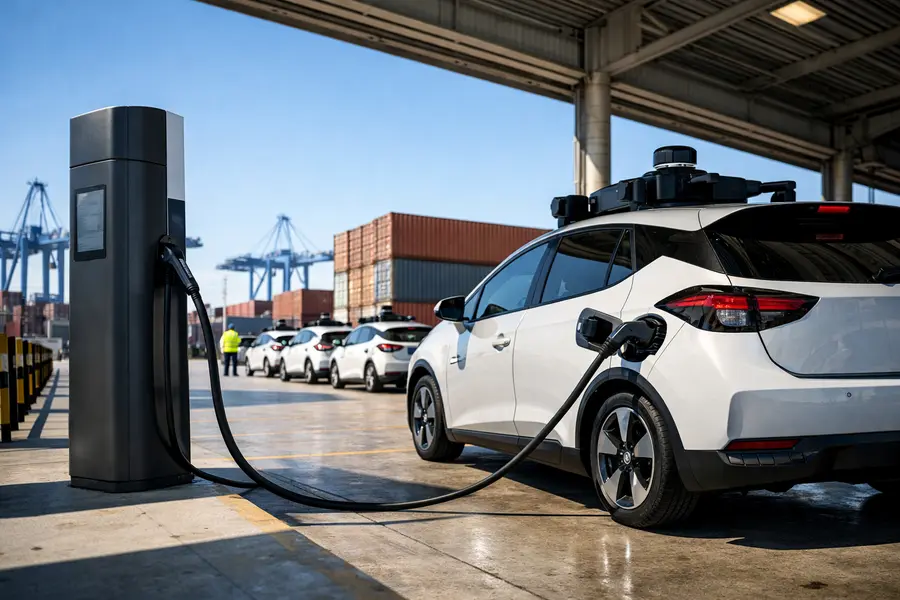
Nigeria-founded Moove pulls in $250M at a $2.1B valuation in a Mubadala-led round to own and operate the physical infrastructure layer behind global robotaxi fleets.
- Mubadala led the round alongside co-leaders Woven Capital (Toyota's Growth Fund) and Ion Pacific; returning backers include Uber, BlackRock, and Franklin Templeton.
- Moove already manages roughly 42,000 vehicles across 14 countries and runs Waymo's fleet operations in Phoenix, Miami, and Las Vegas.
- The company plans to grow its autonomous vehicle workforce 220% by end of 2026, from approximately 150 to 500 employees.
Lead
Moove closed a $250 million Series C on August 5, 2026, at a $2.1 billion valuation, led by Mubadala Investment Company, the Abu Dhabi sovereign wealth fund. Woven Capital, Toyota's growth fund, and Ion Pacific co-led the round. New investors BlueCrest Capital Management, Sona Asset Management, and The Raptor Group joined alongside returning backers BlackRock, MUFG, Franklin Templeton, and Uber.
The company, founded in Lagos and now headquartered in London, is building its business on a straightforward premise: the most durable value in autonomous mobility won't belong to the software that drives the vehicles. It will belong to whoever owns the cars and runs the depots.
What Does Moove Actually Do?
Moove owns vehicles and operates the ground infrastructure that robotaxi software companies have shown little appetite to run themselves. It currently manages Waymo's fleet across Phoenix, Miami, and Las Vegas - handling vehicle ownership, charging, servicing, and continuous orchestration so its partners can focus on the autonomy stack.
The company calls its robotics-enabled charging and maintenance facilities "Nests." These depots manage everything from battery cycles to vehicle readiness, designed for autonomous fleets that don't pull off the road at the end of a shift. Alongside the autonomous operations, Moove still runs roughly 42,000 human-driven vehicles across 14 countries - a near-term revenue base that funds the longer-horizon AV build-out.
Why Is Mubadala Backing This a Third Time?
This is Mubadala's third investment in Moove, a sequence that moves the relationship beyond exploratory into institutional. Abu Dhabi's sovereign capital has consistently targeted physical-asset businesses in sectors where software alone doesn't complete the value chain, and an AV fleet operator with proprietary depot infrastructure fits that thesis directly.
The co-investors reinforce the logic. Woven Capital is Toyota's growth fund, a vehicle manufacturer with obvious strategic interest in who controls large autonomous fleets. Ion Pacific adds exposure to capital markets where autonomous infrastructure is developing quickly. Uber, a returning backer, sold its own self-driving unit in 2020 and has since repositioned as a platform routing rides across third-party fleets including Waymo - its continued support of Moove aligns with that strategy of maintaining a well-capitalized fleet supply partner.
The $2.1 billion valuation marks a sharp step up. Moove's last major outside round was a $76 million Series B in 2023, making this Series C roughly 28 times that round's post-money figure. That multiple implies substantial future revenue assumptions, even against an aggressive AV commercialization timeline.
What Comes Next for Moove's Expansion?
London is the next market, a natural target for a company with British roots that has so far concentrated its autonomous operations entirely in the United States. The company plans to triple its autonomous vehicle headcount by end of 2026. The longer-term roadmap envisions ownership of hundreds of thousands of autonomous vehicles globally, with the Nest depot network scaling in parallel.
The depot model becomes a competitive moat as fleet size grows: operators who control proprietary servicing infrastructure can guarantee uptime in ways that asset-light competitors cannot. That's the structural bet behind the capital raise.
What the Valuation Implies About the Last Round
A 28-fold step-up from Series B to Series C in three years is extreme by any measure. It either reflects a genuine transformation in Moove's business model - from vehicle financing company to AV infrastructure operator - or it prices in a robotaxi market expansion that remains speculative. The pivot from ride-hailing finance to Waymo fleet operator is real and documented. Whether the market scales fast enough to justify $2.1 billion is the open question.
BlackRock and Franklin Templeton returning suggests this is no longer purely venture territory. Infrastructure capital moving alongside growth equity is consistent with what an asset-heavy fleet and depot model actually requires to operate at scale.
Outlook
Moove exits this round with the capital to build Nest depots in new markets, deepen its existing Waymo relationship, and establish a foothold in London. The infrastructure bet - own the vehicles, own the depots, control the operational layer - is structurally coherent regardless of which autonomy stack eventually dominates. The risk is timing: the AV market's commercial scale-up has disappointed expectations before, and a capital-intensive fleet business has limited tolerance for a prolonged ramp. The $250 million buys runway. How much depends on how quickly robotaxi fleets move from hundreds to hundreds of thousands of vehicles on city streets.